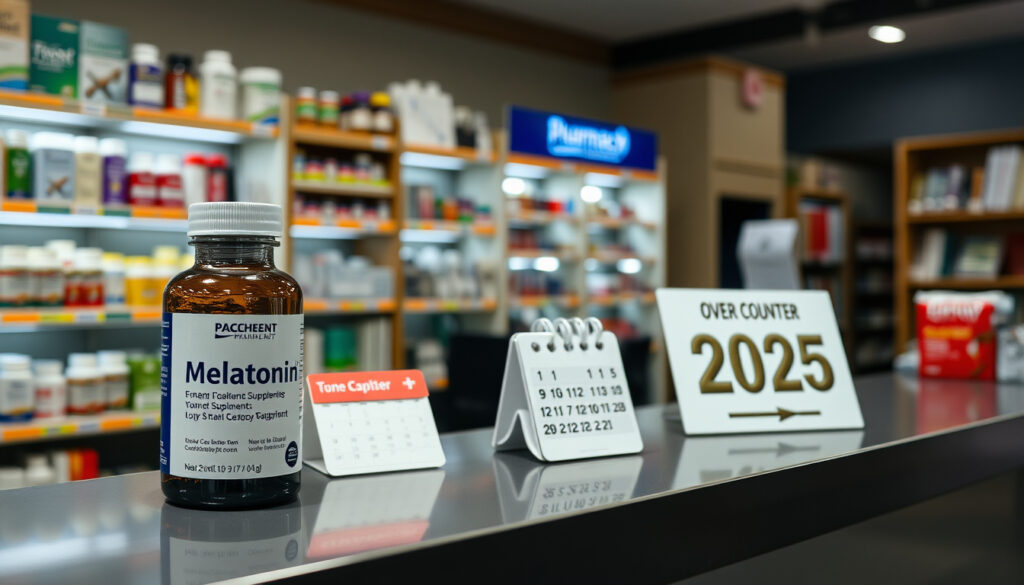
Melatonin Over the Counter NZ: What’s Changed in 2025
Anyone who has battled insomnia in New Zealand knows the old melatonin routine: a prescription, an overseas order, or a doctor’s visit — but in June 2025 Medsafe changed that, and the pharmacy-only rules took effect on 10 October 2025. Adults 18 and over can now buy approved melatonin at the counter for jet lag or short-term insomnia, while the best-known 2mg sleep tablets stay restricted to people aged 55 and older; here’s what the change actually means, who can buy what, and where the caveats still bite.
OTC switch: June 2025 decision; pharmacy-only from 10 October 2025 ·
Licensed 55+ product: Melotin 2mg prolonged-release ·
Minimum age on label: 55 years ·
Lowest listed OTC price: $16.99 for Vigisom 2mg/30 tablets ·
Key contraindications: liver problems, other sleep medicines, pregnancy/breastfeeding
Quick snapshot
- Melatonin was reclassified for pharmacy-only supply in June 2025 (Medsafe).
- Approved 2mg modified-release products (Melotin, APOHEALTH) are named for adults 55+ with short-term insomnia (Medsafe).
- Adults 18+ can use pharmacy-only melatonin for jet lag (up to 10 days) or primary insomnia (up to 30 days) (NZ Gazette).
- No 10mg OTC product appears in the pharmacy-only limits (NZ Gazette).
- More 18+ products are expected — companies applied from July 2025 and first approvals came in September 2025 (Medsafe).
- Long-term nightly safety data remain limited; the approved indication is short-term only (Medsafe).
- 18 June 2025: Medsafe announced the reclassification (Medsafe).
- September 2025: first products approved (Medsafe).
- 10 October 2025: pharmacy-only supply rules took effect (Medsafe).
- Approved 18+ and 55+ products start appearing behind pharmacy counters (Medsafe).
- More brands are likely as product-by-product approvals continue (Medsafe).
- Under-55s should ask which product matches the 18+ pathway before expecting a pack (NZ Gazette).
Nine lines separate a confident purchase from a wasted trip to the pharmacy — and the first is that “OTC” in New Zealand means behind the pharmacy counter, not on a supermarket shelf.
| OTC status | Pharmacy-only from 10 October 2025 (classification decided 18 June 2025) |
|---|---|
| Named licensed 55+ product | Melotin 2mg prolonged-release tablets |
| Also approved | APOHEALTH Melatonin 2mg modified-release tablets |
| 18+ jet-lag pathway | Up to 5mg immediate-release, up to 10 days |
| 18+ insomnia pathway | Up to 3mg immediate-release or 2mg modified-release, up to 30 days |
| 55+ insomnia pathway | Up to 13 weeks after pharmacist consultation |
| Key contraindications | Under 55 (for the 2mg tablet), liver problems, other sleep medicines, pregnancy/breastfeeding |
| Reference price | $16.99 for Vigisom Melatonin 2mg, 30 tablets |
| Imported melatonin | Unapproved personal imports still require a prescription (Medsafe) |
Can you buy melatonin over the counter in New Zealand?
Yes — but “over the counter” needs a precise reading. A Ministry of Health briefing on reclassifying melatonin describes the 2025 change as a Pharmacy-only classification, not an open-shelf retail switch. Approved melatonin medicines can now be supplied without a prescription from a registered pharmacy, under conditions set out in the New Zealand Gazette, and the rules took effect on 10 October 2025.
- Jet lag, adults 18+: immediate-release products no stronger than 5mg per dose unit, with no more than 10 days’ supply (NZ Gazette).
- Primary insomnia, adults 18+: immediate-release products no stronger than 3mg, or modified-release products no stronger than 2mg, capped at 30 days’ supply (NZ Gazette).
- Primary insomnia, adults 55+: larger supplies, up to 13 weeks, after consultation with a registered pharmacist (NZ Gazette).
Products in all three tiers must be supplied in the manufacturer’s original approved pack, and the pharmacy-only route applies only when the Minister of Health or the Director-General has consented to the specific product and indication. In plain terms: the pharmacist decides, not the checkout.
A 60-year-old with insomnia can walk out with a 13-week course after a chat with the pharmacist. A 30-year-old with a long-haul flight can get a 10-day immediate-release product for jet lag. But a 40-year-old asking for Melotin 2mg — the brand most people have heard of — should expect a polite no, because that product’s approved indication is short-term insomnia in adults aged 55 and over (Medsafe).
Which melatonin products are available over the counter in NZ?
- Melotin 2mg prolonged-release tablets — approved for short-term insomnia in adults 55+ (Medsafe).
- APOHEALTH Melatonin 2mg modified-release tablets — same 55+ insomnia indication (Medsafe).
- Vigisom Melatonin 2mg — 30-tablet packs in NZ pharmacy listings; the lowest listed reference price is $16.99.
The pattern so far is narrow: the named approved lines are 2mg modified-release tablets for an older adult with insomnia. That doesn’t mean 10mg products or gummies slipped through the new rules — they didn’t.
The implication: the product range tracks the regulation. The approved medicines named so far serve the 55+ insomnia group, which is why the 18+ jet-lag and insomnia pathways are waiting on product-specific approvals.
Is melatonin 10mg available over the counter in NZ?
No. The pharmacy-only caps are 5mg immediate-release for jet lag and 3mg immediate-release or 2mg modified-release for insomnia. A 10mg product falls outside the current OTC framework.
If a 10mg bottle shows up in an online cart, it’s an overseas product — and unapproved melatonin imported for personal use still requires a prescription (Medsafe). The Gazette’s dose limits are not marketing suggestions; they define the legal ceiling.
Are melatonin gummies available in New Zealand?
- No gummy product is named among the approved pharmacy-only lines in New Zealand.
- The licensed products are modified-release tablets, not supplement-style gummies.
- Imported gummies are unapproved melatonin — still prescription-only for personal use.
Gummies are a popular format overseas, but New Zealand’s new framework was built around approved medicines, and the approved list is tablets. Parents searching for a child-friendly melatonin should also note the bigger rule: no OTC pathway covers children, and prescribing oversight remains the expected route for paediatric sleep problems.
What is the recommended melatonin dose in NZ?
- 55+ insomnia: one 2mg modified-release tablet once daily before bedtime.
- 18+ jet lag: up to 5mg immediate-release per day, up to 10 days.
- 18+ primary insomnia: up to 3mg immediate-release or 2mg modified-release per day, up to 30 days.
The dose is written into the classification, not the marketing. The approved increment for the named 55+ product is 2mg modified-release, and the longest any under-55 adult can legally self-supply for insomnia is 30 days. That is the definition of short-term treatment.
The catch for most readers: the switch to OTC didn’t create one melatonin product for everyone — it created three different rules depending on your age and reason. Knowing which tier you’re in is the whole game.
The pattern: the product list tracks the regulation, and the regulation is still catching up with demand.
What are the common side effects of melatonin?
Headache, dizziness, nausea and daytime drowsiness are the commonly listed side effects on NZ melatonin product labels. The daytime drowsiness one matters most: a medicine meant to improve sleep can leave you groggy the next morning.
Next-day drowsiness is the side effect most likely to create a second problem. The modified-release 2mg tablet delivers melatonin through the night, which is exactly why a morning-after fog is possible — and why the label limits who can take it.
Most side effects are mild and settle quickly. The more serious issues sit in the warnings, and the warnings are strict.
What is the new warning about melatonin?
- In the NZ context, the new warning is the set of conditions attached to the 2025 OTC change, not a single national advisory.
- The strictest product-level warning sits on the Melotin label: no under-55s, no liver problems, no other sleep medicines, no pregnancy or breastfeeding.
People searching “melatonin warning” are usually asking about a specific product they just bought or plan to buy. The relevant NZ warning is printed on the approved medicine’s label, and it travels with the product: short-term insomnia, adults 55 and over, nothing else combined.
The available NZ sources do not identify a separate national warning beyond the Melotin product-label warnings — the “new warning” is effectively the pharmacy-only rulebook.
What organ is affected by melatonin?
- The liver clears melatonin from the body.
- NZ’s licensed 2mg product is contraindicated in people with liver problems.
Melatonin is processed by the liver, which is why the liver warning is not a formality. A modified-release tablet designed to dose through the night expects a liver that can keep pace with clearance — and the product label’s answer is a straight no.
What does the Melotin product label warn about?
- Do not use if you are under 55 years old.
- Do not use if you have liver problems.
- Do not use with any other sleep medicine.
- Do not use if you are pregnant or breastfeeding.
These four lines are the product’s conditions for existing without a prescription. A pharmacist who supplies Melotin to a 45-year-old, or to someone already on a sedative, is breaking the approved indication — so the label is the law at the counter.
Is it harmful to take melatonin every night for sleep?
New Zealand’s health guidance frames melatonin as a short-term insomnia treatment, not an endless nightly routine. The approved 55+ indication says short-term; the 18+ insomnia pathway caps the pack at 30 days; the 55+ pathway extends only under active pharmacist consultation. Every number in the framework points one way: this is a bridge, not a habit.
Why don’t doctors like melatonin?
- Long-term safety data are limited.
- A nightly pill can mask an underlying sleep disorder.
- Self-selected doses treat the symptom while the real driver — timing, stress, another condition — goes unaddressed.
Doctors are cautious for a practical reason: melatonin works quickly, which makes it easy to skip the slower work of finding out why sleep broke in the first place. The NZ reclassification built in guardrails — pack caps, pharmacist screening, approved products — because the medical community wanted access without abandoning that assessment.
What is the controversy with melatonin?
- Dose: the OTC caps allow up to 5mg for jet lag and 3mg immediate-release or 2mg modified-release for insomnia — far below the 10mg dose that appears in overseas product lines.
- Age: the most recognised product, Melotin 2mg, is restricted to 55+, which frustrates younger adults with genuine insomnia.
- Self-selection: can a customer judge between jet lag and insomnia, or between a sleep problem and an underlying health condition?
The Ministry of Health briefing on the reclassification is explicit that this is a controlled pathway, not a deregulation free-for-all. The controversy is the tension between that control and the demand: adults want melatonin without a GP visit, and regulators want to make sure they don’t buy the wrong medicine for the wrong reason.
How long can you safely take melatonin in NZ?
- Jet lag: up to 10 days.
- Primary insomnia, 18+ pathway: up to 30 days.
- Primary insomnia, 55+ pathway: up to 13 weeks, with pharmacist consultation.
The limits are the safety message. If someone has needed melatonin for longer than the pathway allows, the honest conclusion is that the sleep problem outlasted the treatment — and that’s the moment to see a doctor, not to buy a bigger pack.
The people most tempted to take melatonin nightly — younger adults with chronic insomnia — are the group the NZ rules hold to the tightest limit: 30 days. The 55+ group gets a longer 13-week window, but only while a pharmacist is actively monitoring.
Who should not take melatonin?
The strongest no-list in the NZ market comes from the Melotin label: under 55, liver problems, any other sleep medicine, pregnancy or breastfeeding. The newer 18+ pathways lower the age floor for approved products, but they don’t lower the health bar — a pharmacist screens every supply.
Can children take melatonin in New Zealand?
- No OTC pathway covers children or adolescents.
- Prescribing oversight remains the relevant route for paediatric sleep problems (1News).
- Parents should start with a GP, not a pharmacy counter.
The 2025 change made headlines for widening access, but it did not create a child-sized loophole. The named approved products are adult medicines for an older adult indication; anything else needs a prescription and a doctor’s judgement.
If the question is “can my child take melatonin,” the honest first step is a GP appointment, not a pharmacy aisle.
Can you take melatonin if you have liver problems?
- No — the licensed NZ product is contraindicated.
- Melatonin is metabolised in the liver; the label flags liver problems as a hard stop.
Liver disease is not a minor footnote. Because the body breaks melatonin down in the liver, the approved product’s answer to liver problems is a straight no.
Can you take melatonin while pregnant or breastfeeding?
- The Melotin label says do not use.
- The available NZ guidance offers no OTC pathway for pregnancy or breastfeeding.
Pregnancy and breastfeeding sit on the same side of the counter as the liver warning: no approved OTC supply. Anyone in that group should talk to a doctor or pharmacist about non-drug sleep options first. One more rule that catches people: unapproved melatonin bought overseas and imported for personal use still requires a prescription (Medsafe). Ordering a 10mg bottle online does not create a legal supply route — the prescription rule still applies.
The trade-off: the same restrictions that frustrate a 40-year-old insomniac are what let a pharmacist hand over this medicine without a prescription in the first place.
What this means: the pharmacist’s “no” is a regulatory gate, not a personal judgement — and it is supposed to protect the person asking.
What are the alternatives to melatonin?
Melatonin is a hormone that signals sleep timing. If the signal is wrong because of screens, stress, caffeine or an untreated health condition, the pill is a patch, not a fix — and the NZ framework keeps the approved indication short-term for exactly that reason.
The first-line alternatives are behavioural: sleep hygiene first, then cognitive behavioural therapy for insomnia (CBT-I).
What is the healthiest thing to take for sleep?
- Consistent bedtime and wake time, every day.
- A dark, quiet, cool room.
- Screens off well before bed.
- No caffeine in the later afternoon or evening.
- Cognitive behavioural therapy for insomnia (CBT-I) as the first-line treatment.
None of those comes with a label warning. They also treat the cause rather than just the symptom, which is why they’re the first line in sleep guidance and why a pharmacist is more likely to ask about them before reaching for a pack.
What is the strongest sleep aid over the counter in NZ?
There is no “strongest” OTC melatonin in NZ. The legal ceiling is 5mg immediate-release for jet lag and 3mg immediate-release or 2mg modified-release for insomnia — and the best-known approved product is only 2mg.
The word “strongest” in marketing usually means a higher dose, and higher doses are exactly what the NZ pharmacy-only limits exclude. No 10mg product is named in the current OTC framework. Other OTC sleep aids exist behind NZ pharmacy counters, but they use different active ingredients and carry their own rules; the right comparison is safety and indication, not a strength label.
What should I try before melatonin?
- Fix the sleep window: same bedtime, same wake time.
- Cut caffeine after midday.
- Try CBT-I; it targets the thoughts and habits that keep insomnia going.
- Rule out underlying causes with a GP: an untreated sleep disorder or another health condition.
If the behavioural work is done and sleep is still broken, melatonin is a reasonable short-term bridge — that is exactly the niche the NZ rules were built around: short-term, age-appropriate, pharmacy-checked.
Why this matters: melatonin works at the margins of a sleep problem, not the centre of it. The NZ product list matches that — 2mg, modified-release, short-term, adults only.
Three pharmacy pathways now sit under the same “OTC” label, and the differences between them decide who walks out with a pack.
| Feature | Jet lag (18+) | Primary insomnia (18+) | Primary insomnia (55+) |
|---|---|---|---|
| Max strength per dose unit | 5mg immediate-release | 3mg immediate-release or 2mg modified-release | 3mg immediate-release or 2mg modified-release |
| Max supply | 10 days | 30 days | 13 weeks after pharmacist consultation |
| Pharmacist involvement | Pharmacy-only supply | Pharmacy-only supply | Consultation required |
| Named approved products | None named in approved product lists | None named in approved product lists | Melotin and APOHEALTH 2mg modified-release |
Melotin 2mg is the product most people search for, and its spec sheet shows why the OTC switch didn’t turn it into a free-for-all.
| Active ingredient | Melatonin 2mg |
|---|---|
| Release profile | Modified-release (prolonged-release) tablet |
| Indication | Short-term insomnia in adults aged 55 and over |
| Dose | One tablet once daily before bedtime |
| Age restriction | Not for use under 55 years |
| Contraindications | Liver problems, other sleep medicines, pregnancy, breastfeeding |
| Supply rules | Pharmacy-only, up to 13 weeks after pharmacist consultation |
| Price reference | $16.99 for 30 tablets (Vigisom 2mg, NZ pharmacy listing) |
The pattern: the spec sheet is the regulation in miniature — every restriction on the pack is a boundary written into the classification.
Upsides and downsides of pharmacy-only melatonin
Upsides
- Adults 18+ can buy approved melatonin at a pharmacy without a GP appointment.
- Jet-lag users get a legal 10-day immediate-release option.
- 55+ insomnia patients can get up to 13 weeks of 2mg modified-release tablets after a pharmacist consultation.
- Pack limits and pharmacist screening reduce random self-medication.
Downsides
- It’s pharmacy-only, not supermarket-shelf — no grabbing a pack with the groceries.
- No 10mg OTC product exists; the caps are 5mg (jet lag) and 3mg/2mg (insomnia).
- The best-known product, Melotin 2mg, is labelled for 55+, excluding younger adults.
- Unapproved imported melatonin still requires a prescription.
The balance: pharmacy-only access widened who can buy melatonin, but narrowed what they can buy without a prescription.
Timeline: how the OTC switch unfolded
- — Melatonin is not generally available over the counter in New Zealand (Medsafe).
- — Medsafe changes melatonin’s classification to allow pharmacy-only supply of approved melatonin medicines in specified circumstances (Medsafe).
- — Companies apply for approval of the first products intended for pharmacy sale without consultation (Medsafe).
- — Medsafe approves the first melatonin products for pharmacy-only supply (Medsafe).
- — The pharmacy-only classification takes effect (Medsafe).
- — Approved 2mg modified-release products (Melotin, APOHEALTH) serve the 55+ insomnia indication; 18+ jet-lag and insomnia products are approved product-by-product (Medsafe).
The pattern: the change moved from announcement to pharmacy shelf in under four months, but product approvals continue to lag behind the headline.
Confirmed facts vs. what’s still unclear
Confirmed facts
- Melatonin was reclassified in June 2025, with pharmacy-only supply taking effect on 10 October 2025 (Medsafe).
- Approved products include Melotin and APOHEALTH 2mg modified-release tablets for adults 55+ with short-term insomnia (Medsafe).
- Adults 18+ can access pharmacy-only melatonin for jet lag (up to 10 days) or primary insomnia (up to 30 days) under Gazette limits (NZ Gazette).
- Unapproved melatonin imported for personal use still requires a prescription (Medsafe).
What’s unclear
- Whether a 10mg OTC product will ever be approved — none is named in the current pharmacy-only framework (NZ Gazette).
- Whether “the new warning about melatonin” refers to a specific national advisory beyond the Melotin product-label warnings — the available NZ sources don’t identify one.
- The long-term safety of nightly melatonin use — the approved indication is short-term, and long-term data remain limited.
- Which specific products will be approved for the 18+ jet-lag and insomnia pathways; the named approved products so far target the 55+ insomnia group (Medsafe).
The pattern: the confirmed list is short because the framework is deliberately narrow, and the unclear list is longer because approvals are still rolling out.
What the sources say
New Zealand changed melatonin’s classification on 18 June 2025 to enable supply of approved melatonin medicines without a prescription in specified circumstances.
— Medsafe, New Zealand’s medicines regulator
The 2025 change was described as a Pharmacy-only classification rather than unrestricted general-sale retail access.
— Ministry of Health, New Zealand government briefing on reclassifying melatonin
Pharmacy-only melatonin products must be supplied in the manufacturer’s original approved pack.
— New Zealand Gazette, official government notices
The 2025 change did not make melatonin freely available for children and adolescents; prescribing oversight remains relevant for those groups.
— 1News, New Zealand national news
The pattern: each source frames the same change from a different angle — regulator, policy, law, and news — and all four converge on the same point: access is conditional.
What this means for New Zealand adults
The 2025 switch is real access, but it’s calibrated access. A 60-year-old with insomnia can leave a pharmacy with a 13-week supply after a conversation with the pharmacist; a 30-year-old with jet lag can get a 10-day immediate-release product. What the system will not do is sell the famous 2mg tablet to anyone under 55, or sell any 10mg product at all. For New Zealand adults under 55, the decision is clear: buy an approved product that fits the 18+ pathway and respect the 30-day cap, or see a doctor for a prescription — because the pharmacist behind the counter is now the gatekeeper, and a 55+ product won’t cross that counter for anyone younger.
Frequently asked questions
How does melatonin work?
Melatonin is a hormone that helps regulate the body’s sleep-wake clock. New Zealand’s licensed insomnia products use a 2mg modified-release form designed to release through the night, which fits a short-term insomnia indication for adults 55 and over.
What is the best time to take melatonin?
For the 55+ insomnia product, the label directs one tablet once daily before bedtime. For jet-lag use, the approved immediate-release products are taken according to the pack’s instructions, within the 10-day pharmacy-only limit.
Can melatonin cause next-day drowsiness?
Yes — daytime drowsiness is listed as a common side effect of NZ’s licensed 2mg melatonin product, alongside headache, dizziness and nausea. If it lingers, the dose or timing is worth reviewing with a pharmacist.
How long does melatonin stay in your system?
In the licensed New Zealand product the dose is modified-release, so melatonin is delivered gradually across the night rather than all at once. Next-day drowsiness is still possible, which is why the label restricts use and warns about morning-after grogginess.
Can you take melatonin with food?
The NZ product labelling we reviewed doesn’t set a food rule. The stronger warnings concern other sleep medicines, liver problems, and pregnancy or breastfeeding — a pharmacist can check the specific product you’re buying.
Are melatonin gummies as effective as tablets?
No gummy melatonin is named among New Zealand’s approved pharmacy-only products, so the comparison doesn’t yet exist in the NZ OTC market. The licensed options are tablets with approved release profiles; unapproved imported gummies would still require a prescription.
The pattern: the questions people ask show that the OTC switch is still being mapped onto the old reality of prescriptions and imported bottles.
More related posts
 South Melbourne vs Auckland FC: Results, Stats, Highlights
 Fresh n Fruity Yoghurt: Health, Nutrition, and Expert Insights
 Rug Doctor Upholstery Cleaner Guide: Use, Tips & Comparison
 Auckland Botanic Gardens Tickets: Free Entry Guide
 Australia vs South Africa: Live Scores, Times, How to Watch
 Resignation Letter Template NZ: Free Templates & Examples
 Taika Waititi Net Worth 2025: Real Estate, Family, and Rita Ora
