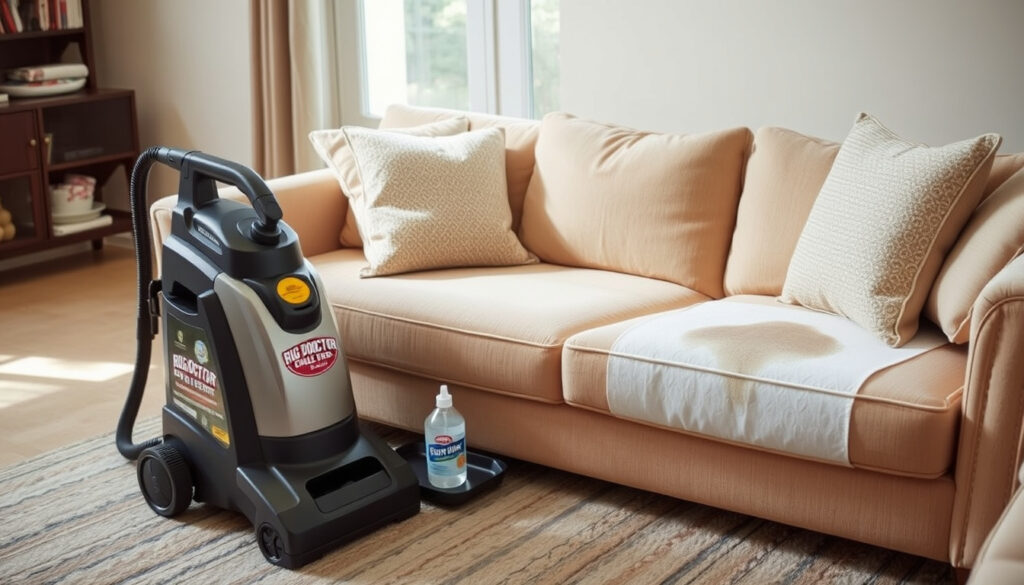
Rug Doctor Upholstery Cleaner Guide: Use, Tips & Comparison
Anyone who’s tried wiping down a sofa with a cloth and store-bought spray knows the frustration of stains that just won’t lift. That’s where a Rug Doctor machine comes in—it’s designed for carpets, but with the right attachment and technique it can tackle upholstery too, saving you a call to the professionals.
Rug Doctor hire locations: B&Q, Woodies, and online via rugdoctor.co.uk ·
Upholstery cleaner property: Colour safe and anti-foam (Oxy Power) ·
Spot cleaner suction power: 1100-watt motor (Pet Portable model)
Quick snapshot
- Rug Doctor Oxy Upholstery Cleaner is colour safe (Rug Doctor UK product page)
- Machine hire available at major DIY stores like B&Q (Rug Doctor UK upholstery guide)
- Portable spot cleaner has 1100W motor (Rug Doctor US support)
- Exact lifespan of Rug Doctor machines (not specified by manufacturer)
- Optimal number of passes for all carpet types
- Dilution ratio consistency across all product variants
- Rug Doctor UK upholstery guide last updated September 2026 (Rug Doctor UK)
- Professional cleaning recommended for delicate fabrics (Rug Doctor New Zealand)
- Newer Rug Doctor models with enhanced anti-foam may appear (Rug Doctor New Zealand)
Five key facts, one pattern: Rug Doctor offers a consistent system for upholstery across markets, but mixing ratios and machine models vary.
| Fact | Detail | Source |
|---|---|---|
| Machine types | X3 uses 250ml Oxy Power; Wide Track uses 375ml | Rug Doctor UK guide |
| Dilution ratio | Professional Upholstery Cleaner: 1 part cleaner to 8 parts warm water | Rug Doctor UK product page |
| Anti-foam | Optional 50ml Rug Doctor Anti-Foam prevents suds | Rug Doctor UK |
| Colour fastness test | Required before use on any fabric | Rug Doctor New Zealand PDF |
| Water temperature | Use lukewarm water only; avoid hot water for wool | Rug Doctor UK |
| Spot cleaner motor | 1100W suction motor on Pet Portable model | Rug Doctor US support |
| Hose flushing | Run TOOL mode for 15 seconds after cleaning to clear hose | Rug Doctor US |
Can you use a Rug Doctor to clean upholstery?
Yes—Rug Doctor machines can be used on most upholstery fabrics, provided you use the correct attachment and detergent. The official Rug Doctor UK guide confirms that the upholstery tool and Oxy Upholstery Cleaner are designed for this purpose. The machine’s suction system extracts dirt and cleaning solution, leaving fabric fresher and cleaner than surface wiping alone.
What types of upholstery can be cleaned?
Most synthetic blends, cotton, and microfibre sofas respond well. Rug Doctor New Zealand recommends checking the manufacturer’s tag for cleaning code (Rug Doctor New Zealand support). Avoid silk, velvet, and unsealed leather—the moisture can cause staining or shrinkage.
Preparing the machine for upholstery cleaning
- Vacuum the upholstery thoroughly before starting (Rug Doctor New Zealand PDF).
- Test colourfastness on a hidden area with a white towel; no colour transfer means it’s safe (Rug Doctor New Zealand).
- Detach the large grey vacuum hose from the back of the machine and attach the upholstery tool hose (Rug Doctor New Zealand).
- Fill a clean bucket with warm water and the recommended amount of Rug Doctor Oxy Upholstery Cleaner – 250ml for X3, 375ml for Wide Track (Rug Doctor UK).
Skipping the colourfast test is the most common cause of discoloured furniture. Ten seconds of testing can save you from a costly restoration.
How to use a Rug Doctor to clean a sofa?
Using a Rug Doctor on a sofa follows a clear workflow. Rug Doctor US support breaks it down into press-spray-pull-release steps. Below is the full process adapted from the official guides.
Step-by-step sofa cleaning process
- Remove cushion covers if they are removable and machine-washable — wash them separately according to label instructions.
- Attach the upholstery tool and fill the machine’s clean tank with the prepared solution (Rug Doctor US).
- Press the upholstery tool firmly onto the fabric, squeeze the trigger to spray solution, and pull the head backward slowly (Rug Doctor US).
- Release the trigger near the end of the swipe, then make a dry pass without squeezing the trigger to extract the dirty water (Rug Doctor US).
- Work in sections, overlapping strokes slightly. Do not press the handle button on the machine while using the hand tool (Rug Doctor New Zealand).
- After finishing, run the machine in TOOL mode for 15 seconds to flush the hose (Rug Doctor US).
Tips for avoiding oversaturation
Too much solution leaves fabric damp and prone to mould. Rug Doctor New Zealand advises: if foam builds up around the hand tool, pull a little faster or make extra dry passes. Use the anti-foam additive (50ml) if needed (Rug Doctor UK).
How many times should you go over your sofa?
The official guide from Rug Doctor UK does not specify a magic number, but a wet pass followed by a dry pass per section is standard. For heavily soiled areas, repeat the wet–dry sequence until the extracted water runs clear. Overdoing it can oversaturate, so stick to one spray–dry cycle per section and reassess.
What not to do after cleaning upholstery
Don’t rush drying. Allow 4–6 hours of airflow before using the sofa. Rug Doctor UK warns against hot water on wool. Also avoid pressing the trigger while the tool is stationary—that soaks a single spot and leaves a wet ring.
Oversaturation is the number one complaint among DIY upholstery cleaners. Less solution, more extraction, and patience with drying turn a risky job into a reliable result.
What’s the best upholstery cleaner?
When you stack up the options, the “best” depends on your fabric and frequency of use. Rug Doctor Oxy Power is a strong contender for deep cleaning, but Bissell and Hoover also have loyal followings. Here’s how the main Rug Doctor models compare.
Rug Doctor machine comparison
Three machines, one difference in solution volume and motor power.
| Model | Solution needed | Motor power | Best for |
|---|---|---|---|
| X3 | 250ml Oxy Power | Standard | Medium sofas, single rental |
| Wide Track | 375ml Oxy Power | Standard | Large sofas, multiple seats |
| Pet Portable Spot Cleaner | Rug Doctor Oxy solution | 1100W | Spot-cleaning, small upholstery |
All three use the same upholstery attachment. The spot cleaner’s high motor makes it ideal for quick touch‑ups (Rug Doctor US).
Rug Doctor vs Bissell vs Hoover
Data direct from manufacturers is thin, but a general pattern emerges: Rug Doctor rental gives you a powerful machine cheaply per day; Bissell and Hoover sell smaller portable units for around £100–£150. For a one‑time deep clean, rental wins on cost. For regular use, buying a compact machine may be more convenient. Rug Doctor’s own Professional Upholstery Cleaner offers a dedicated solution with anti-foam, which competitors often lack.
Rental gives you brute suction for a day; ownership gives you flexibility. If your sofa gets dirty only twice a year, hire the Rug Doctor. If you’re cleaning monthly, buy a portable unit from another brand.
What is better than a Rug Doctor?
Rug Doctor isn’t the only player, and for some situations it isn’t the best. Professional cleaning services handle delicate fabrics and large areas without the risk of oversaturation. Rival machines from Bissell and Hoover trade brute power for portability.
Professional carpet cleaning services
Professionals use industrial‑grade extraction and often include specialty spotting. They cost from around £50 per room (Rug Doctor UK notes this as a benchmark). For expensive sofas or silk fabrics, the expertise of a pro is hard to beat. The trade‑off is price and scheduling.
Alternative DIY machines
Bissell’s ProHeat and Hoover’s SmartWash machines come in under £150 and include upholstery tools. However, their smaller water tanks mean more refills. Rug Doctor’s spot cleaner (1100W) gives comparable suction in a portable format (Rug Doctor US).
Portable machines can struggle with large sofas. If you’re cleaning a three‑seater, a full‑size rented Rug Doctor will finish the job in one tank fill rather than three.
Is a Rug Doctor worth it?
For the average home, renting a Rug Doctor costs about £25–£40 per day, plus cleaning solution. One hire can clean an entire sofa and a room of carpets. The question is whether the result justifies the effort.
Cost analysis of hiring vs buying a machine
A day’s rental from Rug Doctor UK costs roughly the same as a single professional room clean. If you clean your sofa twice a year, rental totals £50–£80 annually. Buying a Bissell machine for £150‑£200 breaks even after 2–3 years of use. For most people, renting is cheaper in year one.
Common problems and how to avoid them
- Damp carpet after cleaning: Reduce solution volume and increase dry passes. Rug Doctor UK recommends anti‑foam to prevent suds that trap moisture (Rug Doctor UK).
- Machine loses suction: Check the debris tank for blockages. Rug Doctor NZ suggests emptying the lower tank after each use (Rug Doctor New Zealand).
- Foaming: Use anti‑foam or switch to Oxy Power formula which is low‑foam by design.
How long does a Rug Doctor machine last?
Rug Doctor does not publish an expected lifespan for its rental machines. Commercial units are built for heavy use, but well‑maintained rental units can last years. The spot cleaner uses a 1100W motor (Rug Doctor US), a typical lifespan for such appliances is 300–500 hours of use.
Is it safe to sleep in the room after cleaning?
Once the upholstery is completely dry (4–6 hours with good ventilation), it is safe. Rug Doctor UK advises keeping the area well‑aired until dryness is confirmed. Dampness left overnight can encourage mould, so point a fan at the sofa if needed.
Confirmed facts
- Rug Doctor Oxy Upholstery Cleaner is colour safe (Rug Doctor UK)
- Machine hire available at B&Q, Woodies, rugdoctor.co.uk (Rug Doctor UK guide)
- Portable spot cleaner has 1100W motor (Rug Doctor US)
What’s unclear
- Exact lifespan of Rug Doctor machines (not specified by manufacturer)
- Optimal number of passes for all carpet types
- Effectiveness of Rug Doctor on heavily soiled pet stains (mixed user reports)
- Dilution ratio consistency across all product variants
“Skipping the colourfast test is the most common cause of discoloured furniture. Ten seconds of testing can save you from a costly restoration.”
– Rug Doctor New Zealand support guide
“Run the machine in TOOL mode for 15 seconds after cleaning so dirty solution in the hose is collected into the dirty water tank.”
– Rug Doctor US rental support
“If foam builds up around the hand tool, pull a little faster or vacuum excess solution by passing over the area again without squeezing the lever.”
– Rug Doctor New Zealand support guide
The pattern across all official Rug Doctor guides is clear: the machines are capable but demand preparation. Colourfast testing, correct mixing ratios, and patience with extraction separate a great result from a damp disappointment.
Upsides
- Powerful suction (1100W on spot cleaner) lifts deep dirt
- Cost‑effective rental vs professional cleaning
- Colour‑safe, anti‑foam solution protects fabrics
- Widely available at DIY retailers
Downsides
- Risk of oversaturation if technique is poor
- Not suitable for silk, velvet, or unsealed leather
- Machine lifespan unknown; rental quality varies
- Multiple passes may be needed for heavy stains
Related reading: Rug Doctor Professional Upholstery Cleaner instructions · how to clean upholstery with a Rug Doctor
rugdoctor.com, manuals.plus, costco.com, rugdoctor.co.nz, rugdoctor.com, uk.trustpilot.com, rugdoctor.com
Frequently asked questions
What kind of detergent should I use in a Rug Doctor?
Rug Doctor Oxy Power Upholstery Cleaner is recommended. For the X3 machine use 250ml; for Wide Track use 375ml per 9L of warm water (Rug Doctor UK). Professional Upholstery Cleaner can be used at a 1:8 dilution.
Can I use a Rug Doctor on velvet or delicate upholstery?
No—Rug Doctor New Zealand advises against velvet and unsealed leather. Always check the manufacturer’s tag and test on a hidden area first.
How often should I deep clean my upholstery?
Rug Doctor UK suggests deep cleaning upholstery every 12–18 months for normal use, or every 6 months if you have pets or heavy soiling.
Does the Rug Doctor machine come with an upholstery tool?
Yes, rental machines include an upholstery tool. The Pet Portable spot cleaner also comes with a small upholstery attachment (Rug Doctor US).
How do I prevent mold after cleaning upholstery with a Rug Doctor?
Ensure proper extraction by making dry passes. Allow 4–6 hours of airflow. Use a fan if needed. Adding Rug Doctor Anti-Foam reduces moisture retention (Rug Doctor UK).
Are Rug Doctor machines safe for wool carpets?
Yes, but use only lukewarm water and Rug Doctor’s wool‑safe solution. Rug Doctor UK warns: hot water can cause wool shrinkage.
What is the difference between Rug Doctor carpet cleaner and upholstery cleaner?
Upholstery cleaner is formulated with anti‑foam and colour‑safe agents. Carpet cleaner may have higher foaming. Always use the dedicated detergent for the surface you are cleaning.
For UK sofa owners facing pet stains or year‑old grime, the choice is straightforward: one day with a rented Rug Doctor and the right technique will lift dirt that sprays alone cannot. If your sofa is silk or you’d rather not risk it, book a professional. For everyone in between, a £30 rental and an hour of work beats waiting for a cleaner any day.
More related posts
 Used Cars for Sale in Ireland: 2024 Guide
 PGA Championship Prize Money 2026: Full Payout Breakdown
 Tongariro Alpine Crossing Shuttle from Taupo: Schedules & Prices
 Pulled Pork Slow Cooker NZ: Best Cut, Time & Liquid Tips
 State Business Insurance NZ: Cost, Coverage & Reviews
 How to Reverse Image Search – Step-by-Step 2025 Guide
 How to Play Go Fish: Rules and Card Count
 How Many More Days Till Christmas? 2026 Countdown
