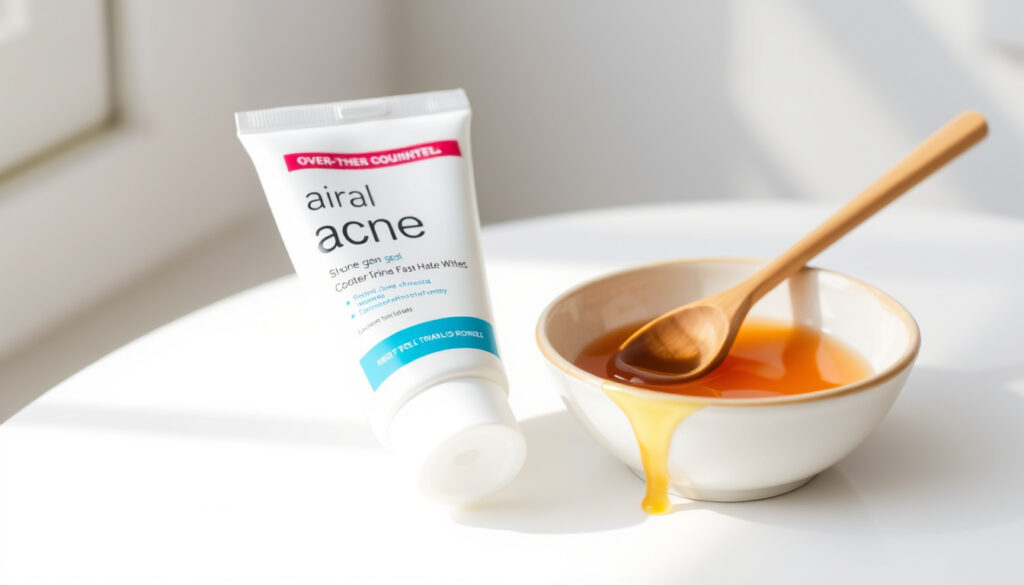
How to Get Rid of Pimples Fast: OTC vs Natural Treatments
Few things ruin a morning faster than a fresh, angry pimple on your chin. You’re far from alone — about 50 million Americans deal with acne every year, and dermatologists have clear evidence on what works. The effective fixes are less dramatic than the internet suggests: salicylic acid for clogged pores, benzoyl peroxide for bacteria, adapalene for stubborn bumps, and one uncomfortable habit to break — keeping your hands off your face. That last part matters more than it sounds, because a popped pimple can turn a week-long annoyance into a scar that lingers for months.
Americans affected by acne annually: 50 million ·
Percentage of people aged 12-24 who experience acne: 85% ·
Acne patients who see a dermatologist: 1 in 5 ·
Time for an unpopped pimple to heal naturally: 3–7 days
Quick snapshot
- Benzoyl peroxide reduces acne bacteria and inflammation (American Academy of Dermatology).
- Salicylic acid face washes can help with isolated pimples (Healthline Medical Review Board).
- Adapalene 0.1% gel is available over the counter in the U.S. and unclogs pores (American Academy of Dermatology).
- Whether chocolate or greasy foods directly cause acne in every person (NHS medicines guidance).
- Precise hormonal triggers for adult-onset acne in women over 25 (NHS 111 Wales health encyclopedia).
- 0 hours: oil, dead skin, and C. acnes block a pore (Yale Medicine).
- 3–7 days: an untouched pimple usually settles (Webdoctor.ie medical team).
- 6–12 weeks if popped: higher risk of infection, dark marks, and scarring (Mayo Clinic acne treatment guide).
- Start with a gentle cleanser plus 2.5% benzoyl peroxide (Mayo Clinic).
- Add adapalene in the evening if clogged pores are the main problem (NHS).
- See a dermatologist if deep, painful lesions or scarring appear (American Academy of Dermatology).
Rumor list
- The exact minimum duration for most herbal supplements to show measurable improvement remains unsubstantiated.
- Using toothpaste to dry out a pimple is not supported by evidence.
- Face masks have no strong evidence for preventing acne breakouts.
Seven decision-relevant facts, one pattern: effective acne treatment is about matching the active ingredient to the breakout type, not buying more products.
| Fact | Value | Evidence |
|---|---|---|
| Fastest OTC acne killer | Benzoyl peroxide | NHS medicines guidance |
| Best exfoliator for clogged pores | Salicylic acid (BHA) | Healthline Medical Review Board |
| Gold standard for severe acne | Prescription isotretinoin | Yale Medicine |
| Top natural anti-inflammatory | Tea tree oil / green tea extract | Healthline Medical Review Board |
| Ideal pH for acne cleansers | 5.5 (pH-neutral) | Webdoctor.ie medical team |
| Time benzoyl peroxide takes to work | About 4 weeks | NHS medicines guidance |
| OTC retinoid strength in the U.S. | Adapalene 0.1% gel | American Academy of Dermatology |
How to deal with acne?
The first rule of acne treatment is to match the active ingredient to the breakout. A consistent routine usually beats a cabinet of spot treatments.
What is the best skincare routine for acne?
- Use a gentle, alcohol-free cleanser as the base of the routine (Webdoctor.ie medical team).
- After cleansing, apply a thin layer of benzoyl peroxide to affected areas once or twice daily (NHS medicines guidance).
- Over-the-counter medicated creams, cleansers, and spot treatments are the first line for mild to moderate acne (Healthline Medical Review Board).
How do dermatologists treat acne?
- Prescription retinoids are usually applied once daily, often in the evening, and introduced gradually to reduce irritation (Mayo Clinic acne treatment guide).
- Prescription acne treatments commonly take four to eight weeks before visible results appear (Mayo Clinic acne treatment guide).
Benzoyl peroxide is a fast OTC bacteria-killer, but it can bleach towels and pillowcases (NHS 111 Wales health encyclopedia). Use white bedding and give it time to work.
The implication: a routine works when you let one evidence-backed active do its job long enough, not when you switch products every few days.
What are blackheads and whiteheads?
Not every bump is the same. Blackheads and whiteheads are both clogged pores, but the depth of the blockage changes how they look and how to treat them.
What causes blackheads and whiteheads?
- Blackheads are open comedones: the pore stays open and oil oxidizes into a dark plug (American Academy of Dermatology).
- Whiteheads are closed comedones: the pore is blocked under a thin layer of skin, so the material stays white (American Academy of Dermatology).
- Excess oil, dead skin cells, and C. acnes bacteria drive both types of comedones.
What is stage 4 acne?
- Severe or cystic acne — sometimes called stage 4 — involves deep, painful lesions and a high risk of scarring (Mayo Clinic acne treatment guide).
- Severe acne usually needs prescription treatment rather than over-the-counter spot products (Mayo Clinic acne treatment guide).
The pattern: the deeper the clog, the louder the inflammation and the higher the scar risk.
What kills acne naturally?
Natural remedies can soothe skin, but they have limits.
Does tea tree oil work for acne?
- Tea tree oil has antimicrobial properties that can help with mild inflamed spots.
- Aloe vera and green tea extract can calm redness, but they are not strong enough on their own for deep lesions.
How to remove pimples overnight?
- No legitimate treatment makes an inflamed pimple disappear in a few hours. Benzoyl peroxide can dry the surface, but it needs about four weeks to change the underlying pattern (NHS medicines guidance).
- Overnight remedies usually reduce redness temporarily; they do not heal the lesion.
What kills acne very fast?
- For an isolated inflamed pimple, 2.5% benzoyl peroxide is a solid fast-acting spot treatment because it reduces acne bacteria and inflammation (American Academy of Dermatology).
- Adapalene 0.1% gel unclogs pores and is available over the counter in the U.S. (American Academy of Dermatology).
Tea tree oil can help mild redness, but it doesn’t kill C. acnes as directly as benzoyl peroxide. For a swollen pimple, clinical actives get there faster.
The catch: natural does not automatically mean gentle, and fast does not automatically mean healed.
Do pimples heal faster, popped or unpopped?
This is the question behind every mirror session. The dermatological answer is consistent: unpopped wins.
Why do pimples squirt when you pop them?
- The fluid is pressurized pus — a mix of oil, dead cells, and bacteria being forced out of the follicle (Mayo Clinic acne treatment guide).
- Popping also pushes bacteria deeper into the follicle, which increases inflammation and infection risk (Mayo Clinic acne treatment guide).
Where does a pimple go if you don’t pop it?
- Without popping, the immune system gradually breaks down the plug and reabsorbs the material over days (Mayo Clinic acne treatment guide).
- An unpopped pimple usually settles in 3–7 days, though the mark can last a couple of weeks.
When I popped a pimple, a hard ball came out.?
- That hard ball is a keratinized plug of sebum and dead skin cells; removing it at home raises the risk of scarring.
Popping feels like a shortcut, but it’s the longest route. A popped lesion can still be healing six to twelve weeks later, while an untouched one usually settles in three to seven days.
What this means: the urge to pop is normal, but it’s the single highest-risk move in acne self-care.
How can I treat neck acne?
Neck acne is often triggered by friction, sweat, and hair or skincare products that travel down the skin.
Which age is acne the worst?
- Acne is most prevalent and often most severe during the teenage years and early twenties — roughly ages 12 to 24 — when hormones surge (Mayo Clinic acne treatment guide).
- Adult-onset acne happens too, especially in women over 25; the exact hormonal trigger is still not fully understood.
How to stop pimples coming on face at home?
- Wash with a pH-neutral cleanser to remove excess oil and makeup without stripping the skin (Webdoctor.ie medical team).
- Keep hair products, collars, masks, and phone screens from rubbing the area; friction can turn a mild breakout into a stubborn one.
If your neck and shoulders keep breaking out, check what touches them after your routine: collar sweat, hair spray, and phone screens are common culprits.
The pattern: neck acne responds to the same ingredients as facial acne, but you also have to remove the friction.
How to stop pimples coming on face?
Prevention is less exciting than spot treatment, but it’s where clear skin is built.
How to remove whiteheads permanently?
- No treatment removes whiteheads permanently because skin constantly produces oil and sheds cells; maintenance is the real goal.
- Regular chemical exfoliation with salicylic acid or glycolic acid keeps pores from refilling.
How to get rid of whiteheads and blackheads on face?
- For clogged pores, a retinoid or salicylic acid is more useful than a scrub, because it works inside the pore rather than on the surface.
- A simple, consistent routine with one or two products is better than rapidly adding many products that can irritate skin (Mayo Clinic acne treatment guide).
How to get rid of pimples naturally and permanently?
- There is no permanent natural cure; long-term control comes from consistent daily care, not occasional treatments.
- If new breakouts keep appearing, prescription options can target the process much earlier.
Why this matters: prevention compounds. Every day without picking is a day that reduces scar risk.
OTC vs natural: which pimple treatment actually wins?
Three OTC routes, one pattern: choose the active that matches the lesion, then wait long enough to see it work.
| Treatment | How it works | Best for | Timeframe | Evidence |
|---|---|---|---|---|
| Benzoyl peroxide | Reduces C. acnes bacteria and inflammation | Inflamed, isolated pimples | About 4 weeks of regular use | NHS medicines guidance |
| Salicylic acid (BHA) | Exfoliates inside the pore | Blackheads and whiteheads | Several weeks of consistent use | Healthline Medical Review Board |
| Adapalene | Retinoid that unclogs pores | Stubborn clogged pores and comedones | 4–8 weeks for visible change | Mayo Clinic acne treatment guide |
The trade-off: benzoyl peroxide works on bacteria but can irritate; adapalene works on clogs but takes weeks. Neither wins by being trendy.
Pros and cons: medicated acne actives
Upsides
- Benzoyl peroxide targets acne bacteria and is available over the counter (NHS medicines guidance).
- Adapalene 0.1% gel is available OTC in the U.S. (American Academy of Dermatology).
- A simple, consistent routine is easier to maintain than rotating many products (Mayo Clinic acne treatment guide).
Downsides
- Benzoyl peroxide can irritate skin and bleach fabrics (NHS 111 Wales health encyclopedia).
- Prescription treatments take four to eight weeks, so patience is mandatory (Mayo Clinic acne treatment guide).
- Spot treatments do not fix the underlying habit of picking.
The implication: the downside of medicated actives is irritation, not lack of effectiveness. That is a management problem, not a reason to avoid them.
Five steps to stop pimples before they start
- Cleanse with a gentle, pH-neutral wash once or twice a day (Webdoctor.ie medical team).
- Apply a thin layer of 2.5% benzoyl peroxide to affected areas after cleansing (NHS medicines guidance).
- Introduce adapalene 0.1% gel in the evening, a few nights a week, if your skin tolerates it (American Academy of Dermatology).
- Wait six to eight weeks before changing anything (Mayo Clinic acne treatment guide).
- If deep, painful lesions or scarring appear, see a dermatologist for prescription treatment (Mayo Clinic acne treatment guide).
The takeaway: a five-step routine only works when you stop adding products every time a new pimple appears.
Pimple healing timeline: what happens when you don’t pop
Five checkpoints, one storyline: your immune system clears the blockage if you let it.
| Time | What happens | Evidence |
|---|---|---|
| 0 hours | Oil, dead skin, and C. acnes block a pore. | American Academy of Dermatology |
| 24–72 hours | The follicle becomes inflamed; pus may form. | Mayo Clinic acne treatment guide |
| 3–7 days | If untouched, inflammation settles and the plug breaks down. | NHS medicines guidance |
| 1–2 weeks | The barrier repairs; dark spots may remain. | Healthline Medical Review Board |
| 6–12 weeks if popped | Higher risk of prolonged healing, infection, and scarring. | Yale Medicine |
The timeline is the argument: wait, and you shorten the recovery. Pop, and you extend it.
What’s confirmed and what’s still unclear
Confirmed facts
- Benzoyl peroxide reduces acne bacteria and inflammation (American Academy of Dermatology).
- Salicylic acid helps unclog pores by exfoliating inside them (Healthline Medical Review Board).
- Popping pimples raises the risk of infection and scarring (Yale Medicine).
What’s unclear
- Whether chocolate or greasy foods directly cause acne in every person.
- The exact minimum duration for most herbal supplements to show measurable improvement.
- Which hormonal changes drive adult-onset acne in women over 25.
- Why identical routines produce clear skin in one person and breakouts in another.
The balance matters: confirmed science gives you the tools; the unclear science should stop you from chasing miracle cures.
What experts say about treating pimples
Start with a 2% salicylic acid product two to three times a week to speed up skin turnover.
— Dr. Perkins, Yale Medicine dermatologist
Use gentle, alcohol-free skin care products to avoid stripping the skin barrier.
— Healthline Medical Review Board
A pH-neutral cleanser removes excess oil and makeup without drying out the skin.
— Webdoctor.ie medical team
The common thread across experts: slow, consistent skin care beats aggressive, reactive treatment.
For anyone still staring at a pimple in the mirror, the decision is simple: treat the lesion with a proven active, keep the rest of the routine boring, and let time do the healing. For the person tempted to pop, the consequence is clear — give in and you trade a 3-to-7-day annoyance for a 6-to-12-week scar risk. For the person who waits, the payoff is a clearer complexion and a much shorter healing bill.
Frequently asked questions
Does stress cause pimples?
Stress is not listed as a direct acne cause in the evidence reviewed here, but hormone shifts linked to stress can influence oil production. The exact triggers of adult-onset acne are still unclear.
How long does a pimple take to heal without popping?
An untouched pimple usually settles in 3–7 days, though the mark can last a couple of weeks.
What is the best face wash for acne?
There is no universal best face wash. Dermatologists favor a gentle, alcohol-free cleanser; if you have clogged pores, a salicylic acid wash can help.
Can you use toothpaste to dry out a pimple?
Toothpaste is not a dermatologist-approved acne treatment. It can irritate the skin; a thin layer of 2.5% benzoyl peroxide is a safer spot option.
Do face masks help prevent acne breakouts?
Face masks can soothe skin, but there is no strong evidence they prevent new pimples. Consistent use of a medicated cleanser or leave-on treatment matters more.
What foods should I avoid to prevent acne?
The diet-acne link is individual; no single food has been proven to trigger breakouts in everyone.
Is it safe to extract blackheads at home?
At-home extraction can push debris deeper and increases the risk of scarring. Dermatologists recommend professional extraction for stubborn blackheads.
Related reading
- Melatonin Over the Counter NZ: What’s Changed in 2025
- Chemist Warehouse Te Rapa: Free Prescriptions & Ownership
More related posts
 The Warehouse Bell Block – Durable Building Blocks for Kids
 Convert NZD to USD: Live Exchange Rate & Guide 2024
 How Much Does It Cost to Build a House in NZ? (2026 Guide)
 Scenic Hotel Southern Cross Dunedin: Reviews, Parking, Menu
 Galaxy M53 5G Review: Worth Buying in 2025
 Warehouse Stationery St Lukes: Hours & Info
 Sean Wainui Cause of Death: Suicide Investigation and Context
