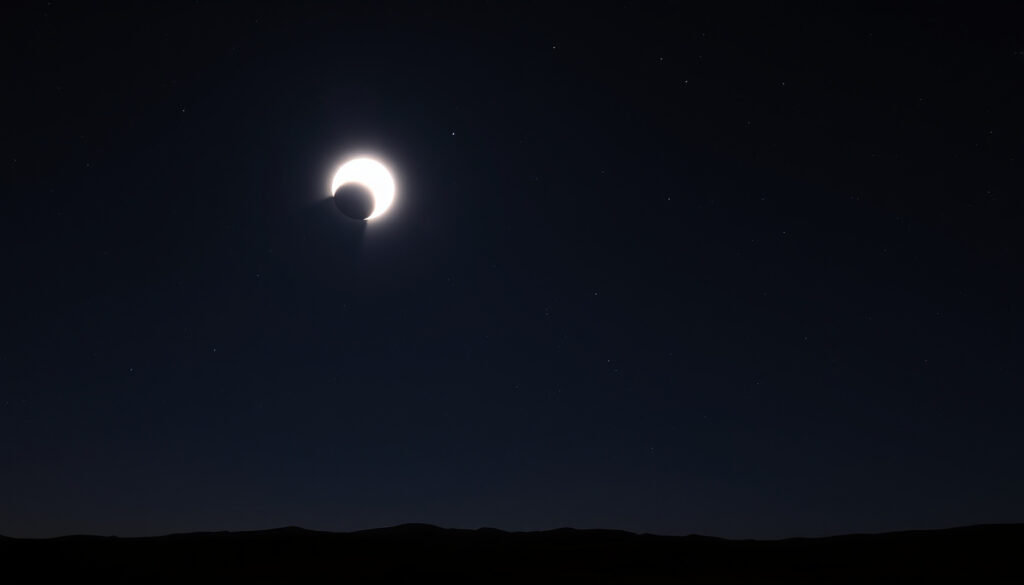
Lunar Eclipse NZ Today: No Eclipse Tonight? Full Timeline Inside
If you searched for “lunar eclipse NZ today,” tonight’s sky has a surprise: there is no lunar eclipse visible from New Zealand on October 15, 2026 — the Moon is a waxing crescent, and a lunar eclipse only occurs at full Moon. This guide explains what’s actually in the sky, why the March 2026 event was New Zealand’s most recent blood moon, and every eclipse Kiwis can realistically see before 2029.
Eclipse in NZ tonight: None (timeanddate.com) · Tonight’s Moon phase: Waxing crescent (timeanddate.com) · March 2026 totality began: 12:04am NZ time (timeanddate.com) · Total phase lasted: 58 minutes (NASA Goddard Space Flight Center) · Next total lunar eclipse in NZ: December 31, 2028 (timeanddate.com)
Quick snapshot
- No lunar eclipse is listed for New Zealand on October 15, 2026 (timeanddate.com (NZ Moon phase page))
- A lunar eclipse only occurs at full Moon; tonight’s Moon is a waxing crescent (NASA Science (lunar eclipse explainer))
- The most recent total lunar eclipse visible from New Zealand was March 3–4, 2026 (NASA Goddard Space Flight Center (lunar eclipse catalog))
- No working “lunar eclipse NZ today” live stream appeared in the sources we checked (NASA (future eclipses calendar))
- Tonight’s cloud cover and city-by-city viewing conditions across New Zealand are not covered in the source data (NASA (future eclipses calendar))
- Local details of the February 17, 2026 annular eclipse as seen from southern New Zealand are not confirmed in available records (NASA (future eclipses calendar))
- March 3–4, 2026: total lunar eclipse visible in New Zealand; totality ran about 58 minutes
- August 28, 2026: partial lunar eclipse — not visible from New Zealand
- The pattern to watch: after 2026, New Zealand’s visible events cluster in 2027–2028, ending with a total lunar eclipse on December 31, 2028
- August 17, 2027 — penumbral lunar eclipse visible from Auckland (timeanddate.com (Auckland Moon phases))
- July 6, 2028 — partial lunar eclipse visible from Auckland (timeanddate.com (Auckland Moon phases))
- July 22, 2028 — partial solar eclipse, and December 31, 2028 — total lunar eclipse, both visible from New Zealand (timeanddate.com (Auckland Moon phases))
Twelve facts, one pattern: every confirmed eclipse date on this list is either already behind New Zealand or still more than a year away — none of them falls on October 15, 2026.
| Fact | Value |
|---|---|
| Eclipse tonight (October 15, 2026) | None (timeanddate.com) |
| Tonight’s Moon phase | Waxing crescent (timeanddate.com) |
| March 3–4, 2026: totality began | 12:04am NZ time (timeanddate.com) |
| March 3–4, 2026: maximum eclipse | 12:30am NZ time (timeanddate.com) |
| March 3–4, 2026: totality ended | 1:02am NZ time (timeanddate.com) |
| Total phase duration | About 58 minutes (NASA Goddard Space Flight Center) |
| Umbral magnitude | 1.151 (NASA Goddard Space Flight Center) |
| Saros series | 133 (NASA Goddard Space Flight Center) |
| Previous blood moon visible from NZ | September 7–8, 2025 (timeanddate.com) |
| Most recent NZ-visible total lunar eclipse | March 3–4, 2026 (timeanddate.com) |
| Next partial solar eclipse in NZ | July 22, 2028 (timeanddate.com) |
| Next total lunar eclipse in NZ | December 31, 2028 (timeanddate.com) |
What time is the eclipse visible in New Zealand?
The short answer for tonight: it isn’t. If you came here from a headline promising a blood moon over New Zealand, the timeline needs a reality check — and the local viewing data for tonight is clear.
What time is the eclipse in NZ tonight?
There is no lunar eclipse visible from New Zealand tonight. On October 15, 2026, the Moon is a waxing crescent over the country — and a lunar eclipse only happens at full Moon (timeanddate.com).
The geometry is the proof: at waxing crescent, the Moon sits roughly in the Sun’s direction, so Earth’s shadow points away from it. At full Moon, Earth is between the Sun and the Moon, and the shadow can land squarely on the lunar surface (NASA Science). Auckland’s own Moon-phase listing for October 15, 2026 also reads “waxing crescent,” which rules out an eclipse that night, and Lake Tekapo — one of the country’s best-known stargazing spots — shows no eclipse on its local page either (timeanddate.com).
What is the exact local eclipse timeline for New Zealand?
- 12:04am — totality begins, New Zealand local time (timeanddate.com (North Island eclipse listing))
- 12:30am — maximum eclipse (timeanddate.com)
- 1:02am — totality ends (timeanddate.com)
- 58 minutes — total duration of totality (NASA Goddard Space Flight Center)
How to check whether an eclipse will be visible from New Zealand
- Check the Moon phase for your city — a lunar eclipse can only occur at full Moon.
- Compare the date against NASA’s lunar eclipse catalog — if no event is listed, no eclipse is scheduled.
- Use the local New Zealand times from the eclipse listing, including any daylight-saving adjustment.
- Check local cloud cover before planning a viewing — the Moon must be above the horizon and skies clear.
Those are the local New Zealand times for the total lunar eclipse of March 3–4, 2026 — the most recent total lunar eclipse visible from this country. NASA’s catalog dates the event as March 3; in New Zealand, the eclipse played out in the early hours of March 4 local time (NASA Goddard Space Flight Center).
NASA’s 2026 listing shows no lunar eclipse around October 15. The next lunar eclipse after March is a partial one on August 28, 2026, and its visibility region covers the eastern Pacific, the Americas, Europe and Africa — not New Zealand (NASA Goddard Space Flight Center). Search results that promise a blood moon “tonight” are recycling the March timeline.
The implication: whenever a page says “lunar eclipse NZ today,” check the Moon phase before planning a viewing. Tonight the Moon is crescent, no eclipse is listed, and the actual events are all on other dates.
When was the last blood moon?
The most recent total lunar eclipse visible from New Zealand was March 3–4, 2026 (NASA Goddard Space Flight Center). Before that, the last blood moon New Zealanders could see was September 7–8, 2025 (timeanddate.com).
What is a lunar eclipse?
- Earth is positioned between the Sun and the Moon (NASA Science)
- Earth’s shadow falls on the Moon’s surface (NASA Science)
- The alignment can only occur at full Moon (NASA Science)
A lunar eclipse is not a filter or a trick of light in the atmosphere; it is the Moon physically travelling through Earth’s shadow in space. The Moon passes through Earth’s central shadow during totality, which is why the whole disc darkens rather than just a sliver (NASA Science).
What causes a blood moon?
The red colour is a filtered-sunlight effect: blue light scatters in Earth’s atmosphere, while red light bends around the planet and lands on the Moon (NASA Science). That’s the entire “blood moon” story.
During the March 2026 eclipse, the Moon sat deep inside Earth’s shadow — the event reached an umbral magnitude of 1.151 and belonged to Saros series 133 (NASA Goddard Space Flight Center). Totality lasted about 58 minutes, from 12:04am to 1:02am New Zealand time, with maximum at 12:30am (timeanddate.com).
Why this matters: “Blood moon” is the public name for a total lunar eclipse, not a separate phenomenon. A partial eclipse — like the August 28, 2026 event — does not produce the same full red disc (NASA Goddard Space Flight Center).
What happens on February 17, 2026?
That date is already history, and it was never a blood moon for New Zealand. February 17, 2026 was the date of a solar eclipse — specifically an annular solar eclipse, rather than a total one (NASA future eclipses calendar).
What time will the solar eclipse on February 17, 2026 be visible?
New Zealand was not in the path of annularity. The Moon covered the Sun’s centre, leaving a bright ring — but no New Zealand city was positioned to see it (NASA future eclipses calendar).
In astronomical terms, the event was a partial solar eclipse from New Zealand at best, and the available source data does not confirm how much was visible from southern cities. The next solar eclipse of 2026 — a total one on August 12 — also took place outside New Zealand, so there was no local totality in 2026 (NASA future eclipses calendar).
Why is February 17 so special?
- It was the first solar eclipse of 2026 (NASA future eclipses calendar)
- It was annular, not total — a “ring of fire” event, not a dark sky
- For New Zealand, it was a travel story, not a local sky event
The date still draws searches because global headlines called it a major eclipse. The detail New Zealanders need is the path: a ring of fire is a regional event, and this one missed New Zealand entirely.
The trade-off: 2026 gives eclipse travellers two headline dates — February 17 and August 12 — but New Zealand’s home-viewing calendar stays quiet until 2027.
Where to see solar eclipse 2026?
If you wanted to see a total solar eclipse in 2026, the destination list sat entirely outside New Zealand. The year’s two solar eclipses — February 17 (annular) and August 12 (total) — both missed local skies (NASA future eclipses calendar).
What time will the total solar eclipse start in 2026?
- August 12, 2026 — the year’s total solar eclipse (NASA future eclipses calendar)
- Not visible from New Zealand — no local totality occurred
- New Zealand’s next partial solar eclipse: July 22, 2028 (timeanddate.com)
Because the path of totality misses New Zealand, there is no useful local start time for August 12. The last solar eclipse New Zealanders watched from home was the partial event of September 21–22, 2025, visible from about 6am to 8am, with maximum near 7am (timeanddate.com). Stardome, Auckland’s observatory, used that roughly 7am peak to guide early-morning viewers across the country.
Where is the 2026 total solar eclipse visible?
Every major 2026 eclipse — February’s annular and August’s total — falls on the other side of the planet from New Zealand. The local eclipse calendar resumes in August 2027 (timeanddate.com).
That geographic gap explains why “solar eclipse 2026 New Zealand” searches surface travel guides rather than local viewing times. For sky-watchers here, 2028 is the year to save: July 22, 2028 brings a partial solar eclipse visible from New Zealand (timeanddate.com).
The implication: if you missed the September 2025 partial solar eclipse, the next solar event visible from New Zealand is July 22, 2028 — a three-year gap with no home-viewing solar moments in between.
What will happen on July 22, 2028?
July 22, 2028 is a partial solar eclipse for New Zealand, and it arrives in the middle of a strong run of visible lunar events that starts a year earlier (timeanddate.com).
What are the next eclipses visible from New Zealand?
- August 17, 2027 — penumbral lunar eclipse, visible from Auckland (timeanddate.com)
- July 6, 2028 — partial lunar eclipse, visible from Auckland (timeanddate.com)
- July 22, 2028 — partial solar eclipse, visible from New Zealand (timeanddate.com)
- December 31, 2028 — total lunar eclipse, visible from New Zealand (timeanddate.com)
That sequence means the wait after tonight is shorter than it looks: a subtle penumbral event in 2027, then three visible events inside six months in 2028.
When is the next total lunar eclipse in New Zealand?
December 31, 2028: a New Year’s Eve total lunar eclipse — the next genuine blood moon visible from New Zealand (timeanddate.com).
Between now and then, the August 28, 2026 partial lunar eclipse passes New Zealand by, and no total lunar eclipse is visible from the country in 2027 (NASA Goddard Space Flight Center). The New Year’s Eve 2028 event is the one to put in the calendar.
The pattern: New Zealand’s eclipse rhythm moves from “nothing visible for years” to a fast 2028 — and the next total lunar eclipse lands on a date that is easy to remember.
New Zealand eclipse timeline, 2025–2028
Eleven entries, one pattern: after tonight, New Zealand’s next visible eclipse is August 17, 2027 — then the pace speeds up sharply in 2028.
| Date | Event | Visible from New Zealand? | Reference |
|---|---|---|---|
| September 7–8, 2025 | Total lunar eclipse (blood moon) | Yes | timeanddate.com |
| September 21–22, 2025 | Partial solar eclipse | Yes — maximum near 7am | timeanddate.com |
| February 17, 2026 | Annular solar eclipse | No — outside the annular path | NASA |
| March 3–4, 2026 | Total lunar eclipse | Yes — totality 12:04am–1:02am | timeanddate.com |
| August 12, 2026 | Total solar eclipse | No | NASA |
| August 28, 2026 | Partial lunar eclipse | No | NASA Goddard Space Flight Center |
| October 15, 2026 | No eclipse — waxing crescent Moon | N/A | timeanddate.com |
| August 17, 2027 | Penumbral lunar eclipse | Yes — Auckland | timeanddate.com |
| July 6, 2028 | Partial lunar eclipse | Yes — Auckland | timeanddate.com |
| July 22, 2028 | Partial solar eclipse | Yes | timeanddate.com |
| December 31, 2028 | Total lunar eclipse (blood moon) | Yes | timeanddate.com |
The pattern is plain: 2026 is a gap year for New Zealand viewers, 2027 offers a faint penumbral eclipse, and 2028 ends with three visible events in six months, capped by a total lunar eclipse on New Year’s Eve.
What’s confirmed, what’s not
Confirmed facts
- No lunar eclipse is listed for New Zealand on October 15, 2026 (timeanddate.com)
- The Moon tonight is a waxing crescent, not a full Moon (timeanddate.com)
- The total lunar eclipse of March 3–4, 2026 was visible from New Zealand, with totality of about 58 minutes (NASA Goddard Space Flight Center)
- Auckland’s next total lunar eclipse is December 31, 2028 (timeanddate.com)
What’s unclear
- Whether any “lunar eclipse NZ today” live stream is genuinely running — no active feed appeared in the sources we checked
- Tonight’s cloud cover and city-by-city viewing conditions across New Zealand — not covered in the source data
- Local details of the February 17, 2026 annular eclipse from southern New Zealand — unconfirmed in available records (NASA)
- Lake Tekapo’s Moon-phase listing for October 15, 2026 also shows no eclipse, though the source’s matching confidence is lower than the national listings
What this means: the one claim that fails every check is “blood moon tonight.” The Moon is a crescent, no eclipse is listed, and the next total lunar eclipse visible from New Zealand is more than two years away.
What the experts say
“Totality begins at 12:04am, maximum eclipse is at 12:30am, and totality ends by 1:02am.”
— Aoraki, cited in Stuff (NZ news outlet); times cross-checked with timeanddate.com
“The maximum of the September 2025 partial solar eclipse was around 7am for New Zealand viewers.”
— Stardome (Auckland’s observatory), via NZ Herald; window cross-checked with timeanddate.com
“The August 28, 2026 eclipse is partial, not total, so it should not be described as a total blood moon.”
— NASA Goddard Space Flight Center (lunar eclipse catalog)
“Auckland’s next total lunar eclipse falls on December 31, 2028, with a partial lunar eclipse on July 6 and a partial solar eclipse on July 22 the same year.”
— timeanddate.com (Auckland Moon phases)
The takeaway: the people who track eclipses are describing the same calendar — nothing for New Zealand tonight, a quiet 2027, and a total lunar eclipse on December 31, 2028.
The upshot: tonight’s sky is quiet — no lunar eclipse, no blood moon, just a waxing crescent over New Zealand on October 15, 2026. The next total lunar eclipse visible from this country is December 31, 2028. For New Zealand sky-watchers, the decision is clear: treat tonight as an ordinary crescent night and put December 31, 2028 in the calendar now — or you’ll be searching “lunar eclipse NZ today” again in two years, on the wrong date.
Related reading
science.nasa.gov, timeanddate.com, eclipse.gsfc.nasa.gov, timeanddate.com
Frequently asked questions
Why does the Moon look red during a total lunar eclipse?
During totality, Earth blocks direct sunlight, but some sunlight bends through Earth’s atmosphere. Blue light scatters away, and red light reaches the Moon, giving it a copper-red glow (NASA Science).
Is it safe to watch a lunar eclipse without a telescope?
Yes. A lunar eclipse is safe to watch with the naked eye because you are looking at the Moon, not directly at the Sun. No eclipse glasses are needed for the Moon’s red phase (NASA Science).
How long does the total phase of a lunar eclipse last?
In the March 3–4, 2026 total lunar eclipse visible from New Zealand, totality lasted about 58 minutes — from 12:04am to 1:02am local time (NASA Goddard Space Flight Center; timeanddate.com). Durations vary from eclipse to eclipse.
How often do lunar eclipses happen?
Several lunar eclipses occur each year globally, but not every event is visible from New Zealand. In 2026, NASA lists a total lunar eclipse in March and a partial one on August 28 — only the March event was visible from New Zealand (NASA).
What is the difference between a penumbral and a partial lunar eclipse?
A penumbral eclipse is a subtle dimming as the Moon crosses Earth’s faint outer shadow. A partial eclipse is more obvious because part of the Moon enters the dark inner shadow. Auckland sees a penumbral eclipse on August 17, 2027 and a partial eclipse on July 6, 2028 (timeanddate.com).
Can you see a lunar eclipse from any city in New Zealand?
Yes — when the eclipse falls during New Zealand night hours and skies are clear, the Moon is above the horizon across the country. The March 3–4, 2026 total lunar eclipse was listed as visible from the North Island (timeanddate.com). Cloud cover is the main variable.
More related posts
 New Zealand Sea Lion Guide: Facts, Habitat, Safety
 Mary-Louise Parker – Career Net Worth Family 2025
 Victory Metals Share Price (ASX:VTM): Forecast & Risks
 Aura Farming Boat Kid: Who Is He and What Is the Meme
 Eight Restaurant at Cordis Auckland Menu: Prices & Hours
 The Quick and the Dead – Meaning, Origin and History
 Big Bang Theory Cast: Actors, Characters & Rumors
 Citadines Walker North Sydney: 88 Walker St Review & Price
