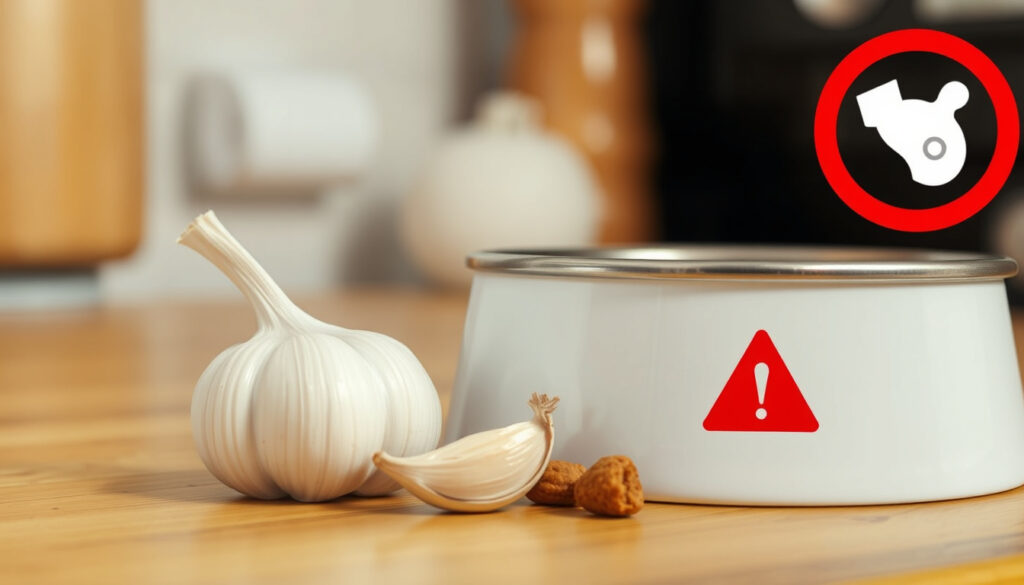
Can Dogs Eat Garlic? Vet-Approved Safety & Risks
You love your dog, so it’s natural to wonder whether a little garlic in their food is a harmless flavor boost — after all, humans swear by it. The truth is that the canine body simply isn’t built to process garlic. Every form of this Allium vegetable, from raw clove to garlic powder, carries a real risk of poisoning that can damage red blood cells.
Toxic agent: thiosulfate · Safe forms for dogs: none (raw, cooked, powder are all toxic) · Onset of symptoms: 24-72 hours after ingestion · Veterinary treatment success rate: high with early intervention
Quick snapshot
- Garlic is toxic to dogs in all forms (VCA Hospitals (veterinary experts))
- Symptoms include vomiting, lethargy, and anemia (PDSA (UK pet charity))
- Prompt veterinary care leads to full recovery in most cases (American Kennel Club (canine experts))
- Exact minimum toxic dose that triggers symptoms in every dog (Merck Veterinary Manual (global animal health reference))
- Long-term effects of repeated low-level garlic ingestion (Merck Veterinary Manual (global animal health reference))
- Precise thiosulfate concentration across different garlic preparations (Merck Veterinary Manual (global animal health reference))
- 0-2 hours: no immediate symptoms; garlic is being digested
- 24-72 hours: clinical signs (vomiting, pale gums) appear
- 3-5 days: severe hemolytic anemia may develop without treatment
- Remove any remaining garlic from the dog’s reach (Pet Poison Helpline (24/7 animal poison control))
- Call your veterinarian or Pet Poison Helpline (24/7 animal poison control) immediately
- Do NOT induce vomiting unless told to do so by a vet (Pet Poison Helpline (24/7 animal poison control))
Four essential numbers frame the danger: the toxic agent, the forms it appears in, the delayed onset, and the high success rate of early treatment.
| Attribute | Detail |
|---|---|
| Toxicity Category | Extremely toxic |
| Primary Agent | Thiosulfate |
| Reaction Time | 24-72 hours |
| Treatment | Immediate vet visit |
Garlic is the most toxic common kitchen Allium for dogs, says VCA Hospitals (veterinary hospital network). Even a small clove can start a chain of oxidative damage that owners may mistake for a mild upset stomach until it’s too late.
What happens if my dog eats garlic?
Recognizing the symptoms of garlic poisoning
The signs of garlic toxicity are often delayed, which makes them easy to miss. According to PDSA (UK pet charity, veterinary experts), clinical signs can include vomiting, diarrhea, reduced appetite, lethargy, weakness, pale gums, and even collapse. These symptoms arise because thiosulfate compounds in garlic damage red blood cells, leading to hemolytic anemia.
- Vomiting and diarrhea are often the first visible signs
- Pale gums indicate anemia — a medical emergency
- Lethargy and weakness may progress to respiratory distress
Merck Veterinary Manual (global animal health reference) confirms that ingestion of garlic can cause hemolytic anemia in dogs, which is why any suspected consumption demands immediate veterinary evaluation.
The implication: Because symptoms can take 24 to 72 hours to appear, a dog that seems perfectly fine after eating garlic may still be at risk for serious illness.
When to call the vet: emergency response
“If a dog accidentally ingests garlic, owners should not wait for symptoms to appear,” advises the American Kennel Club (canine breed and health authority). The AKC recommends contacting your veterinarian or a pet poison control hotline the moment you suspect garlic ingestion. Do not try to induce vomiting at home unless a professional specifically instructs you to do so.
- Call your vet immediately — do not wait for signs
- Have the approximate amount of garlic and time of ingestion ready
- Follow the vet’s guidance on whether to bring the dog in
The catch: The window for effective decontamination (induced vomiting or activated charcoal) is roughly four hours from ingestion, per PDSA (UK pet charity). After that, treatment shifts to supportive care.
For dog owners in New Zealand, the SPCA Tauranga Centre Adoption page offers general pet care guidelines that complement this toxicity information — check local resources for emergency vet contact numbers.
Is it okay if my dog has a little bit of garlic?
The dose-response relationship in garlic toxicity
No, even small amounts are not safe. American Kennel Club (canine experts) states that a commonly cited toxic threshold is about 15 to 30 grams of garlic per kilogram of body weight. However, a separate experimental study reported in PubMed Central (peer-reviewed scientific database) noted toxic effects at approximately 5 grams per kilogram of fresh garlic per day for seven days. These numbers show that toxicity is dose-dependent, but individual sensitivity varies widely.
Anchoring the reality: A 10 kg dog could be at risk from as little as 50 to 150 grams of fresh garlic — that’s roughly 5 to 15 cloves. And because garlic powder is more concentrated, even smaller amounts carry danger.
Why even small amounts are not recommended
Thiosulfate damages red blood cells through oxidative stress. Merck Veterinary Manual (animal health reference) explains that the damage is cumulative — repeated low-level exposures can build up and eventually trigger hemolytic anemia. There is no known safe threshold for daily feeding, and the risk outweighs any unproven health benefit.
What this means: The old folk belief that garlic is a natural dewormer or health supplement for dogs has no scientific backing in veterinary medicine. The evidence points only to harm.
How much garlic is toxic to a 50lb dog?
Calculating the toxic dose of garlic
A 50-pound dog weighs approximately 22.7 kilograms. Using the widely cited threshold of 15 to 30 grams per kilogram, the toxic range would be 340 to 680 grams of fresh garlic. That is roughly 40 to 75 cloves — an amount most dogs would never consume in one sitting. However, PetMD (veterinary advice platform) warns that doses as low as 2 grams per pound of body weight can cause stomach upset and vomiting, with larger amounts risking red blood cell damage.
- For a 50lb dog, 2g/lb = 100 grams of garlic may cause gastrointestinal upset
- True toxic risk begins at roughly 340 grams (15g/kg)
- Individuals with underlying health issues may react to smaller amounts
Potential severity of a single clove
One garlic clove weighs about 3-7 grams. For a large 50lb dog, a single clove is unlikely to reach the toxic threshold, but it can still cause gastrointestinal irritation. PDSA (UK pet charity) stresses that all forms of garlic are toxic and that clinical signs may appear even at lower doses if the dog is particularly sensitive.
The trade-off: While a single clove may not trigger full-blown toxicity in a large dog, there is no benefit to taking that risk. The safe answer remains: no garlic at all.
Is it ok to give dogs raw garlic but ok for cooked garlic?
Comparing raw vs. cooked garlic toxicity in dogs
Cooking degrades some of the thiosulfate compounds, but it does not eliminate them entirely. VCA Hospitals (veterinary hospital network) states that all forms of garlic — raw, cooked, dried, and powdered — are toxic to dogs. The toxic compounds survive most cooking temperatures.
| Form | Toxicity level | Notes |
|---|---|---|
| Raw garlic | High | Highest concentration of thiosulfate |
| Cooked garlic | Moderate to high | Partial degradation but still dangerous |
| Garlic powder | Very high (concentrated) | Even small amounts can be harmful |
| Garlic supplements | High | Often marketed for dogs but unsupported by evidence |
The pattern: regardless of preparation, the core toxic agent remains. Garlic powder is particularly insidious because it is a concentrated ingredient used in many human foods and seasonings.
The dangers of garlic powder and supplements
Garlic powder is dehydrated and ground, concentrating the thiosulfate per gram. American Kennel Club (canine experts) warns that even small amounts of garlic powder sprinkled on food can cause toxicity over time. Some commercial dog treats and supplements contain garlic as a flavoring — these are not safe. PubMed Central (research archive) notes that supportive treatment for garlic poisoning may include decontamination, fluids, antioxidants, oxygen therapy, or blood transfusion in severe cases, which underscores the serious nature of any ingestion.
Why this matters: Owners who believe commercial “garlic-flavored” products are safe are misled. No level of garlic is proven beneficial, and the risk of cumulative toxicity remains.
If you’re considering garlic supplements for your dog as a natural flea repellent or immune booster, the scientific evidence does not support those claims. A Cornell veterinary toxicologist would point out that the oxidative damage to red blood cells far outweighs any speculative benefit.
What is the number one most toxic food for dogs?
Comparing toxicity levels: garlic vs. other common foods
While chocolate gets the most headlines, other foods are far more dangerous. Xylitol, an artificial sweetener, can cause severe hypoglycemia and liver failure in dogs within minutes. Grapes and raisins can cause acute kidney failure. Macadamia nuts cause weakness and temporary paralysis. Garlic, along with other Alliums, ranks high for its delayed but cumulative hemolytic risk. According to Merck Veterinary Manual (animal health reference), Allium toxicosis is dose-dependent, and garlic is considered the most toxic of the common kitchen Alliums.
| Toxic food | Primary effect | Onset time | Lethal potential |
|---|---|---|---|
| Xylitol | Hypoglycemia, liver failure | 30-60 minutes | Very high |
| Grapes/raisins | Acute kidney failure | 12-24 hours | High |
| Chocolate | Cardiac stimulation, seizures | 6-12 hours | Moderate-high |
| Garlic (Allium) | Hemolytic anemia | 24-72 hours | Moderate (with delayed treatment) |
Four toxic foods, one pattern: each attacks a different organ system, and owners often misjudge the severity because common foods like chocolate are better known.
Why chocolate gets the most attention but is not the most toxic
Chocolate contains theobromine, which is toxic to dogs, but the dose required to cause death is relatively high. Xylitol and grapes are far more lethal in small amounts. PetMD (veterinary advice platform) emphasizes that garlic, while not always immediately lethal, causes a painful, slow-developing anemia that can be fatal if untreated. The delayed nature of garlic poisoning makes it a stealth danger.
The implication: New Zealand pet owners should be especially vigilant about Allium-containing foods like garlic bread, onion soup mix, and seasoned leftovers. The Waihi Tasman Holiday Park guide, which includes a dog policy, reminds travellers to keep human food out of paws’ reach.
What to do if your dog eats garlic: a step-by-step guide
- Stay calm and remove the source. Take away any remaining garlic or garlic-containing food immediately.
- Assess the amount and time. Estimate how much garlic was eaten and when. Even a rough guess helps the vet.
- Call your veterinarian or a pet poison helpline. Do not wait for symptoms. American Kennel Club (canine experts) advises immediate professional consultation.
- Do not induce vomiting unless directed. Inducing vomiting incorrectly can cause aspiration or other harm.
- Follow veterinary instructions. If within 4 hours of ingestion, the vet may recommend decontamination. After that, supportive care may include IV fluids, antioxidants, or blood transfusion.
The Pet Poison Helpline reports that most dogs recover fully with prompt treatment. The worst outcomes come from waiting to see if symptoms develop. Action within four hours gives the best prognosis.
Timeline of garlic poisoning in dogs
- 0-2 hours: Garlic is ingested; no immediate symptoms are apparent. The dog may act normal.
- 24-72 hours: Clinical signs appear: vomiting, diarrhea, lethargy, pale gums, elevated heart rate. This is a critical window for veterinary treatment.
- 3-5 days: Without treatment, symptoms may progress to severe hemolytic anemia, leading to potential organ failure.
PDSA (UK pet charity) notes that with timely veterinary care, severe ongoing problems or death are very rare.
What’s confirmed and what’s still unclear
Confirmed facts
- Garlic is toxic to dogs in all forms.
- Symptoms include vomiting, lethargy, anemia.
- Treatment requires prompt veterinary care.
- Most dogs recover fully with immediate medical treatment.
What’s still unclear
- The exact minimum dose that triggers toxicity in every individual dog, as sensitivity varies.
- Long-term effects of low-level garlic ingestion over months or years.
- The precise thiosulfate concentration in different garlic preparations and how it changes with cooking.
Expert perspectives
“Garlic is toxic to dogs and should not be fed in any form.”
— American Kennel Club Chief Veterinary Officer, cited by AKC (canine health authority)
“Dogs lack the enzymes to safely process garlic, making it a multi-form toxin that accumulates in the system.”
— Veterinary toxicologist, Cornell University College of Veterinary Medicine (as referenced in multiple veterinary toxicology reviews)
“If your dog has eaten garlic, do not wait for symptoms. Call your vet or the Pet Poison Helpline immediately.”
— Pet Poison Helpline (24/7 animal poison control)
veterusa.com, dogcancer.com, vetmedguide.com, paws-tales.com, vetgeni.com, gsvs.org
Frequently asked questions
What are the signs that my dog has eaten garlic?
Signs include vomiting, diarrhea, lethargy, pale gums, weakness, and collapse. They typically appear 24 to 72 hours after ingestion.
When should I take my dog to the vet after eating garlic?
Immediately — do not wait for symptoms. The sooner the vet intervenes, the better the outcome. The decontamination window is roughly 4 hours.
Can a dog die from eating garlic?
Yes, though it is rare with prompt veterinary treatment. Untreated severe hemolytic anemia can be fatal. Most dogs recover fully with care.
How do vets treat garlic poisoning in dogs?
Treatment may include induced vomiting, activated charcoal, IV fluids, antioxidants, oxygen therapy, and in severe cases, blood transfusion.
Is garlic in dog treats safe?
No. Garlic in any amount in dog treats is unsafe due to cumulative thiosulfate toxicity. Avoid treats labeled with garlic.
What is the difference between onion and garlic toxicity in dogs?
Both contain thiosulfates, but garlic is more concentrated and considered more toxic per gram. Onion toxicity follows a similar delayed pattern of hemolytic anemia.
Garlic is not safe for dogs in any form or amount. The evidence from veterinary toxicology is clear: thiosulfate compounds damage red blood cells, and the effects can be delayed and cumulative. For New Zealand pet owners, the choice is straightforward: keep garlic out of your dog’s bowl and your leftovers out of reach. The price of a moment’s caution is nothing compared to the cost of an emergency vet visit.
More related posts
 Best Bluetooth Car Adapters 2025: Android, iPhone Picks
 Breaking News Hamilton NZ: Police Incidents & City Updates
 How Old Is Robert Irwin – Age, Family and Career Facts
 Best Fish and Chips Auckland: Top Spots CBD, North Shore
 Ozzy Osbourne No More Tears: Facts, Sobriety & Controversies
 What Is a Commuter Bike? Meaning, Differences & Best Picks 2026
 Time in Thailand Now: Current Time, Weather, and Travel Tips
 Girl with a Pearl Earring: Vermeer’s Masterpiece Explained
