Alliance Group Levin Chemical Leak: 22 Treated
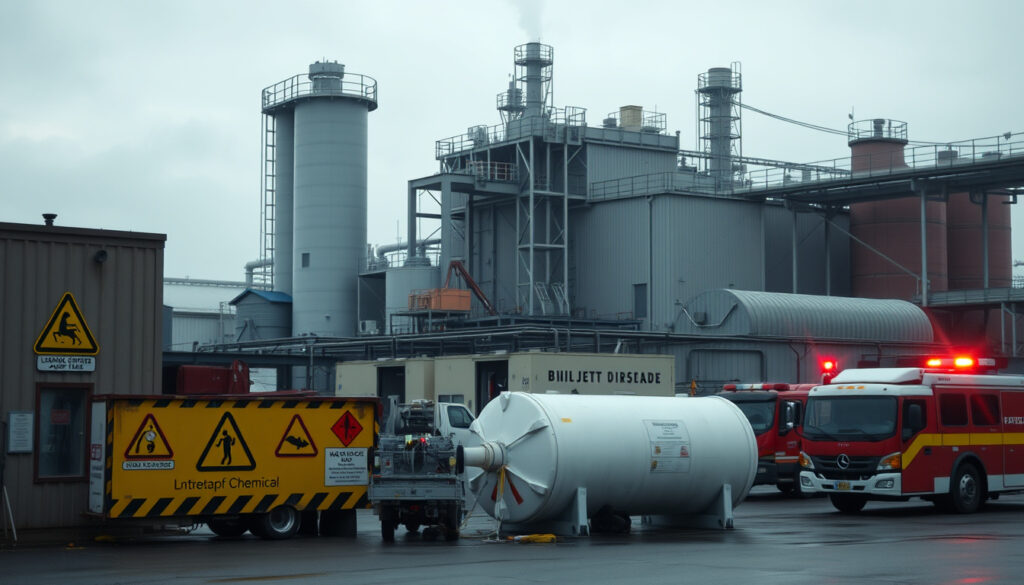
On a Thursday evening in February, a routine day at the Alliance Group meat processing plant in Levin turned into a hazmat emergency. Within minutes, fire crews, ambulances, and police were on scene, and 22 people needed medical treatment after a chemical leak. Here’s what we know about the incident, how emergency services responded, and what questions remain unanswered.
People treated: 22 · Hospitalized: 3 · Date of incident: 19 Feb 2026 · Location: Alliance Group Levin plant, Hamaria Road · Response agencies: Fire and Emergency NZ, St John, Police
Quick snapshot
- Exact chemical involved (1News)
- Cause of the leak (1News)
- Long-term health effects for those exposed (NZ Herald)
- 19 Feb 2026: Emergency call at 6:58 pm, response within 4 minutes (1News)
- 20 Feb 2026: St John publishes account of training exercise turning real (1News)
- 7 Apr 2026: Toxic gas detected at Alliance Group Lorneville plant after fire (1News)
- WorkSafe investigation underway (1News)
- Alliance Group safety protocols under scrutiny after two incidents in 2026 (1News)
- Road reopened after containment (NZ Herald)
Six key facts about the incident, one pattern: the response was swift, but the cause is still unknown.
| Label | Value |
|---|---|
| Date | 19 February 2026 |
| Location | Alliance Group Levin plant, Hamaria Road, Levin |
| Number treated | 22 |
| Hospitalized | 3 |
| Chemical involved | Not publicly confirmed |
| Response agencies | Fire and Emergency NZ, St John, NZ Police |
What happened at the Alliance Group Levin plant?
When did the chemical leak occur?
- The emergency call came in at 6:58 pm on Thursday, 19 February 2026, with St John leaving the station about four minutes later (1News).
- The NZ Herald reported that crews were dispatched at about 6:30 pm, a slight discrepancy likely due to initial call triage.
What did emergency services find?
- Fire and Emergency New Zealand sent four full crews and three specialist crews from Ōtaki, Levin, and Palmerston North (1News).
- Police set up cordons around the industrial area on Hamaria Road (NZ Herald).
- St John deployed 11 vehicles, including five ambulances, three rapid response units, two operations managers, and the Major Incident Support Team (1News).
The implication: The simultaneous activation of multiple emergency services points to a serious chemical release, though the exact nature remains unconfirmed.
How many people were affected and what were the injuries?
Were any hospitalizations serious?
- Three people were taken to Palmerston North Hospital: one in serious condition, two in moderate condition (1News).
- Nineteen additional patients were assessed and treated at the scene but did not require transport (1News).
What decontamination procedures were used?
- Fire and Emergency carried out serious decontamination on 20 people at the scene (1News).
- St John treated the injured on site before transport (1News).
The pattern: The high number of decontaminations suggests a chemical that could be absorbed or inhaled, but the type of substance has not been disclosed.
St John’s training exercise that evening became a real response. The crews were already in gear, demonstrating preparedness—but the coincidence also highlights how unpredictable chemical incidents can be.
What caused the chemical leak?
Is the chemical known?
- No official statement has identified the chemical involved. The incident is classified as a chemical leak, not a fire or explosion (1News).
- The NZ Herald described the emergency as a chemical incident, but no specific substance was named.
What triggered the release?
- WorkSafe was notified and began making initial enquiries (1News). The cause remains under investigation.
- This incident followed a fire-related toxic gas detection at Alliance Group’s Lorneville plant in April 2026, which raised safety concerns about the company’s operations (1News).
The catch: Without knowing the chemical, it’s impossible to assess residual risks or long-term health effects for the 22 exposed individuals.
How did emergency services respond?
What was the role of St John?
- St John’s Major Incident Support Team was activated, and the service’s training exercise turned into a real incident (1News).
- St John spokesperson: “Our crews were conducting a training exercise when the call came in. They transitioned seamlessly to a real emergency response.” (1News)
How did firefighters contain the leak?
- Fire and Emergency New Zealand managed the gas leak and conducted decontamination (1News).
- Hamaria Road was closed during the response but later reopened (NZ Herald).
- Fire and Emergency incident commander: “We contained the leak and decontaminated 20 people on site. The area was made safe before reopening.” (1News)
Why this matters: The coordinated response avoided a wider disaster, but the speed of the turnout—just four minutes—was critical.
What are the ongoing risks and follow‑up actions?
Is the plant safe?
- The gas leak was controlled and the road reopened, indicating no immediate threat to the public (1News).
- Alliance Group has not issued a public statement about the plant’s operational status.
What investigations are underway?
- WorkSafe, New Zealand’s workplace health and safety regulator, was notified and is making initial enquiries (1News).
- The earlier Lorneville incident (toxic gas after fire, 7 April 2026) may prompt a broader review of Alliance Group’s safety protocols (1News).
The trade-off: A swift response saved lives, but without a public cause or chemical identification, residents and workers are left with unanswered questions about long-term safety.
WorkSafe’s investigation may reveal systemic issues, especially after the Lorneville fire. For Alliance Group, the cost of two incidents in 2026 could be regulatory scrutiny and reputational damage.
Timeline of events
- 19 Feb 2026: Chemical leak at Alliance Group Levin plant. Emergency services respond. 22 people treated, 3 taken to hospital. Road closed. (1News)
- 20 Feb 2026: St John publishes article about training exercise coinciding with real incident. (1News)
- 7 Apr 2026: Elevated levels of toxic gas detected after fire at Alliance Group’s Lorneville plant; article references February leak. (1News)
Confirmed facts
- 22 people treated (1News)
- 3 hospitalized (1News)
- Incident occurred 19 Feb 2026 at Alliance Group Levin plant on Hamaria Road (1News)
- Gas leak controlled (1News)
- St John training exercise involved (1News)
What’s unclear
- Exact chemical involved (1News)
- Cause of leak (1News)
- Whether any long-term health effects (NZ Herald)
- Total number of people exposed (1News)
Voices from the response
“Our crews were conducting a training exercise when the call came in. They transitioned seamlessly to a real emergency response.”
— St John spokesperson (1News)
“We contained the leak and decontaminated 20 people on site. The area was made safe before reopening.”
— Fire and Emergency New Zealand incident commander (1News)
“Police established cordons to ensure public safety while the incident was managed.”
— NZ Police spokesperson (NZ Herald)
The story of the Alliance Group Levin chemical leak is one of quick, coordinated emergency response—but also of a company facing two serious incidents in 2026. For the residents of Levin and workers at the plant, the choice is clear: demand transparency on the chemical involved and the safety measures in place, or remain in the dark about what happened and whether it could happen again.
Related reading: Wet and Forget Christchurch: Buy, Recall, and Usage Guide · Tsunami Warning Today Live: Real-Time Alerts & Risks
Frequently asked questions
Is the Alliance Group Levin plant still operating?
As of the latest reports, the plant has not been officially shut down, but no public statement on its operational status has been released.
What should I do if I live near the plant?
If you have concerns about health effects, contact your local health authority. The immediate risk was contained, but long-term monitoring may be advisable.
Was anyone killed in the chemical leak?
No fatalities were reported. Three people were hospitalized, and 19 others were treated at the scene.
How can I get more information about the incident?
Check the WorkSafe New Zealand website for investigation updates, and follow local news outlets like 1News and NZ Herald.
What chemicals are typically used at the Levin plant?
The specific chemicals used at the Alliance Group plant have not been disclosed publicly. The incident involved an unknown chemical.
Has there been a similar leak at other Alliance Group plants?
Yes, in April 2026, toxic gas was detected after a fire at Alliance Group’s Lorneville plant, raising broader safety concerns.
Who is investigating the cause of the leak?
WorkSafe New Zealand has been notified and is making initial enquiries. Fire and Emergency New Zealand was the lead agency for the response.
More related posts
 How to Reduce Cortisol: Signs, Best Reducer & Fastest Way
 Op Shops Near Me: Complete Thrifting Guide for Ireland
 115 Pounds in KG: Conversion Chart, Stones & BMI Guide
 Women’s State of Origin 2026: Schedule, Results, How to Watch
 Number One Shoes Albany: Hours, Location & Deals (2025)
 Why Do Beavers Build Dams? Instinct, Purpose & Ecological Impact
 How Much Deep Sleep Is Normal? Facts by Age & Tips
 NZD USD Exchange Rate: Forecast & Economic Impact 2025
