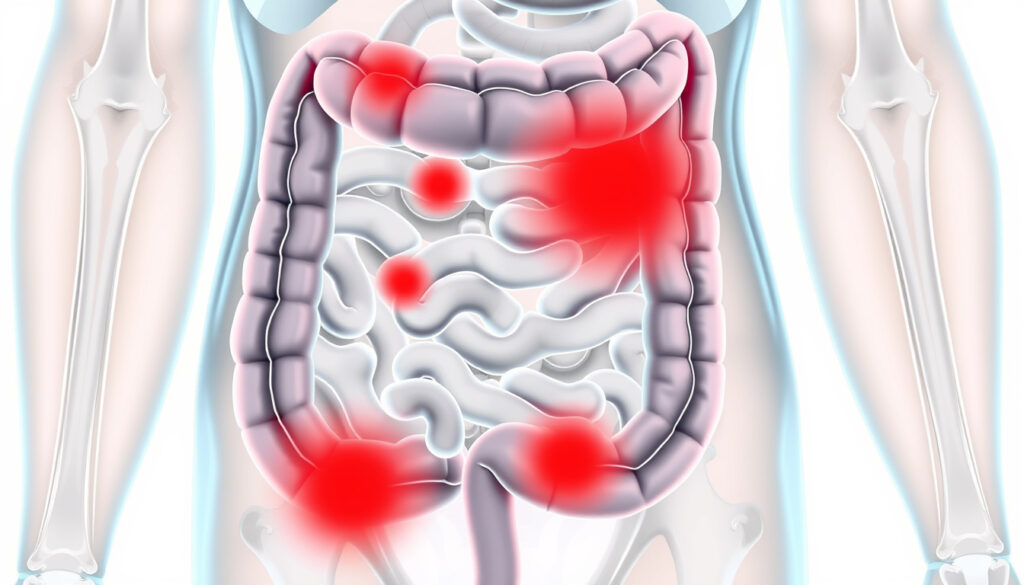
What Is Crohn’s Disease? Symptoms, Causes, and Life Expectancy
If you or someone close to you has been dealing with persistent digestive troubles that doctors can’t seem to explain, the term “Crohn’s disease” might have surfaced. This chronic inflammatory bowel disease affects roughly 6.8 million people worldwide, and figuring out what’s actually going on can feel overwhelming. This guide walks through the core facts — early symptoms, causes, treatment options, and what life looks like long-term — so you can have a clearer picture when talking to your healthcare team.
Estimated prevalence (global): ~6.8 million cases ·
Peak age of onset: 15–35 years ·
Major complications: fistulas, strictures, abscesses ·
Type of condition: chronic inflammatory bowel disease ·
Common extra-intestinal manifestations: joint pain, skin rashes, eye inflammation
Quick snapshot
- Crohn’s is a chronic condition causing inflammation in the digestive tract (Medical News Today (health journalism site))
- Symptoms come and go in flares and remissions (Cleveland Clinic (nonprofit medical center))
- Life expectancy is near-normal with proper treatment (Medical News Today)
- Exact environmental trigger that starts the immune reaction is unknown (Cleveland Clinic)
- Diet alone as a preventive factor is not proven (Mayo Clinic (leading US medical center))
- Why some patients develop extra-intestinal symptoms without clear cause remains uncertain (NHS (UK national health service))
- 1932: Dr. Burrill B. Crohn first described the disease as “regional ileitis” (Mayo Clinic)
- 2001: NOD2 gene identified as a major risk factor (PubMed Central (peer-reviewed research archive))
- 2020s: Biologic therapies (anti-TNF, anti-integrin) become standard of care (Cleveland Clinic)
- If diagnosed, work with a gastroenterologist to build a treatment plan tailored to your disease location and severity (NHS)
- Regular colonoscopies recommended to monitor for colorectal cancer risk (Mayo Clinic)
- Dietary adjustments and stress management can help reduce flare frequency (Medical News Today)
Five key facts about Crohn’s disease, from classification to treatment goals, summarised together for quick reference.
| Label | Value |
|---|---|
| Type | Chronic inflammatory bowel disease |
| Typical onset | Late teens to early 30s (Cleveland Clinic) |
| Key symptom | Persistent diarrhea and abdominal pain (Medical News Today) |
| Lifetime risk of colorectal cancer | Increased but small; surveillance reduces risk (Mayo Clinic) |
| Treatment goal | Reduce inflammation, prevent flares, maintain remission (Cleveland Clinic) |
What is the main cause of Crohn’s disease?
Genetic predisposition
- More than 200 genes have been associated with Crohn’s, including the NOD2 gene which is one of the strongest risk factors (Mayo Clinic (leading US medical center)).
- Having a first-degree relative with Crohn’s increases your risk, though most people with the condition have no family history (NHS (UK national health service)).
Immune system dysfunction
The prevailing theory is that Crohn’s results from an abnormal immune reaction against harmless bacteria in the gut. This immune attack triggers chronic inflammation (Cleveland Clinic (nonprofit medical center)). The exact trigger that first sets off this immune response isn’t known, but researchers believe a combination of genetic susceptibility and an environmental factor — such as an infection or change in gut microbiota — is responsible.
Environmental triggers
- Smoking is one of the strongest modifiable risk factors; smokers are roughly twice as likely to develop Crohn’s and have more severe disease (NHS).
- Westernized diets high in animal fats, processed meats, and refined sugars, and low in fiber, are associated with increased risk (PubMed Central review (peer-reviewed research)).
- Stress and diet do not cause Crohn’s but can aggravate existing disease (Mayo Clinic).
Crohn’s isn’t caused by one thing — it’s the result of genes, immune misdirection, and environment interacting. That’s why no single “cause” gets pinned down in a lab test, and why treatment focuses on calming the immune response rather than removing a root cause.
The implication: understanding this multi-factor origin helps patients and providers set realistic expectations — no single test or lifestyle change will eliminate the condition, but a combination of strategies can keep it under control.
What are the first signs and 5 symptoms of Crohn’s disease?
Early signs vs. chronic symptoms
The earliest signs are often subtle and easy to mistake for a stomach bug or stress. People may notice persistent loose stools, mild cramping after meals, or feeling unusually tired. These symptoms can come and go, which delays diagnosis (NHS (UK national health service)).
Digestive symptoms
- Chronic diarrhea (sometimes urgent, may contain mucus or blood)
- Abdominal pain or cramping, often in the lower right side
- Blood in stool (Cleveland Clinic (nonprofit medical center))
- Nausea and vomiting if the small intestine is narrowed
Systemic symptoms
- Unexplained weight loss and reduced appetite
- Extreme fatigue (Medical News Today (health journalism site))
- Fever during flare-ups
- Joint pain, sore eyes, and skin rashes — these can appear even without gut symptoms (NHS)
Five core symptoms to watch for: persistent diarrhea, abdominal cramping, blood in stool, fatigue, and unintentional weight loss. If these last more than a few weeks, it’s time to see a doctor.
The difference between early signs and later complications matters because early treatment can prevent progression to strictures, fistulas, and abscesses that require surgery. A simple symptom checklist can cut the average delay from symptom onset to diagnosis — which often runs months or years.
The pattern: catching Crohn’s early means starting treatment before irreversible damage occurs, which directly improves long-term outcomes.
What is the life expectancy of someone with Crohn’s disease?
Life expectancy with treatment
With modern medical management, most people with Crohn’s disease have a life expectancy similar to the general population. Both the Cleveland Clinic (nonprofit medical center) and Medical News Today (health journalism site) report that survival is generally normal when the condition is well-controlled.
Factors affecting prognosis
- Disease location and severity: small-bowel involvement and fistulizing disease increase complication risk (Mayo Clinic (leading US medical center)).
- Colorectal cancer risk: people with Crohn’s have a slightly elevated risk, but regular colonoscopy surveillance greatly reduces mortality from this complication (Mayo Clinic).
- Severe complications like bowel obstruction, perforation, sepsis, or blood clots can shorten life expectancy if not treated promptly (NHS (UK national health service)).
The pattern: good treatment adherence and regular monitoring keep most patients in the same survival bracket as everyone else. The risk comes from unmanaged inflammation over decades, not from the diagnosis itself.
What foods and drinks trigger or worsen Crohn’s disease?
Foods to avoid
- High-fiber foods: nuts, seeds, popcorn, raw vegetables, and whole grains can cause blockages in narrowed intestines (Mayo Clinic (leading US medical center)).
- Spicy and fatty foods: these can irritate the gut lining and trigger cramping or diarrhea.
- Dairy products: lactose intolerance is common in Crohn’s patients; limiting milk, soft cheese, and ice cream may help (Mayo Clinic).
- Processed meats and high-sugar foods: Western dietary patterns are linked to higher inflammation (PubMed Central review (peer-reviewed research)).
Drinks to avoid
- Alcohol: can disrupt the gut barrier and worsen symptoms.
- Caffeine: stimulates bowel movements and may increase diarrhea (Mayo Clinic).
- Carbonated drinks: gas can aggravate bloating and abdominal pain (Mayo Clinic).
- Dairy-based drinks: same lactose issue as solid dairy.
Safe alternatives
- Small, frequent meals instead of large ones.
- Well-cooked vegetables, lean proteins, and refined grains (white rice, white bread) are often better tolerated.
- Water is the safest drink; herbal teas may also be gentle.
- Mediterranean-style eating — plenty of olive oil, fish, fruits, vegetables — is associated with anti-inflammatory benefits (PubMed Central review).
The trade-off: there is no universal trigger list. What bothers one person may be fine for another. A food diary helps identify personal triggers, and working with a dietitian is recommended.
How is Crohn’s disease diagnosed and treated?
Diagnostic tests
- Colonoscopy with biopsy: the gold standard for diagnosis and to rule out other conditions (NHS (UK national health service)).
- Imaging: CT scan, MRI, or capsule endoscopy to view the small intestine (Cleveland Clinic (nonprofit medical center)).
- Blood tests: check for anemia, inflammation markers, and nutritional deficiencies.
- Stool tests: to rule out infection and detect inflammation markers like calprotectin (NHS).
Treatment approaches
Treatment aims to reduce inflammation, control symptoms, and maintain remission. It is tailored to disease location, severity, and how active the disease is.
- Anti-inflammatory drugs: aminosalicylates (mesalamine) for mild disease.
- Immune system suppressors: azathioprine, methotrexate (Crohn’s & Colitis Ireland, patient advocacy organization).
- Biologics: anti-TNF therapy (infliximab, adalimumab) and anti-integrin drugs for moderate to severe disease (Cleveland Clinic).
- Antibiotics: for infections or abscesses.
- Nutritional support: special liquid diets can be used to rest the bowel during severe flares (Medical News Today (health journalism site)).
Surgery options
About half of people with Crohn’s will need surgery at some point — usually to remove a diseased segment, open a stricture, or drain an abscess. Surgery is not a cure, but it can provide long remission periods (Cleveland Clinic).
“Crohn’s disease is a type of inflammatory bowel disease (IBD) that causes swelling and irritation in the digestive tract.”
— Mayo Clinic (leading US medical center)
“Inflammation can affect any part of the digestive tract from mouth to anus.”
— Cleveland Clinic (nonprofit medical center)
“A lifelong condition with periods of flare-ups and remission.”
— HSE Ireland (Irish national health authority)
“Inflammation occurs in any part of the gut, most commonly the end of the small intestine.”
— Crohn’s & Colitis Ireland (patient advocacy organization)
For patients and first-contact providers, the implication is clear: early recognition of the five key symptoms — chronic diarrhea, abdominal pain, blood in stool, fatigue, weight loss — can shorten the diagnostic delay and improve outcomes. Treatment is more effective when started before complications such as strictures or fistulas develop.
Related reading: **Gastric Sleeve NZ Cost: Prices, Eligibility & Long-Term Results** · **Fresh n Fruity Yoghurt: Health, Nutrition, and Expert Insights**
Frequently asked questions
Can Crohn’s disease be cured?
No, there is no cure yet. Treatment focuses on reducing inflammation, managing symptoms, and achieving long-term remission (Cleveland Clinic).
Is Crohn’s disease contagious?
No, it is not contagious. You cannot catch it from another person (NHS).
Does stress cause Crohn’s disease?
Stress does not cause Crohn’s, but it can worsen symptoms and trigger flare-ups (Mayo Clinic).
Can Crohn’s disease affect pregnancy?
Most women with well-controlled Crohn’s have normal pregnancies and healthy babies. Active disease during pregnancy increases risks, so planning with a specialist is important (NHS).
Is there a blood test for Crohn’s disease?
No single blood test can diagnose Crohn’s. Blood tests can show signs of inflammation or anemia, but diagnosis requires endoscopy and imaging (Cleveland Clinic).
How often should I see a doctor with Crohn’s disease?
Most patients see a gastroenterologist every 3–12 months depending on disease activity. Annual colonoscopy is recommended for cancer surveillance (Mayo Clinic).
Can I still exercise with Crohn’s disease?
Yes, moderate exercise is generally safe and may help manage stress and improve quality of life. Intense exercise during flares may worsen symptoms (Medical News Today).
More related posts
 Time in Thailand Now: Current Time, Weather, and Travel Tips
 Demon Slayer Infinity Castle Release Date, Tickets & Movies 2025
 Confessions of a Shopaholic – Plot Summary, Series Order, Movie Guide
 Banks Peninsula Heavy Rain: Record Flooding and Road Closures
 5 Letter Word Solver: How to Use It for Wordle & More
 Resignation Letter Template NZ: Free Templates & Examples
 Daylight Saving Time 2025: Start Dates for US and Ireland
 Pork Mince Recipes NZ: Discover 5 Easy Ideas from Pork.co.nz
