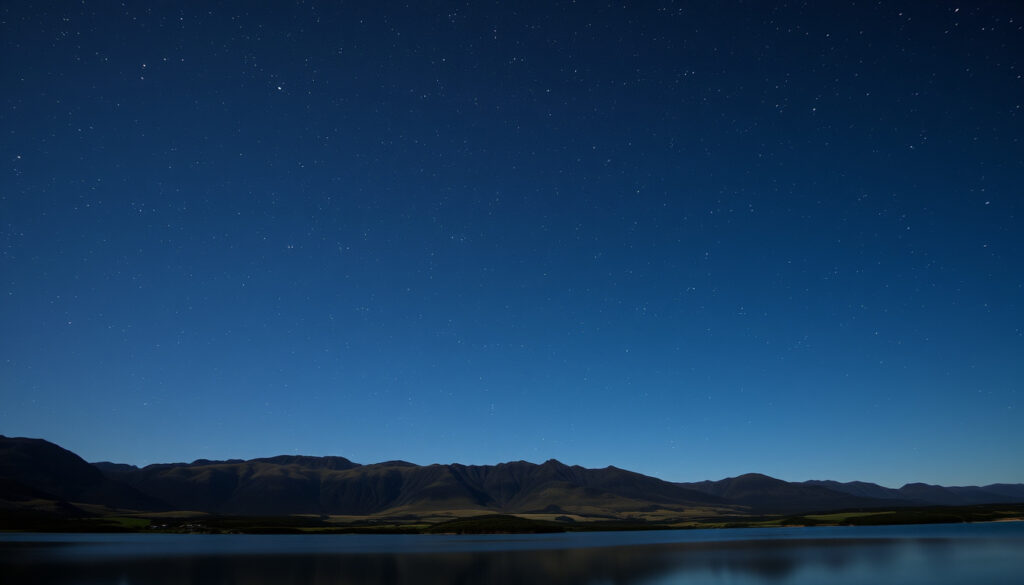
Is Matariki a Public Holiday? 2026 Date & Rules
Matariki is a genuine public holiday in New Zealand, not just a day off. The 2026 date is Friday, 10 July, and it always lands on a Friday.
First observed as public holiday: 24 June 2022 ·
2026 date: Friday, 10 July ·
Falls on a Friday: Every year ·
Public holiday status: Yes, in New Zealand ·
Mondayised when on weekend: No, always Friday
Quick snapshot
- Matariki is a national public holiday in New Zealand (Employment New Zealand (NZ government employment regulator))
- 2026 date is Friday 10 July (govt.nz (official NZ government portal))
- Always falls on the closest Friday to the Tangaroa lunar period (MBIE (NZ Ministry of Business, Innovation and Employment))
- Matariki is the Māori New Year celebrating the Pleiades cluster rising (WECC (workplace relations advisory body))
- Whether every shop will be open or closed varies by individual business decision (NZ Herald (major NZ news outlet))
- Exact surcharge policies are not defined at the national level (NZ Herald (major NZ news outlet))
- First observed: 24 June 2022 (MBIE (NZ Ministry of Business, Innovation and Employment))
- Te Kāhui o Matariki Public Holiday Act 2022 came into effect 8 April 2022 (WECC (workplace relations advisory body))
- Dates set out through to 2052 (MBIE (NZ Ministry of Business, Innovation and Employment))
- 2026: Friday 10 July — treat as standard public holiday for pay and leave (Business Canterbury (regional business advisory body))
- Businesses may open, close, or add surcharges based on trading restrictions and labour cost decisions (Business Canterbury (regional business advisory body))
- Workers entitled to time-and-a-half plus alternative holiday if they work and it’s an otherwise working day (Business Canterbury (regional business advisory body))
The five facts below outline the legislation and the 2026 date.
| Fact | Value |
|---|---|
| First public holiday | 24 June 2022 |
| 2026 date | 10 July 2026 |
| Day of week | Friday |
| Determined by | Tangaroa lunar period in Pipiri |
| Public holiday in | New Zealand only |
Is Matariki a public holiday for everyone?
Who gets the Matariki public holiday?
Matariki is a national public holiday in New Zealand, applying to all employees covered by the Holidays Act 2003 (Employment New Zealand (NZ government employment regulator)). That means if the day is an otherwise working day for you — a day you would normally work — you’re entitled to a paid day off or time-and-a-half plus an alternative holiday if you work.
Is Matariki a public holiday in New Zealand only?
Yes. Matariki is a public holiday in New Zealand only (MBIE (NZ Ministry of Business, Innovation and Employment)). It’s not a public holiday anywhere else in the world. The legislation, Te Kāhui o Matariki Public Holiday Act 2022, was passed by the New Zealand Parliament and applies only within the country’s jurisdiction (WECC (workplace relations advisory body)).
If you’re outside New Zealand, Matariki is not a public holiday. The question “Is Matariki a public holiday near Dublin?” or “Is Matariki a public holiday near Ireland?” comes up in search data — the answer is no. It exists only under New Zealand law.
The implication: for anyone outside NZ, the holiday simply doesn’t apply.
Is Matariki a public holiday in 2026?
What date is Matariki 2026?
Yes, Matariki is a public holiday in 2026, falling on Friday 10 July (Employment New Zealand (NZ government employment regulator)). The official government calendar confirms this date across multiple sources (govt.nz (official NZ government portal), Work and Income (NZ social development agency)). Employers are required to treat it as a standard public holiday.
How is the date determined?
The date is based on the Tangaroa lunar period in the Māori month of Pipiri — roughly June–July in the Gregorian calendar (WECC (workplace relations advisory body)). The Matariki public holiday always falls on the Friday closest to that lunar marker, which is why the dates shift year to year but never land on a weekend.
What this means: employers must treat 10 July 2026 as a standard public holiday under the Holidays Act, giving workers a paid day off or penalty rates if they work.
Does Matariki always fall on a Friday?
Why is Matariki on a Friday?
By design. The Te Kāhui o Matariki Public Holiday Act 2022 sets the public holiday as the Friday closest to the Tangaroa lunar period (MBIE (NZ Ministry of Business, Innovation and Employment)). This was an intentional choice to guarantee a long weekend every year.
Is Matariki Mondayised if it falls on a weekend?
No, Matariki is not Mondayised because it always falls on a Friday (MBIE (NZ Ministry of Business, Innovation and Employment)). The Mondayisation rule — where a Saturday or Sunday public holiday is observed on the following Monday — doesn’t apply because the date never lands on a weekend.
The Friday rule means Matariki is always a long weekend. But it also means the holiday moves by up to six days each year relative to the lunar calendar’s midpoint, trading astronomical precision for a predictable day off.
The catch: workers get a reliable long weekend, but the lunar connection shifts slightly each year.
What is Matariki and why is it celebrated?
What does Matariki mean in Māori?
Matariki is the Māori name for the Pleiades star cluster — a group of stars that appears in New Zealand’s winter sky. In Māori cosmology, the rising of Matariki signals the Māori New Year (WECC (workplace relations advisory body)). The word itself can be interpreted as “the eyes of the god” or “little eyes” — referencing the cluster’s appearance as a set of small stars.
What is the significance of the Matariki star cluster?
The rising of Matariki marks a period for remembrance of the deceased, celebration of the present, and planning for the year ahead. Traditional practices include feasting, sharing stories, and looking to the stars for signs of the coming season.
“Matariki is a time to gather with whānau and reflect on the year that has been, to celebrate the present, and to plan for the year ahead.”
— MBIE (NZ Ministry of Business, Innovation and Employment)
“Trading restrictions do not apply to Matariki in the same way they do to Easter, Christmas, or the first half of Anzac Day.”
The dates for the Matariki public holiday have been set out through to 2052 (MBIE (NZ Ministry of Business, Innovation and Employment)). Future dates include 25 June 2027 and 14 July 2028 (MBIE (NZ Ministry of Business, Innovation and Employment)).
The pattern: Matariki blends astronomical tradition with a fixed Friday schedule, giving New Zealanders a stable public holiday rooted in Māori culture.
Are shops shut for Matariki?
What is open on Matariki public holiday?
Unlike Easter Friday, Christmas Day, or the first half of Anzac Day, there are no statutory trading restrictions that force shops to close on Matariki (NZ Herald (major NZ news outlet)). Shops, restaurants, cafes, and other businesses can open if they wish. Many choose to close voluntarily to allow staff the day off, while hospitality venues often remain open.
Do shops charge a surcharge on Matariki?
Hospitality businesses can add a 15% surcharge on Matariki to cover time-and-a-half labour costs (NZ Herald (major NZ news outlet)). Surcharge policies vary by individual business, and there is no national standard.
For workers, the key question isn’t whether shops are shut — it’s whether you’d otherwise be working that day. If you’re a casual employee whose shift would normally fall on Friday, you get the same entitlements as a permanent employee for that day (Business Canterbury (regional business advisory body)).
The implication: shoppers should expect varied trading hours and possible surcharges, while workers should check their employment contracts.
Timeline: Matariki public holiday dates
- 2022 — Matariki first observed as an official public holiday in New Zealand on 24 June (MBIE (NZ Ministry of Business, Innovation and Employment))
- 2023 — Matariki public holiday celebrated on 14 July
- 2024 — Matariki public holiday on 28 June
- 2025 — Matariki public holiday on 20 June
- 2026 — Matariki public holiday on 10 July (Employment New Zealand (NZ government employment regulator))
- 2027 — Matariki public holiday on 25 June
- 2028 — Matariki public holiday on 14 July
What this means: the holiday now has a settled pattern through to 2052, giving workers and businesses long-term predictability.
en.wikipedia.org, mokopounamu.co.nz, en.wikipedia.org, nzjournalist.org, leavebalance.com
For a detailed look at the previous year’s observance, the Matariki 2025 public holiday guide outlines the 2025 date and theme.
Frequently asked questions
Is Matariki a public holiday in 2026?
Yes, Matariki is a public holiday in New Zealand in 2026. It falls on Friday 10 July (Employment New Zealand (NZ government employment regulator)).
Does Matariki always fall on a Friday?
Yes, the Matariki public holiday is always observed on a Friday — the Friday closest to the Tangaroa lunar period (MBIE (NZ Ministry of Business, Innovation and Employment)).
What is Matariki and why is it celebrated?
Matariki is the Māori New Year, celebrated at the rising of the Pleiades star cluster. It is a time for remembrance, feasting, and planning for the year ahead (WECC (workplace relations advisory body)).
What does Matariki mean in Māori?
Matariki refers to the Pleiades star cluster. The name can be interpreted as “the eyes of the god” or “little eyes,” referencing the cluster’s appearance as a group of small stars.
Are shops shut for Matariki?
No statutory trading restrictions force shops to close on Matariki, unlike Easter Friday or Christmas Day. Individual businesses decide whether to open or close (NZ Herald (major NZ news outlet)).
Is it okay to say happy Matariki?
Yes, “Happy Matariki” is a common greeting during the Māori New Year, used similarly to “Happy New Year.”
What food is eaten on Matariki?
Traditional Matariki foods include kūmara (sweet potato), fish, and birds cooked in a hāngī — an earth oven. Feasting is central to the celebration.
Is Matariki public holiday Mondayised?
No, Matariki is not Mondayised because it always falls on a Friday (MBIE (NZ Ministry of Business, Innovation and Employment)).
Related reading
Editor’s note: This article was produced based on official government sources and reputable New Zealand news outlets. The 2026 Matariki date of 10 July is confirmed by Employment New Zealand, govt.nz, and Work and Income. For the most up-to-date information, check the official public holidays page on the Employment New Zealand website.
More related posts
 Black Snow Season 2: Release, Cast, Episodes & Season 3
 109 USD to NZD: Live Conversion and Why NZD Is Falling
 Best Places to See the Northern Lights: 2026 Guide
 Phone Case with Card Holder: Pros, Cons, and Safety Tips
 How to Reduce Cortisol: Signs, Best Reducer & Fastest Way
 All Blacks vs Scotland 2026: History, How to Watch, Stats
 Chelsea FC vs PSG Lineups: Starting XI & Match Stats
 NCEA Guide: Levels, Credits, and Reforms
