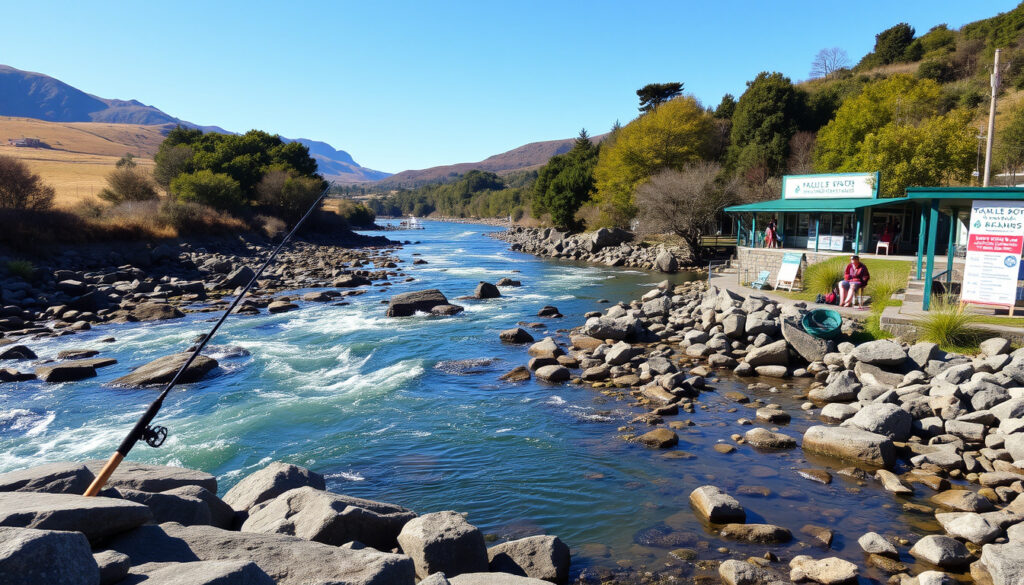
Hunting and Fishing in Oamaru: Spots, Stores & Rules
Oamaru’s position on the North Otago coast puts you within striking distance of some genuinely wild fishing water — and the town itself has a solid outfitter for gear, licenses, and local advice. Whether you’re a visitor figuring out which permits you actually need, or someone mapping out a first serious hunt in the region, there’s a fair bit of regulatory ground to cover before you cast a line or shoulder a shotgun.
North Otago Store Address: 172 Thames Street, Oamaru, Otago 9400 · Store Phone: 03 434 9893 · Game Bird Licences: Available from Fish & Game NZ · Fishing Rules Source: NZ Ministry for Primary Industries
Quick snapshot
- A non-resident whole-season freshwater licence costs $264 for adults (Fish & Game NZ licence information)
- Otago holds nine rivers under the Designated Waters system — the highest count of any Fish & Game region (Otago Daily Times regional report)
- Specific named fishing spots within Oamaru’s immediate vicinity (e.g. Shag River access points) lack publicly available current documentation
- Exact 2025–2026 game bird season dates and bag limits for the North Otago subregion specifically
- Upper Clutha backcountry closes 1 May and reopens with a permit from 1 November each year (Action Outdoors seasonal guide)
- The new Designated Waters system, which replaced backcountry licences starting October 2023, now governs access to Otago’s premium trout fisheries (Otago Daily Times policy update)
The table below consolidates the key regulatory facts visitors need before heading out on the water or into the field.
| Item | Detail |
|---|---|
| Store Location | 172 Thames Street, Oamaru 9400 |
| Store Hours (Mon–Thu) | 9AM–5PM |
| Store Hours (Sun) | 10AM–3PM |
| Fishing Authority | NZ Ministry for Primary Industries |
| Hunting Licences | Fish & Game NZ |
| Season Dates | 1 October 2025 – 30 September 2026 |
| Non-Resident Whole Season Licence | $264 (adults) |
| One Day Non-Resident Licence | $38 (adults), $22 (juniors) |
| Designated Waters Daily Surcharge | $40 per region |
| Licence Age Threshold | Ages 12 and over require a licence |
“Otago, with nine rivers, has the highest number of rivers of any region under the new systems.”
— Fish & Game regional manager, Otago Daily Times
Where to fish in Oamaru
Oamaru sits within the Otago Fish & Game region, which manages all freshwater fishing for the surrounding area including Oamaru’s nearest rivers and lakes. While the town itself is small, the broader Otago region offers access to a wide range of trout fisheries — from accessible streams within a short drive to backcountry rivers that require a bit more planning.
Local rivers and beaches
Otago’s Designated Waters include rivers like the Hunter and Nevis — clear-water systems known for large trout and sight-fishing in remote backcountry settings. Otago holds nine rivers under the Designated Waters system, the highest count of any region nationwide (Otago Daily Times regional report). These require an additional $40 per day surcharge on top of your base non-resident licence.
Saltwater fishing requires no licence at all — you can cast from the coast near Oamaru freely as long as you follow national bag limits. For freshwater sports fish like rainbow and brown trout, however, a Fish & Game licence is mandatory (Ministry for Primary Industries fishing rules).
Access points
Licences are available online, at local fishing stores, or at visitor information centres. Fish & Game Otago publishes access pamphlets with maps for local waters on its website (Fish & Game NZ official site). The North Otago store on Thames Street can also point you toward current local conditions and any waterway updates worth knowing before you head out.
The implication: Otago’s Designated Waters system means that for premium backcountry rivers, a standard non-resident licence isn’t enough — you’ll need to purchase day permits for each river separately, capped at five days per region.
Otago’s Designated Waters system means that for premium backcountry rivers, a standard non-resident licence isn’t enough — you’ll need to purchase day permits for each river separately, capped at five days per region.
“Non-residents will have to pay $40 per day to fish designated waters, and can only purchase a maximum of five designated waters day licences for each Fish & Game region.”
— Fish & Game spokesperson, Otago Daily Times
Can foreigners hunt in New Zealand?
Non-residents face stricter rules around freshwater fishing licences than domestic anglers, but hunting brings its own layer of complexity — and the rules differ depending on whether you’re talking about game birds or larger game like deer.
Guided hunting requirements
New Zealand defines a non-resident as someone not ordinarily resident in the country as of 1 October (Fish & Game NZ licence information). Non-residents are ineligible for domestic licence categories and must use either a Non-Resident Licence (NRL) or day licences for freshwater fishing.
For hunting specifically, the rules vary by game type. Game bird licences for duck, pheasant, and quail are available through Fish & Game NZ, while big-game species like red deer, sika, and tahr fall under separate regulations. Most visitors hunting larger game do so with a licensed guide or operator, which simplifies compliance considerably.
Firearms safety
Any foreigner bringing firearms into New Zealand must hold a valid firearms licence and declare weapons at the border. Police in New Zealand take compliance seriously — the penalties for fishing without the correct non-resident licence include fines of up to NZD $5,000 (Fish & Game NZ licence information). Selling any recreationally caught fish or shellfish carries far steeper consequences: fines up to $250,000 or up to five years in prison (New Zealand Government fishing guidance).
“A ‘closed’ river means no fishing by any method, even catch-and-release.”
— Action Outdoors fishing guide, Action Outdoors seasonal guide
Can you fish in New Zealand as a tourist?
Yes — provided you have the right licence and you’re targeting the right waters. The key distinction is between saltwater and freshwater: no licence is needed for ocean fishing, but any attempt to catch freshwater sports fish like trout or salmon requires a Fish & Game licence regardless of your residency status.
License needs
Recreational fishers aged 12 and over need a licence for sports fish; children under 12 can fish free in most regions (Action Outdoors seasonal guide). The two main options for visitors are the Non-Resident Whole Season Licence at $264 for adults, which covers fishing across all Fish & Game regions except Taupo, and the One Day Non-Resident Licence at $38 for adults ($22 for juniors), which does not grant access to Designated Waters fisheries.
Rules from MPI
The Ministry for Primary Industries clarifies that the Taupo fishery is a special case requiring a separate licence from the Department of Conservation — it is not covered under the standard Fish & Game NRL (Fish & Game NZ overseas visitor information). The nationwide daily bag limit for recreational fishers is up to 20 finfish plus 50 baitfish, though regional sub-limits can be tighter.
The pattern: visitors who skip the Taupo licence often assume their Fish & Game NRL covers the entire country — it doesn’t, and the DOC licence requires separate purchase.
A closed river means no fishing by any method, even catch-and-release — something many visitors don’t realise before arriving (Action Outdoors seasonal guide). Checking closures before you travel is not optional.
What is the best time to go fishing in NZ?
The freshwater fishing season runs from 1 October to 30 September, with the peak period generally falling in the warmer months from late spring through early autumn (Fish & Game NZ overseas visitor information). For Otago specifically, the timing depends heavily on whether you’re targeting open-water streams or backcountry fisheries with seasonal restrictions.
Seasonal guide
October through April offers the most consistent fishing conditions across most Otago waters. The Upper Clutha backcountry, however, is closed from 1 May to 31 October each year — a significant portion of the peak season — and requires a permit from 1 November onward (Action Outdoors seasonal guide). The Upper Greenstone River also requires advance booking for exclusive access during its controlled period.
Trout focus
Otago’s backcountry rivers — including Designated Waters like the Hunter and Nevis — are characterised by clear water and large brown trout, making them popular for sight-fishing. These fisheries are under additional pressure-sensitive management, which is why the Designated Waters surcharge exists.
The implication: planning a trip around Upper Clutha access requires working backward from the 1 May closure date — , 。
How much is a hunting license in New Zealand?
For game birds specifically, a whole-season Non-Resident Licence covers you across all Fish & Game regions. For larger game, costs vary by licence type and species — and some permits require joining a guided hunt rather than self-guided access.
Game bird options
Game bird licences through Fish & Game NZ are available at the same North Otago store that sells fishing licences, with prices varying by season and region. The store at 172 Thames Street, Oamaru (03 434 9893) is the closest point of sale for residents and visitors in the area.
Fish & Game sales
Fish & Game NZ is funded by licence sales, which go directly toward fisheries management and habitat protection across the country (Fish & Game NZ licence information). Buying your licence supports the waterways you’re using — a point worth remembering when comparing costs.
What this means: choosing the whole-season NRL over day tickets saves money if you’re serious about multiple trips — and every dollar directly funds the habitat you’ll fish.
If you’re planning to fish Otago’s backcountry rivers, budget an extra $40 per river per day on top of your base licence — and remember the five-day-per-region cap on Designated Waters day licences.
How to get started: steps for visitors
Putting together a plan for your first freshwater fishing or hunting trip from Oamaru is straightforward if you work through these steps in order.
- Step 1 — Sort your licence before you travel. The Non-Resident Whole Season Licence ($264) offers the best value if you’re planning more than a couple of days on the water. Purchase it online through Fish & Game NZ or at the North Otago store on Thames Street, Oamaru (03 434 9893).
- Step 2 — Check waterway status. Confirm whether your target rivers are open, under seasonal closure, or designated as premium waters requiring additional day permits. The Upper Clutha, for example, closes from 1 May to 31 October.
- Step 3 — Budget for Designated Waters if needed. If you’re targeting Otago’s premium backcountry rivers like the Hunter or Nevis, add $40 per river per day to your cost plan. Remember the five-day-per-region cap.
- Step 4 — Gather your gear locally. The North Otago store stocks rods, flies, tackle, and ammunition. Its hours are 9AM–5PM Monday to Thursday and 10AM–3PM on Sundays.
- Step 5 — Understand the penalties. Fishing without a valid non-resident licence can result in fines of up to NZD $5,000. Selling any recreationally caught fish carries fines up to $250,000 or imprisonment.
- Step 6 — For hunting, decide on guided vs. self-guided. Game bird licences are available through Fish & Game. For big-game hunting, most visitors benefit from booking a licensed guide, which handles firearms compliance and access arrangements.
The Taupo fishery requires a completely separate licence from the Department of Conservation — it’s a common oversight that catches visitors who’ve only purchased a Fish & Game NRL.
Related reading: Houses for Sale in Oamaru
fishandgame.org.nz, nzpocketguide.com, newzealand.com, flylife.com.au, fishandgame.org.nz
Outdoor enthusiasts in Oamaru often head to the Hunting and Fishing Timaru store just south in Timaru for specialized gear and local advice before hitting the spots.
Frequently asked questions
Where to buy hunting gear in Oamaru?
The North Otago Hunting & Fishing store is at 172 Thames Street, Oamaru (phone: 03 434 9893). It’s open 9AM–5PM Monday to Thursday and 10AM–3PM on Sundays. The store sells fishing and hunting gear and also handles licence sales.
What fishing license do tourists need?
Tourists fishing freshwater in New Zealand need a Fish & Game Non-Resident Licence. Options include the whole-season NRL at $264 or a one-day licence at $38. Designated Waters rivers require an additional $40 per day surcharge.
Are there guided hunts near Oamaru?
Licensed hunting guides operate throughout the Otago region. Most big-game hunts for visitors are guided arrangements, which also simplifies firearms declaration requirements at the border.
What deer products are available in NZ?
New Zealand has extensive farmed and wild deer populations. Venison is widely available in butchers and supermarkets. For visitors, wild venison is typically accessed through hunting — not commercial sale of recreationally caught meat.
Can I hunt without a guide as a foreigner?
For game birds, yes — you can purchase a game bird licence and hunt independently if you hold a valid firearms licence. For big-game species, self-guided hunting by non-residents is restricted, and guided hunts are the practical route.
Best nearby fishing for beginners?
Open-access streams in the broader Otago region are a good starting point. Staff at the North Otago store on Thames Street can advise on current conditions and which waters are best suited for beginners.
Hunting safety rules in North Otago?
Firearms must be declared at the border and a valid NZ firearms licence is required. All hunters should complete a firearms safety course recognised by the NZ Police before purchasing a licence.
For visitors planning a freshwater fishing trip from Oamaru, the choice comes down to this: buy a whole-season Non-Resident Licence ($264) if you’re serious about covering multiple regions and water types, or stick to one-day licences ($38) if you’re targeting a specific area and don’t need Designated Waters access. For hunting, hook up with a licensed guide unless you already hold a New Zealand firearms licence — the compliance path otherwise is lengthy and the margin for error is small.
More related posts
 Latency vs Bandwidth: What’s the Difference
 How to Reduce Cortisol: Signs, Best Reducer & Fastest Way
 Park Min-young: Biography, Career, Relationships & Net Worth
 Convert Yen to NZD: Current Rates, Fees, and Value Guide
 The 48 Laws of Power: Full List, Controversy & Takeaways
 Net to Gross Calculator NZ – Reverse Take-Home Pay for 2025
 Edwards & Co Lucci Stroller Review: Specs vs Otto
 Otago Daily Times Quiz: Your Guide to New Zealand’s Local Trivia
