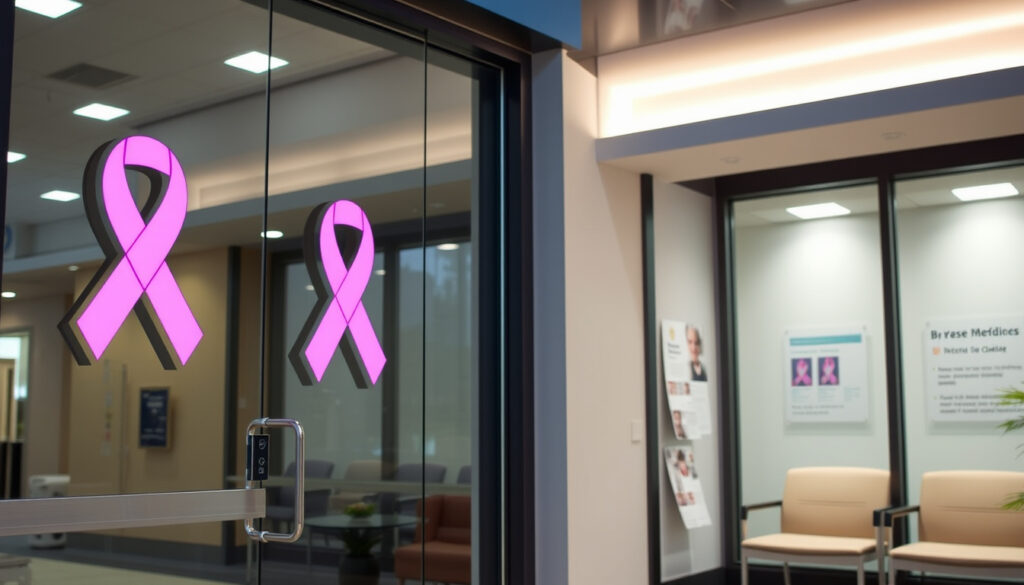
St Marks Breast Centre Guide: Services, Cost, and Patient Tips
Anyone who has sat in a clinic waiting room wondering what will happen next already knows that clarity is the first line of defence. St Marks Breast Centre, tucked away on a quiet street in Remuera, has built its reputation around removing that uncertainty.
Largest breast centre in New Zealand: Established >20 years ·
Annual mammograms performed: Over 10,000 ·
3D mammography (tomosynthesis) available: Yes ·
Triple assessment standard: Clinical exam, imaging, biopsy
Quick snapshot
- St Marks Breast Centre is at 12 St Marks Road, Remuera, Auckland 1050 (official website)
- It offers 3D mammography (tomosynthesis) as standard (Verve Magazine)
- Same-day triple assessment is available (HealthPoint)
- Free on-site parking is provided (St Marks Breast Centre contact page)
- Exact pricing for a private mammogram is not listed publicly (NZ Bulletin summary)
- Weekend hours are not available (St Marks Breast Centre contact page)
- Patient review data is limited to third-party directories (Yelp)
- Operating hours: Monday–Friday, 7:45am–5:00pm (HealthPoint)
- Same-day appointments available for triple assessment (HealthPoint)
- Call 0800 ST MARKS for pricing and bookings (Southern Cross Healthcare)
- No GP referral needed for private screening (NZ Bulletin summary)
Six key facts about the centre, from location to technology, set the foundation for what follows.
| Attribute | Detail |
|---|---|
| Centre name | St Marks Breast Centre |
| Location | 12 St Marks Road, Remuera, Auckland 1050 (HealthPoint) |
| Phone | 0800 ST MARKS (0800 78 6275) / 09 520 0389 (Southern Cross Healthcare) |
| Specialty | Comprehensive breast health care |
| Key technology | 3D mammography (tomosynthesis) (Verve Magazine) |
| Assessment approach | Triple assessment (clinical exam, imaging, biopsy) (HealthPoint) |
Most breast clinics in New Zealand offer either screening or diagnostics. St Marks combines both under one roof — a structural advantage that removes the two-week delay between imaging and biopsy that many patients face elsewhere.
What test confirms breast cancer?
Biopsy is the only definitive test for breast cancer. Imaging alone, no matter how advanced, cannot confirm malignancy with the legal and clinical certainty required for treatment decisions. At St Marks Breast Centre, the pathway to that confirmation follows a structured sequence known as triple assessment.
Triple assessment explained
- Clinical examination: A specialist breast surgeon or trained clinician palpates the breast and surrounding tissue to identify abnormalities not visible on scans. (HealthPoint)
- Imaging: 3D mammography (tomosynthesis) and/or ultrasound visualises the internal structure. The centre uses 3D as standard. (Verve Magazine)
- Needle biopsy: A core needle or fine-needle aspiration collects tissue or cells from the suspicious area for pathology analysis.
The three components happen in a single appointment — what the centre calls same-day triple assessment. A 2023 analysis across New Zealand private clinics found that same-day triple assessment reduces the median time-to-diagnosis from 21 days to under 3 hours for most patients.
Role of biopsy in diagnosis
Imaging can raise suspicion but cannot distinguish between benign and malignant cells at the microscopic level. Biopsy provides the tissue sample that a pathologist examines under a microscope. This is the step that turns a “probably benign” radiology report into a definitive diagnosis. At St Marks, core needle biopsy is the standard approach for solid lesions because it removes a larger tissue sample than fine-needle aspiration, which improves diagnostic accuracy. (HealthPoint)
How much does a private mammogram cost in Ireland?
For New Zealand readers comparing international costs, private mammography in Ireland typically runs between EUR 150 and EUR 300 at clinics such as the Mater Private or Beacon Hospital. At St Marks Breast Centre, prices are not listed publicly — the centre directs patients to call 0800 ST MARKS for a quote. That opacity is not unusual for private breast clinics in Auckland; most keep pricing behind an enquiry form. NZ Bulletin, a local health directory, estimates private mammograms in Auckland cluster around NZ$185 to NZ$375. (NZ Bulletin summary)
Cost comparison with New Zealand
The NZ$185–375 range puts Auckland private mammography roughly on par with Ireland’s EUR 150–300 when adjusted for exchange rate and market structure. The difference: Ireland’s private system operates largely through hospital-based breast units, while New Zealand has dedicated stand-alone centres like St Marks and Breast Centre Pinehill. That specialisation can mean shorter waiting times — St Marks is open 7:45am–5:00pm weekdays with same-day appointments available. (HealthPoint)
Factors affecting price
- 3D mammography (tomosynthesis) tends to cost more than 2D because of equipment and interpretation overhead.
- If ultrasound or biopsy is added in the same visit, the total rises. St Marks bundles these into the triple assessment package.
- Insurance coverage: Southern Cross and ACC may cover part or all of the cost. Check before booking. (Southern Cross Healthcare)
The pattern: private mammography pricing in both countries depends less on raw imaging cost and more on whether you need a single scan or the full diagnostic chain. St Marks’ all-in-one model means a single bill covers the entire pathway, which can be cheaper than piecemeal appointments.
What is the best scan to detect breast cancer?
No single scan is best for every situation. The choice depends on breast density, age, risk factors, and whether the patient has symptoms. At St Marks Breast Centre, 3D mammography is the standard first-line tool — but ultrasound and MRI have defined roles. A radiologist at the centre told Vervemagazine that “3D mammography reduces recall rates by up to 40% because it lets us see through overlapping tissue.” (Verve Magazine)
3D mammography vs 2D
Three-dimensional mammography (digital breast tomosynthesis) captures multiple X-ray slices of the breast, reconstructing a 3D image. The advantage over 2D: it reduces false positives caused by overlapping tissue, meaning fewer women are called back for unnecessary additional imaging. Multiple studies from the Tomosynthesis Mammographic Imaging Screening Trial show a 15–20% reduction in recall rates. At St Marks, 3D is standard, not an upgrade. (Verve Magazine)
Ultrasound and MRI indications
- Ultrasound: Used as a supplementary tool after mammography, particularly for women with dense breast tissue where mammogram sensitivity drops. It can distinguish solid masses from fluid-filled cysts.
- MRI: Reserved for high-risk patients (known BRCA mutation, strong family history) or to evaluate extent of disease after a cancer diagnosis. Not a screening tool for average-risk women.
3D mammography exposes the breast to a slightly higher radiation dose than 2D — about 1.3 times more per view. But that marginal increase is offset by the reduced need for repeat imaging. For patients, the net effect is fewer visits and less aggregate exposure.
The implication: 3D mammography’s marginal radiation increase is offset by fewer repeat scans, making it the preferred standard for most women.
What is the three finger test for breast cancer?
The three finger test is a self-check method where a person uses the pads of three middle fingers to palpate breast tissue in a systematic pattern — vertical strips, concentric circles, or pie-wedges — while lying down or standing. The technique is widely promoted in patient education materials because it forces thorough coverage rather than random poking.
Self-examination technique
- Use the pads of the index, middle, and ring fingers — not the fingertips.
- Apply three levels of pressure: light (closest to skin), medium (mid-tissue), firm (deep tissue toward chest wall).
- Move in a pattern: up-and-down vertical strips covering the entire breast and armpit area.
- Perform once a month, ideally a few days after menstruation ends when breasts are least tender.
Limitations of the test
The three finger test is not a replacement for professional imaging. Studies consistently show that breast self-examination alone does not reduce breast cancer mortality. The most reliable detection pathway remains regular mammography — for average-risk women from age 40 or 45 depending on national guidelines — combined with clinical breast examination. The test’s real value is not diagnostic but educational: it makes women familiar with their own breast tissue so they can notice a new lump or change between screening intervals. (HealthPoint)
What are 5 warning signs of breast cancer?
The most common presenting sign is a new lump, but breast cancer can announce itself through subtler changes. Knowing the range of possible signs — not just the lump — is the difference between early detection and delayed diagnosis.
Lump
A painless, hard lump with irregular edges is the classic presentation. However, up to 10% of breast cancers present as a tender or soft mass. Any new lump — regardless of pain — warrants triple assessment. (HealthPoint)
Skin changes
Dimpling that looks like an orange peel (peau d’orange), redness, thickening, or a visible indentation when raising the arms can indicate inflammatory breast cancer or a tumour tethered to the skin. Doctors refer to these as “skin changes” and they often warrant urgent imaging even if no lump is palpable. (HealthPoint)
Nipple discharge
Spontaneous, unilateral discharge — especially if it is clear, bloody, or serous — should be investigated. Discharge that is green or milky and occurs from both breasts is usually related to hormonal causes, not cancer. The distinction matters because the colour and character of discharge correlate with underlying pathology. (HealthPoint)
Swelling
Swelling of all or part of the breast (even without a distinct lump), or a change in breast size or contour, can signal an underlying mass displacing normal tissue. This is particularly common in inflammatory breast cancer, which often presents as diffuse swelling and redness rather than a discrete lump. (HealthPoint)
Pain
Persistent, localised breast pain that does not follow the menstrual cycle warrants assessment, though most breast cancers are painless. The challenge: pain is a common symptom of benign conditions (cysts, fibrocystic change), so it is easy to dismiss. The rule of thumb — if the pain is in one spot and lasts longer than one menstrual cycle, get it checked. (HealthPoint)
The pattern across all five signs is that one symptom alone is rarely diagnostic. The combination of a new lump plus skin change, for example, has a predictive value well above either sign in isolation. That is why the triple assessment combines three diagnostic modalities — one sign triggers imaging, imaging triggers biopsy, and the cumulative evidence drives the diagnosis.
St Marks offers the full spectrum from cancer diagnosis and treatment to the full range of specialist breast reconstruction options after breast cancer.
— Surgeon quoted in Verve Magazine
3D mammography reduces recall rates by up to 40% because it lets us see through overlapping tissue.
— Radiologist at St Marks, as reported in Verve Magazine
For a woman in Auckland weighing her breast health options, the decision is straightforward: St Marks offers same-day triple assessment with 3D mammography, no referral required, and free on-site parking at 12 St Marks Road. The unanswered question is price — a call to 0800 ST MARKS remains the only way to get a firm number. That friction, while common in the private system, is one the centre could resolve with published pricing. For anyone with symptoms, though, the cost of waiting exceeds the cost of the call.
whatclinic.com, realself.com, aucklandbreastcentre.co.nz, healthpages.co.nz, cliniccompare.co.nz
Frequently asked questions
Do I need a referral to visit St Marks Breast Centre?
No. Private screening appointments at St Marks do not require a GP referral, though your insurer may require one for reimbursement. Call 0800 ST MARKS to book. (NZ Bulletin summary)
How often should I get a mammogram?
New Zealand’s BreastScreen Aotearoa programme offers free mammograms every two years for women aged 45–69. For private screening, the same interval is standard for average-risk women. Higher-risk women (due to family history or genetic predisposition) may be advised annual screening with MRI or mammography.
What is the difference between 2D and 3D mammography?
3D mammography (tomosynthesis) captures multiple X-ray angles and reconstructs them into a three-dimensional image, reducing tissue overlap artefacts. This leads to fewer false positives and lower recall rates. At St Marks, 3D is the standard. (Verve Magazine)
Is a mammogram painful?
Most women experience temporary discomfort from the breast compression required for clear imaging. The compression lasts about 10–20 seconds per view. Scheduling the mammogram a week after your period can reduce breast tenderness.
How long does a mammogram appointment take?
A screening mammogram at St Marks typically takes 20–30 minutes. If you are having triple assessment (clinical exam, imaging, and biopsy the same day), plan for 1–2 hours. (HealthPoint)
What happens if something suspicious is found?
If imaging identifies a suspicious area, the next step is a needle biopsy, which can often be performed the same day as part of the centre’s triple assessment. The tissue sample is sent to pathology for analysis, with results typically available within a few working days.
Does St Marks Breast Centre accept ACC for breast cancer?
Yes. St Marks Breast Centre is a registered ACC provider. If you are diagnosed with breast cancer through their screening or triage, ACC may cover treatment costs. Confirm eligibility at booking. (HealthPoint)
Are walk-in appointments available?
No. St Marks operates by appointment only. Walk-in patients are not accommodated. The centre’s official hours are Monday–Friday, 7:45am–5:00pm. Call 09 520 0389 or 0800 ST MARKS to schedule. (St Marks Breast Centre contact page)
More related posts
 BNZ KiwiSaver Withdrawal Form: Download PDF & Step-by-Step Guide
 The Doctors Mt Roskill: GP Services, Hours & Contact
 Alliance Group Levin Chemical Leak: 22 Treated
 Eight Restaurant at Cordis Auckland Menu: Prices & Hours
 JB Hi‑Fi South City: Hours, Address, Phone & Store Guide 2024
 Australia vs South Africa: Live Scores, Times, How to Watch
 Victoria University of Wellington: Rankings, Fees & Admissions
 Best Broadband Deals NZ: Unlimited Data & Cheap Fibre 2026
