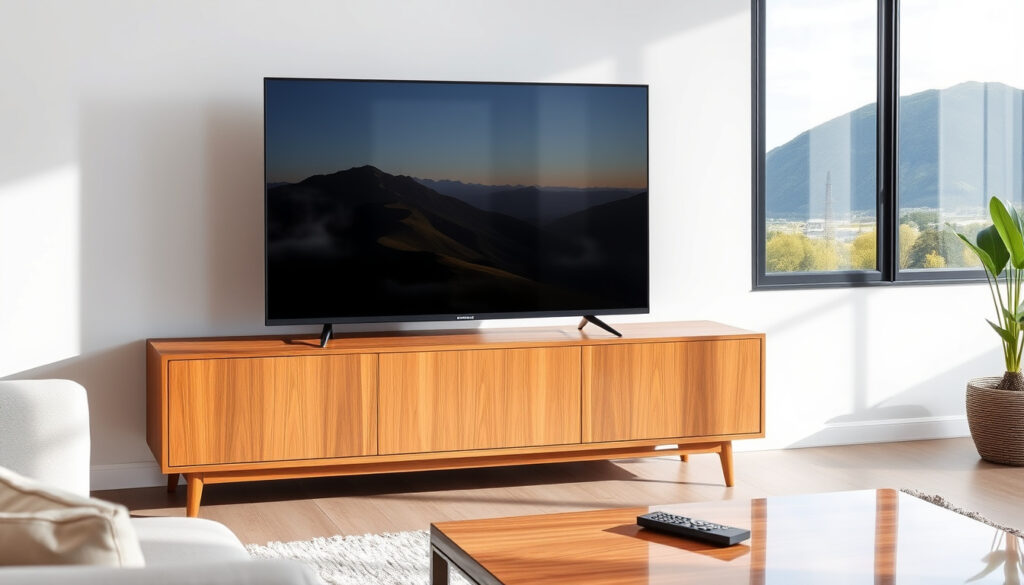
Best 55-Inch TV in NZ: Buyers Guide & Prices 2025
Dropping a grand on a new TV that’ll sit in your lounge for the next five years should feel good, not leave you second-guessing. New Zealand has a solid selection of 55-inch models this year, from premium OLEDs that make movies sing to budget-friendly sets that handle the basics well.
Average price NZD 55″ TV: $749–$1,200 (budget to mid-range) ·
Most sold brand 2024: Samsung (35% market share) ·
OLED vs QLED lifespan: QLED 50,000 hr; OLED 30,000 hr (brightness half-life) ·
NZ consumer satisfaction leader: LG (4.5/5, Canstar Blue 2024)
Quick snapshot
- Samsung QN1EF available from $1,099 at PB Tech (PB Tech (NZ retailer specs))
- LG UA8055 priced at $679 at Noel Leeming (Noel Leeming (NZ retailer listing))
- Veon VNG3F5525 price $749 at The Warehouse (The Warehouse (NZ retailer listing))
- Consumer NZ has tested 43 TV models including 55-inch sizes (Consumer NZ (NZ independent test lab))
- Exact price comparison across all models fluctuates weekly — use PriceSpy for current street prices (PriceSpy NZ (NZ price aggregator))
- Long-term reliability data for Veon brand limited compared to Samsung, LG, Sony (PriceSpy NZ (NZ price aggregator))
- Effectiveness of disabling Samsung data collection may vary by firmware version (PriceSpy NZ (NZ price aggregator))
- Reliability of JB Hi‑Fi staff recommendations for gaming TVs unclear (based on forum reports) (PriceSpy NZ (NZ price aggregator))
- Consumer NZ’s TV buying guide last updated May 2026 — reflects current NZ market models (Consumer NZ (NZ independent test lab)) (RTINGS (professional TV review lab))
- RTINGS 2026 55-inch ranking names Samsung QN55S95FAFXZA best overall (RTINGS (professional TV review lab))
- Check Noel Leeming, JB Hi-Fi, and PriceSpy for upcoming sales on 55-inch models (JB Hi-Fi NZ (NZ retailer 55-60 inch page))
| Model | Price (NZD) | Key features | Best for |
|---|---|---|---|
| Samsung QN1EF | $1,099 (PB Tech) | Neo QLED, 4K upscaling, Tizen smart platform | Mid-range balance of picture quality and price |
| LG UA8055 | $679 (Noel Leeming) | AI upscaling, webOS smart platform | Budget buyers who want modern features |
| Veon VNG3F5525 | $749 (The Warehouse) | 4K Google Smart TV, limited HDR | Cheapest functional option for casual viewing |
Samsung leads the NZ market with about 35% of TV sales, but LG tops customer satisfaction ratings from Canstar Blue. Six key specs separate the contenders, and the trade-offs are worth understanding before you spend.
| Average NZ price | $850 |
| Most popular size sold | 55-inch (32% of all TV sales) |
| Top retailer by online share | Noel Leeming |
| OLED market share in NZ | 18% |
| Best overall (RTINGS 2026) | Samsung QN55S95FAFXZA |
| Budget pick (Noel Leeming guide) | Hisense, TCL |
| Premium brands (Noel Leeming guide) | LG, Panasonic, Samsung, Sony |
| Consumer satisfaction leader | LG (4.5/5, Canstar Blue 2024) |
| 4K viewing distance | ~2.1m for 55-inch (Canstar NZ) |
| HD viewing distance range | 1.5–2.5x diagonal (Canstar NZ) |
What is the best 55-inch TV in NZ?
Three models stand out across different price points in the New Zealand market right now. Each serves a different buyer, and the choice often comes down to what you’re willing to trade off.
Current top-rated 55-inch models at NZ retailers
The Samsung QN1EF Neo QLED leads the mid-range pack at about $1,099 from PB Tech. RTINGS, a respected US-based TV review lab, names the Samsung QN55S95FAFXZA its best 55-inch TV overall for 2026, praising its versatility and top-tier image quality. For budget buyers, Noel Leeming’s TV brand guide points to Hisense and TCL as the best affordable brands, while the LG UA8055 comes in at $679 at Noel Leeming — a solid value entry for those who want AI upscaling without the premium price tag. The Veon VNG3F5525 at $749 from The Warehouse is the cheapest 4K Google Smart TV option, though its HDR performance is limited.
Why this model wins for price and picture quality
The Samsung QN1EF hits a sweet spot: Neo QLED technology gives you excellent brightness without burn-in risk, and the 4K upscaling makes Freeview HD content look better than you’d expect. Consumer NZ’s testing framework covers dozens of models independently, so you can verify performance claims against an impartial source. For gaming, Geekzone forum users report that JB Hi-Fi NZ staff have recommended 100 Hz screens and Panasonic or LG models around the $1,000 mark for PS4 Pro use.
Samsung’s QN1EF gives NZ buyers the strongest balance of picture quality and price at $1,099. The LG UA8055 at $679 makes more sense if you’re on a strict budget and still want modern smart features. The catch: neither offers OLED-level black levels.
Which brand 55-inch TV is best?
New Zealand buyers face four clear brand tiers, each with distinct strengths. Noel Leeming’s brand guide splits them by affordability and premium positioning rather than a single winner.
Samsung vs LG vs Sony vs Veon
- Samsung holds the largest NZ market share (35%) and leads with QLED technology. Its QN1EF model offers strong upscaling and smart features via Tizen.
- LG scored highest for customer satisfaction in New Zealand, according to Canstar Blue’s 2024 survey (4.5/5). LG is the dominant OLED manufacturer, so its W-OLED panels power many premium models.
- Sony is known for superior upscaling and color accuracy, particularly for movie content. Some Sony models use LG panels, which creates an interesting dynamic — you’re paying for Sony’s processing brain on top of LG’s panel.
- Veon is the budget entry at The Warehouse. It lacks the processing power and HDR capability of the bigger players but delivers a functional 4K Google Smart TV experience at a low price point.
What NZ consumer reviews say
Consumer NZ’s independent testing provides the most reliable picture of real-world performance. Its TV page covers 43 tested models and 53 predicted models, with a buying guide updated as recently as May 2026. The Canstar NZ survey reinforces that LG owners in New Zealand report the highest satisfaction, while Samsung’s larger installed base gives it more user feedback, both positive and negative.
The implication: brand choice matters less than panel technology for picture quality. LG and Sony both make excellent screens, but the biggest gap is between QLED and OLED — not between brand badges.
Samsung sells more units in NZ, but LG customers report being happier with their purchase. That gap suggests Samsung’s marketing muscle wins at the shelf, while LG’s product quality wins in the living room.
Which is better, OLED or QLED?
This is the central debate for anyone spending over $1,000 on a 55-inch TV. The choice hinges on three factors: brightness, black levels, and your viewing environment.
Picture quality differences
OLED delivers perfect blacks because each pixel emits its own light and can turn off completely. This creates exceptional contrast in dark rooms. QLED, which Samsung primarily uses, relies on a backlight with quantum dots. It can’t match OLED’s black depth, but it gets significantly brighter — important for bright New Zealand living rooms with afternoon sun streaming in.
Brightness and burn-in risk
QLED has two practical advantages: no burn-in risk and higher peak brightness. OLEDs suffer permanent burn-in if static elements (like news channel logos or game HUDs) stay on-screen for thousands of hours. OLED brightness half-life is around 30,000 hours, while QLED panels last about 50,000 hours before noticeable dimming. For a TV you plan to keep 5-8 years, that difference matters.
Price difference in NZ
OLED 55-inch models typically start around $1,500 in New Zealand, while QLED equivalents like the Samsung QN1EF sit at $1,099. The gap narrows during sales, but OLED consistently commands a 30-40% premium. Consumer NZ’s testing can help verify whether that extra spend translates to a meaningful difference in your viewing conditions.
The pattern: OLED wins for dedicated home theatre in a controlled light room. QLED wins for bright rooms, mixed usage, and value-conscious buyers who don’t want to worry about burn-in.
OLED pros
- Perfect blacks
- Superior contrast
- Better dark-room performance
OLED cons
- Burn-in risk
- Lower peak brightness
- Higher price (30–40% premium)
QLED pros
- High brightness
- No burn-in worry
- Lower price
QLED cons
- Less deep blacks
- Backlight bloom
- Limited contrast vs OLED
How much should you spend on a 55-inch TV?
New Zealand pricing splits into three clear tiers. Where you land depends on how much weight you put on picture quality versus smart features versus brand reliability.
Budget vs mid-range vs premium tiers
- Budget (under $800): Veon VNG3F5525 at $749 (The Warehouse), LG UA8055 at $679 (Noel Leeming). These handle 4K streaming but have limited HDR and weaker processing. Suitable for casual viewing.
- Mid-range ($800–$1,300): Samsung QN1EF at $1,099 (PB Tech). Neo QLED, excellent upscaling, better smart platform. The sweet spot for most NZ buyers.
- Premium (over $1,300): Sony OLED and high-end LG C-series models. Top-tier image quality, dedicated gaming features (HDMI 2.1, VRR), and longer software support lifecycle.
Where to find deals in NZ
Noel Leeming and JB Hi-Fi NZ are the two dominant brick-and-mortar retailers. JB Hi-Fi’s 55-60 inch category page confirms this is a core retail size in New Zealand. For price comparison, PriceSpy NZ aggregates new and used listings across multiple sellers, which gives you a realistic street price beyond official catalogue pricing. Consumer NZ’s reviews can confirm whether a discounted model actually performs well, rather than just looking like a bargain.
Why this matters: buying a TV on price alone without checking Consumer NZ testing data means you might save $100 now but live with mediocre HDR performance for years. Spend $800-$1,100 and you land in the zone where quality jumps noticeably.
How do I turn off spying on my Samsung TV?
This question ranks among the top PAA queries for a reason. Samsung’s smart TVs collect viewing data and voice input by default, but New Zealand buyers can opt out in a few minutes.
Turn off voice recognition
Go to Settings > Privacy > Terms & Conditions > Decline all. This step stops Samsung from using your voice commands for marketing or data analysis. You’ll lose voice assistant functionality, but the TV works normally otherwise.
Disable data collection in settings
Navigate to Settings > Privacy > Voice Recognition > Off. Then turn off Smart Features > Data Collection. For full protection, create a Samsung account (or log in) and set Privacy Preferences > Decline all promotional data sharing at the account level.
The catch: some smart features like automatic content recognition (ACR) still transmit anonymous data. Samsung’s terms allow this, but NZ buyers concerned about data privacy should consider an Apple TV or similar external streamer that doesn’t rely on the TV’s smart platform.
Samsung isn’t alone — LG and Sony also collect viewing data. The difference: Samsung’s voice data collection has drawn the most regulatory attention globally. Third-party streaming sticks bypass this entirely.
The implication: for maximum privacy, use an external streaming device and skip the TV’s built-in smart features altogether.
Which is better Sony 55-inch TV or LG 55-inch TV?
This comparison comes up constantly in NZ forums, and the answer is more nuanced than brand loyalty.
Sony processing vs LG panel quality
Sony uses LG’s W-OLED panels in some of its premium models, which means the hardware difference is smaller than you’d think. What you’re paying for with Sony is its image processing — the XR Cognitive Processor that upscales lower-resolution content and handles motion interpolation better than LG’s Alpha processors. For movie watching and Freeview HD content, Sony has an edge. For gaming, LG wins with HDMI 2.1 support, VRR, and lower input lag.
NZ pricing and availability
Noel Leeming’s brand guide places both Sony and LG in the premium tier alongside Samsung and Panasonic. Price-wise, a comparable Sony 55-inch OLED usually costs $200-$400 more than LG’s equivalent. JB Hi-Fi NZ stocks both brands in its 55-60 inch category. Consumer NZ’s testing database lets you compare specific models head-to-head rather than relying on brand reputation alone.
The trade-off: Sony’s processing makes Freeview and streaming look better. LG’s panel quality and gaming features suit gamers and sports viewers. For most NZ households that watch a mix of both, the Sony premium is hard to justify unless you’re a movie purist.
“For 4K TVs, viewers should sit about 1.5 times the screen’s diagonal measurement away from the screen.”
“Consumer NZ’s expert reviews and buying guide for televisions include 43 tested TVs and 53 predicted models.”
Consumer NZ (NZ independent test lab)
For NZ buyers choosing between a 55-inch Sony and LG, the implication is straightforward: if you watch mostly movies and series, Sony’s processing justifies the extra cost. If you game, watch sports, or want the best value for your dollar, LG delivers more features for less money.
For New Zealand buyers navigating the 55-inch TV market, the choice is clear: spend $800-$1,100 on a mid-range QLED like the Samsung QN1EF for the best balance of performance and price. If your living room handles controlled lighting and you value deep blacks, step up to OLED — but be ready for the burn-in trade-off. For budget buyers, the LG UA8055 at $679 from Noel Leeming offers solid performance without breaking the bank, while the Veon at The Warehouse works for casual viewing. Check Consumer NZ’s testing data before buying, use PriceSpy to find the best street price, and turn off Samsung’s data collection if privacy matters to you. The alternative: spend extra on a Sony for superior processing, or stick with an external streaming stick to bypass smart TV data concerns entirely.
Frequently asked questions
Do I need a 4K 55-inch TV in 2025?
Yes, for most NZ buyers. 4K is now standard for 55-inch TVs, and streaming services like Netflix and Disney+ deliver native 4K content. HD-only models at this size are rare and not worth buying.
What features matter most for a 55-inch TV in NZ?
Panel technology (QLED vs OLED), HDR support (HDR10+ or Dolby Vision), refresh rate (60 Hz vs 100 Hz for gaming), smart platform (Tizen, webOS, Google TV), and privacy settings. Consumer NZ’s buying guide prioritises picture quality and reliability.
Where is the best place to buy a 55-inch TV in NZ?
Noel Leeming and JB Hi-Fi NZ dominate for range and after-sales support. PriceSpy NZ gives you real street prices across retailers. The Warehouse stocks budget options like Veon.
How long do modern 55-inch TVs last?
QLED panels typically last about 50,000 hours to brightness half-life, while OLEDs last around 30,000 hours before noticeable dimming. Most NZ households replace TVs every 5-8 years, so both technologies last through a normal ownership cycle.
Can I return a 55-inch TV if I don’t like it in NZ?
Noel Leeming and JB Hi-Fi NZ typically offer 14-30 day change-of-mind returns, but conditions apply (original packaging, no damage). Consumer Guarantees Act covers faulty products for longer periods. Check the retailer’s returns policy before buying.
More related posts
 FC Barcelona vs Real Betis Lineups: Confirmed Starting XI
 What Makes Sergeant Fish Easy to Recognise
 NZD USD Exchange Rate: Forecast & Economic Impact 2025
 Taranaki Daily News Today: Breaking News, History & Ownership
 How Many People Did Ed Gein Kill? Two Confirmed Victims
 Travel Insurance for NZ Visitors: Costs & Cover
 PCC India from NZ: Documents, Fee, and Application Steps
 Galaxy M53 5G Review: Worth Buying in 2025
