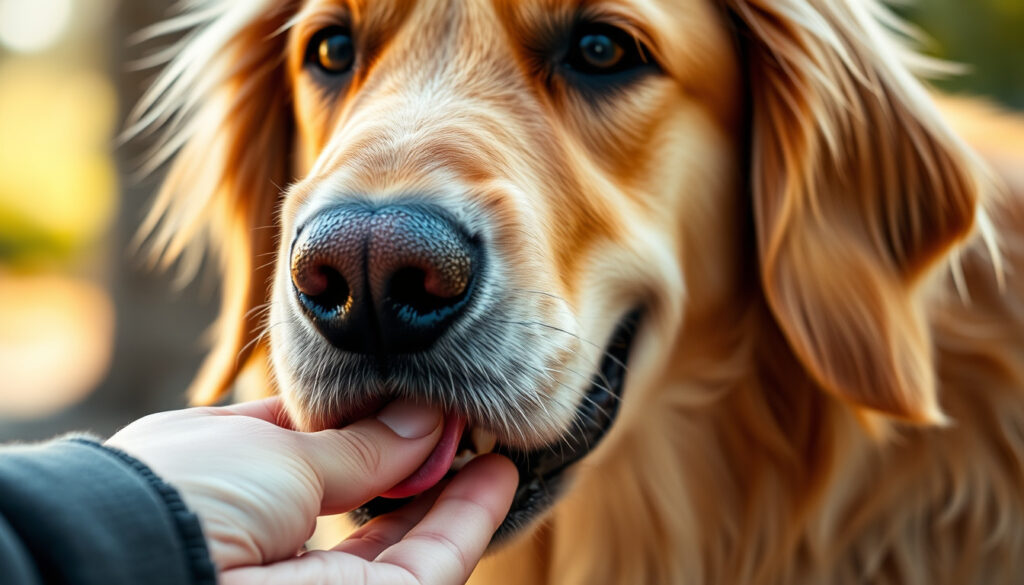
Why Do Dogs Lick You? Vet-Explained Reasons & Meanings
There’s a reason your dog’s tongue finds your face, your hands, or your feet—and it’s not just about affection. Every lick carries a message rooted in evolution, communication, and even self-soothing. In this guide, we’ll walk through the science and veterinary insights behind why dogs lick, what different contexts mean, and when licking might signal something more than a simple greeting.
Dogs lick to communicate: Affection, attention, or appeasement ·
Endorphin release during licking: Calms and relaxes the dog ·
Common licking targets: Hands, feet, face, legs ·
Licking as grooming: Self-cleaning or pack bonding
Quick snapshot
- Licking releases endorphins in the dog’s brain (Peninsula Humane Society & SPCA – animal behavior center)
- Whether licking is primarily affection or appeasement depends on context and individual dog personality (Newsweek – pet behavior reporting)
- Licking behavior emerges in puppyhood as exploratory and social grooming (PetMD – veterinary resource)
- If licking becomes excessive or compulsive, veterinary behaviorists recommend ruling out medical causes first (Pooler Veterinary Hospital – small animal practice)
The table below organizes the core dimensions of dog licking behavior.
| Most common reason | Affection and bonding |
| Neurochemical effect | Endorphin release calms the dog |
| Typical licking targets | Hands, face, feet, legs |
| Frequency in healthy dogs | Daily, varies by individual |
| Primary function | Communication, grooming, exploration |
| When to be concerned | Persistent licking that interferes with rest or causes skin damage |
What Does It Actually Mean When a Dog Licks You?
Affection and bonding
- Licking releases endorphins in the dog’s brain, creating a calming effect (Peninsula Humane Society & SPCA – animal behavior center).
- Dogs often lick their owners during quiet greetings, paired with a relaxed tail wag (PetMD – veterinary resource).
- This behavior mirrors the grooming and bonding rituals dogs use within their pack (Animal Friends – pet insurance and behavior advice).
Appeasement and submission
- Licking can be a polite request for space or a submissive signal after a reprimand (Newsweek – pet behavior reporting).
- Some dogs learn that licking a person’s face makes the person move away, turning it into an avoidance strategy.
- In these cases, the lick says “I am not a threat” more than “I love you.”
Exploratory and taste reasons
- Puppies use their tongues to investigate new objects, and that curiosity carries into adulthood (PetMD – veterinary resource).
- Human skin carries salt, sweat, and food residue, which dogs find interesting (Newsweek – pet behavior reporting).
- Licking also helps dogs gather scent information through their vomeronasal organ.
Attention-seeking
- If a dog licks and you react—by looking, talking, or petting—the behavior is reinforced (Pets Best – pet insurance and behavior guides).
- Many dogs quickly learn that licking reliably gets attention, even negative attention.
The same lick can mean love, anxiety, or a simple request. For owners, the key is reading the context: a soft, relaxed dog is bonding; a tense, lip-licking dog may be stressed.
Why Do Dogs Lick Your Feet, Hands, and Legs?
Why dogs lick your feet
- Feet carry strong scent information from sweat glands and from the ground you walk on (PetMD – veterinary resource).
- Licking feet can be a sign of affection, but also a way to gather information about where you’ve been.
Why dogs lick your hands
- Hands often have food residue or familiar smells from pets and objects (Animal Friends – pet insurance and behavior advice).
- Hand licking is also a common affectionate greeting when you come home.
Why dogs lick your legs
- Leg licking often occurs when you’re standing still, especially after a shower or exercise (Newsweek – pet behavior reporting).
- It may be a combination of salt taste, greeting excitement, and grooming instinct.
The pattern: dogs target the body parts that carry the most scent and are easiest to reach. It’s a mix of curiosity, bonding, and taste.
Why Do Dogs Lick You When You Get Home or in the Morning?
Greeting behavior and excitement
- Licking upon return is a classic greeting ritual, often accompanied by tail wagging and jumping (PetMD – veterinary resource).
- It’s a way for the dog to reconnect and check your scent after an absence.
Morning licking as a routine check
- Morning licking may be linked to hunger or a desire for attention (The Kennel Club – canine health and behavior authority).
- It can also be a gentle way for the dog to wake you up for their breakfast routine.
Morning and greeting licks are normal social behavior. But if they become frantic or obsessive, consider whether your dog is getting enough mental stimulation or if anxiety is at play.
Why Do Dogs Lick You After a Shower?
New scents and moisture
- After a shower, your skin smells different—soap, shampoo, and water attract a dog’s curiosity (Newsweek – pet behavior reporting).
- Licking the water droplets is also part of the dog’s natural grooming instinct.
Grooming instinct
- Dogs groom themselves and pack members by licking, and a wet person may be seen as needing a “clean-up” (Animal Friends – pet insurance and behavior advice).
- This is generally harmless and often a sign of bonding.
Why Does My Dog Lick Me When I Pet Her?
Reciprocal affection
- Licking during petting can be a way for the dog to “return the favor” and reinforce the bonding moment (PetMD – veterinary resource).
- It’s a sign that the dog is enjoying the interaction.
Calming feedback loop
- Licking releases endorphins, so it can be a self-soothing behavior during petting (Peninsula Humane Society & SPCA – animal behavior center).
- If the dog licks excessively and then tries to move away, it may be a sign of overstimulation.
How Do Dogs Say ‘I Love You’ and How Do They Choose Their Favorite Person?
Dog love languages beyond licking
- Eye contact, a relaxed tail wag, leaning against you, and bringing you toys are all signs of affection (The Kennel Club – canine health and behavior authority).
- Licking is just one piece of a larger communication system.
How dogs pick a favorite person
- The favorite person is usually the one who provides the most positive interactions—feeding, walks, play, and calm presence (PetMD – veterinary resource).
- Dogs are also drawn to individuals with a calm, predictable energy.
How Do Dogs Say ‘I’m Sorry’ and What Do Dogs See When They Look at You?
Appeasement gestures
- Licking can be a submissive apology after being scolded, accompanied by a lowered head and tucked tail (Newsweek – pet behavior reporting).
- It’s not a moral apology, but a signal of deference to avoid conflict.
Dog visual perception of humans
- Dogs rely more on body language and scent than on facial detail to recognize their owners (The Kennel Club – canine health and behavior authority).
- They can read your emotional state from your posture, tone, and smell.
When Licking Becomes a Problem: A Step-by-Step Guide
If licking is persistent, compulsive, or causing skin damage, follow these steps recommended by veterinarians.
- Rule out medical causes first. Schedule a vet visit to check for allergies, skin infections, dental pain, or gastrointestinal issues (Pooler Veterinary Hospital – small animal practice).
- Assess your dog’s environment. Boredom and lack of stimulation can drive repetitive licking (Pets Best – pet insurance and behavior guides).
- Increase mental and physical exercise. More walks, puzzle toys, and training sessions can reduce stress-related licking.
- Use positive reinforcement for calm behavior. Reward your dog when they are resting quietly instead of licking.
- Consult a veterinary behaviorist if licking persists despite medical and environmental changes.
Confirmed facts
- Licking releases endorphins and calms the dog (Peninsula Humane Society & SPCA – animal behavior center)
- Licking is a natural grooming and communication behavior (PetMD – veterinary resource)
- Dogs use licking to explore taste and scent (Animal Friends – pet insurance and behavior advice)
- Excessive licking can be a sign of medical issues (Savannah Veterinary Internal Medicine – internal medicine specialist)
What’s unclear
- Whether licking is primarily affection or appeasement depends on context (Newsweek – pet behavior reporting)
- Exact meaning of post-bite licking is not fully understood
- Neurological disorders as a cause of repetitive licking require further study (Savannah Veterinary Internal Medicine – internal medicine specialist)
- The role of salt taste vs. pleasure seeking is debated among experts
“Licking releases pleasure-causing endorphins and can be self-soothing for dogs.”
— Peninsula Humane Society & SPCA (animal behavior center)
“Dogs may lick to show affection and to gather information about their environment.”
— PetMD (veterinary resource)
“Excessive licking is more concerning when it is persistent, compulsive, or tied to other symptoms.”
— Pets Best (pet insurance and behavior guides)
“Veterinary sources advise ruling out medical causes first when licking is excessive.”
— Pooler Veterinary Hospital (small animal practice)
The takeaway for dog owners: licking is a normal, multi-layered behavior. Pay attention to the context—when, where, and how your dog licks. A few licks during a cuddle session are a good sign. Hours of licking that disrupt sleep or cause raw skin warrant a vet visit. For the average owner, the decision is clear: enjoy the affection, but stay alert to the signals that say something deeper.
adoptapet.com, newportharborvets.com, caringhandsvet.com, reddit.com
Understanding the reasons dogs lick humans can help you better interpret your dog’s behavior and strengthen your bond.
Frequently asked questions
Is it safe to let my dog lick my face?
For most healthy adults, the risk is low. However, dogs can carry bacteria in their mouths that may cause infection, especially for people with weakened immune systems. Avoid letting your dog lick open wounds or mucous membranes.
How can I stop my dog from licking excessively?
First, rule out medical causes with a veterinarian. Then address boredom, anxiety, or habit. Increase exercise, provide mental stimulation, and use positive reinforcement to reward calm behavior. Avoid punishment, which can increase anxiety.
Does licking mean my dog is stressed?
It can. Stress-related licking is often repetitive, focused on surfaces or paws, and may be accompanied by other signs like pacing, whining, or lip licking. If you suspect stress, consult a veterinary behaviorist.
Why does my dog lick the air?
Air licking can be a normal response to a new scent, but it can also indicate gastrointestinal discomfort, nausea, or in some cases, a neurological issue. If it’s frequent, have your vet check it out.
Why do dogs lick each other’s ears?
Ear licking is a grooming and bonding behavior among dogs. It can also be a sign of submission or friendship. However, excessive ear licking may indicate an ear infection or irritation.
Can licking be a sign of a medical problem?
Yes. Excessive licking of paws, surfaces, or objects can be a sign of allergies, skin infections, dental pain, gastrointestinal issues, or even neurological disorders. A vet visit is recommended if licking is persistent.
Why does my dog lick me and then bite me gently?
This is often a sign of overstimulation. The gentle bite (“mouthing”) usually follows a period of licking and petting. It’s common in puppies and young dogs. If it’s hard or frequent, redirect to a toy or take a break.
More related posts
 Prayer Times in Auckland Today: FIANZ & Hanafi Guide
 Bed Bath and Beyond Henderson: Hours, Location & Store Guide
 Best Hand Cream for Dry Hands: Expert Picks and Tips
 Park Min-young: Biography, Career, Relationships & Net Worth
 Where the Wild Things Are: Book, Film, Controversy Guide
 Sarah J. Maas Books in Order: Complete Reading Guide 2024
 Dollar Rate in India: USD to INR Live & Cost of Living Guide
 Bluetooth Transmitter for Car – Best Picks and Buying Guide
