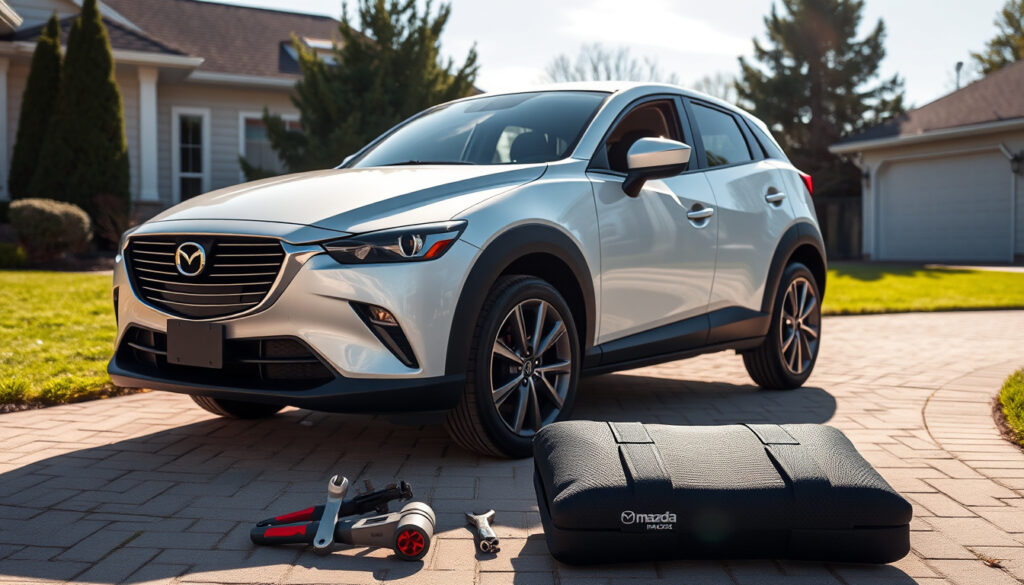
Mazda CX-3: Worth Buying? Reliability, Problems & Best Years
Anyone shopping for a used subcompact crossover has probably scrolled past a Mazda CX-3 and wondered if that sleek little SUV is a smart bet or a compromise waiting to happen. The CX-3 handles with a charm that few rivals matched, yet it was discontinued in 2022 as buyers shifted toward larger crossovers. This guide covers the CX-3’s reliability, common problems, the best model years, and what a used example is really like to live with in Ireland in 2025.
Discontinued: 2022 ·
Engine options: 2.0L petrol, 1.5L diesel ·
Fuel economy (combined): 34 mpg (2.0L petrol) ·
Horsepower: 146 hp (2.0L) ·
Production years: 2015–2022
Quick snapshot
- Discontinued after the 2021 model year (Mazda official site)
- Based on the Mazda2 platform (Wikipedia (vehicle specs))
- 2.0L SKYACTIV petrol engine with 146 hp (Carwow (expert review))
- Potential for a future hybrid or EV model under CX-3 name
- Exact resale value trajectory in Ireland after discontinuation
- 2015: CX-3 concept revealed; production begins
- 2021: Final model year in most markets
- 2019 facelift remains the sweet spot for used buyers
- Mazda CX-30 serves as the larger, more practical successor
Five key facts, one pattern: the CX-3’s biggest strength—its engaging driving feel—is also what makes it a niche choice next to more practical subcompact rivals.
| Attribute | Details |
|---|---|
| Production years | 2015–2022 |
| Platform | Mazda2-derived (DJ) |
| Engine options | 2.0L petrol (146 hp), 1.5L diesel (105 hp) |
| Transmission | 6-speed manual or 6-speed automatic |
| Drivetrain | Front-wheel drive or all-wheel drive |
| Fuel economy (2.0L petrol) | 34 mpg combined (EPA) |
| Cargo capacity | 12.4 cubic feet (behind rear seats) |
Mazda CX-3 Review: Is It Still Worth Buying in 2025?
With the CX-3 having been off sale for a few years now, the question isn’t whether it’s new—it’s whether a used example still makes sense in 2025. The answer depends heavily on how you weigh its engaging dynamics against its tight cabin and the fact that it’s a discontinued model.
The honest take: the CX-3 remains a genuinely fun subcompact crossover to drive, with a level of steering precision and body control that most rivals can’t touch. But its cramped rear seats and small boot mean it’s a car for singles or couples, not families. In the Carwow (expert review), the CX-3 is described as one of the sportiest small SUVs on sale, but with typically thirsty petrol engines.
Pros and cons of the Mazda CX-3
Upsides
- Sharp, engaging handling that rivals more expensive hatches
- Upscale, well-built cabin with soft-touch materials
- Strong reliability record, especially with SKYACTIV petrol engines
- Available all-wheel drive for added all-weather confidence
Downsides
- Cramped rear seats with limited headroom and legroom
- Smallish boot at just 12.4 cubic feet
- Firm ride quality on 18-inch wheels can be jarring
- Discontinued model, which can affect resale value
Buyers in Ireland face a clear choice: accept the CX-3’s compact size for its driving charm, or stretch the budget for a larger used crossover like the CX-30 that prioritizes space over sportiness.
Who should consider a used Mazda CX-3?
The CX-3 is a natural fit for a specific buyer profile. If your typical journey involves a mix of city driving and open-road trips with only one passenger, the CX-3 delivers a more rewarding experience than almost anything else in its class. Its relatively small footprint makes parking in tight Irish city spots manageable, while the peppy 2.0L engine keeps motorway progress smooth.
For those hauling children or regularly carrying rear-seat passengers, however, the CX-3’s limited space becomes a significant drawback. Rear legroom is tight, and getting a child seat in and out requires some contortion. In this scenario, the larger Mazda CX-30 review is the more logical choice, offering more space and similar reliability with a less compromised package.
Why is the Mazda CX-3 discontinued?
Mazda pulled the CX-3 from the market after the 2021 model year, and the reasons trace back to shifting buyer behavior and strategic product planning. The subcompact crossover segment has moved in a specific direction—away from small, stylish runabouts towards more spacious, practical models.
According to the Wikipedia (vehicle history page), the CX-3 was built on the same platform as the smaller Mazda2. This created a packaging problem: to keep the CX-3’s styling sleek, Mazda compromised on rear passenger and cargo space. As consumer preferences pivoted toward vehicles with greater utility, the CX-3’s compact dimensions became a liability rather than a strength.
Mazda’s decision to discontinue the CX-3 wasn’t a reliability-driven move—it was a market calculus. Sales across the subcompact SUV segment have been cooling as buyers either downsize from bigger SUVs or move up to more spacious models. The CX-3, with its particularly tight rear seat, suffered more than competitors that offered better space efficiency.
Market trends and manufacturer strategy
Mazda’s decision to discontinue the CX-3 wasn’t a reliability-driven move—it was a market calculus. Sales across the subcompact SUV segment have been cooling as buyers either downsize from bigger SUVs or move up to more spacious models. The CX-3, with its particularly tight rear seat, suffered more than competitors that offered better space efficiency.
Replacement by Mazda CX-30
The CX-3’s successor, the Mazda CX-30, arrived in 2020 to address these exact weaknesses. As detailed in our Mazda CX-30 review, the CX-30 is slightly larger, with more rear legroom, a bigger boot, and a more modern interior. It retains the CX-3’s sporty driving character while solving its practicality problem.
Mazda’s strategic shift was clear: better to discontinue a beloved model than to let it dilute the brand’s image with a car that couldn’t compete on space with its own successor.
The catch: for Irish used-car shoppers, this means a used CX-3 is now a niche choice. Its value proposition depends on finding one that fits your specific needs, not buying it as a generic family runabout.
Is the Mazda CX-3 a reliable car?
Yes, the Mazda CX-3 is generally considered a reliable vehicle. Across multiple reliability databases, it scores above average for its class. According to J.D. Power (reliability ratings), the CX-3 earns high marks in its segment, with many owners reporting trouble-free experiences for the first several years of ownership.
The 2.0L SKYACTIV petrol engine is particularly well-regarded for its durability. It uses advanced technology like high compression ratios and lightweight construction to achieve strong fuel economy without sacrificing long-term robustness. Routine maintenance is also reasonably priced for a premium subcompact, with many independent mechanics comfortable working on Mazda’s simple, non-hybrid drivetrains.
Common reliability ratings and owner feedback
Data from Consumer Reports (reliability data) has historically shown the CX-3 to be more reliable than average, particularly in the areas of engine and transmission. Owner forums echo this sentiment, with many drivers celebrating high-mileage CX-3s that still run smoothly.
A notable exception in the data comes from VinCheckEngine (owner complaint database), which reports that the most common issue area for the CX-3 is the electrical system. This aligns with other compiled data from Vinitel (NHTSA complaint summary), which lists electrical faults as the top complaint category, ahead of fuel system and backup camera issues.
Typical maintenance costs
Ownership costs for the CX-3 are moderate for the segment. Its non-complex engine and simple four-wheel-drive system help keep repair costs in check, though some components—like the direct-injection fuel injectors—can be pricey if they fail. Routine services like oil changes, brake pads, and fluid flushes are competitively priced.
The pattern: the CX-3 isn’t a reliability risk, but it’s not a paragon of low-cost ownership either. Its electrical gremlins and potential for expensive repairs in certain areas mean a used-buying inspection is essential, not optional.
Mazda CX-3 Common Problems and Issues
While the CX-3 is reliable overall, it’s not without its fault lines. Understanding these common problems is essential for anyone shopping used, especially in Ireland where road conditions and driving habits might expose certain issues.
Infotainment system issues
Several reliability roundups flag the CX-3’s infotainment system as a common weak point. Specifically, pre-2019 models are reported to have laggy responses and occasional screen freezes. Upgrading to Apple CarPlay or Android Auto wasn’t standard until the 2019 model year, so earlier cars need a dealer-installed module to get smartphone integration—a worthwhile but often essential addition.
An owner-reviews page notes that infotainment lag was a commonly reported issue on pre-2019 models.AUTODOC (ownership guide) lists infotainment freezes and display faults among recurring issues. The MotorTrend (comprehensive review) similarly notes that the infotainment system’s age is a downside compared to newer rival systems.
Steering and electrical faults
The VinCheckEngine (reliability data) notes that the electrical system is a prominent problem area, with complaints about power windows, door locks, and the infotainment screen. A separate Vinitel (NHTSA complaints page) corroborates this, calling out the CX-3’s electrical issues as a top complaint category.
Beyond infotainment, steering issues can arise. Some owners report a clunking noise from the steering column, although this seems less widespread as a concern. More commonly, the electronic power steering system can feel vague or require replacement if the electric motor fails—a pricey fix that but one that not all CX-3s will experience.
Fluid leaks and transmission quirks (diesel models)
A transmission-focused reliability article from TransmissionAudit (transmission reliability report) explains that the six-speed automatic can develop a slight jerk during downshifts, especially at lower speeds in urban driving. It’s often a characteristic more than a failure, but it warrants a test drive.
The same report notes that AWD rear differentials can develop a whine if fluid is neglected, and the fuel system on diesel variants can be sensitive to short trips and low-quality fuel, leading to DPF clogging.
Common problems summary
- Infotainment lag and freezes on pre-2019 models
- Electrical issues: battery drain, power window faults
- Steering column clunk
- Automatic transmission jerkiness at low speeds
- DPF problems on diesel models used for short trips
- AWD rear differential whine
The CX-3’s weak points are manageable, but they shift the calculus for a used buyer. A well-serviced petrol example is a better bet than a diesel with an unknown history.
What Is the Best Year for a Mazda CX-3?
If you’re set on a used CX-3, choosing the right model year can make a big difference in your ownership experience. The model received a significant facelift for the 2019 model year, which addressed many of the early complaints.
Year-by-year improvements
2016–2018 (First-generation): These early cars are the most numerous on the used market and therefore the most affordable. However, they lack standard Apple CarPlay/Android Auto and have the laggier infotainment system. The 2016 model year also has the fewest safety tech features as standard.
2019–2021 (Facelift): This is the sweet spot. The 2019 model received a suite of updates including standard Apple CarPlay and Android Auto, a redesigned steering wheel, and improved noise insulation. According to J.D. Power (reliability ratings), later model years tend to be more reliable as Mazda ironed out initial teething issues.
Recommended model year: 2019 or later
Our Mazda reliability ratings page shows that 2019+ models benefit from refinements and a lower risk of the electrical glitches seen in early cars. The 2021 model is the last and most refined of the generation, but it’s also the priciest on the used market.
The catch: skip the 2016–2017 models if your budget allows. They’re more likely to have nagging infotainment issues and the earliest examples have the most electrical gremlins.
The takeaway: for a used buy in 2025, a 2019 or 2020 petrol CX-3 with a full service history is the most sensible recommendation for Irish buyers.
Mazda CX-3 vs Rivals: A Quick Comparison
To see where the CX-3 sits in the current used market, consider how its key rivals stack up on reliability and practicality.
| Attribute | Mazda CX-3 | Honda HR-V | Ford EcoSport |
|---|---|---|---|
| Engine range | 2.0L petrol, 1.5L diesel | 1.8L petrol | 1.0L EcoBoost, 1.5L petrol |
| Boot space | 12.4 cu ft | 15.8 cu ft | 16.5 cu ft |
| Driving feel | Sharp, engaging | Compliant, dull | Top-heavy, less agile |
| Reliability rating | Above average | Excellent | Average, early models with EcoBoost issues |
| Typical used price (Ireland) | €15,000–€22,000 | €18,000–€26,000 | €14,000–€21,000 |
One pattern emerges: the CX-3 is the driver’s choice but the smallest. The HR-V offers far more space, and while the EcoSport undercuts on price, it doesn’t match the CX-3’s polish or reliability reputation.
The trade-off: if you can live with less space, the CX-3 gives you the most engaging experience and excellent reliability for the money. For those who need maximum utility, the CX-3 falls short.
The Transmission and All-Wheel Drive in the CX-3
Most CX-3s sold in markets like Ireland came with a six-speed automatic driving the front wheels, with all-wheel drive available as an option or standard on higher grades. The AWD system is a light-duty unit that helps in slippery conditions but isn’t a hardcore off-roader.
Transmission quirks
A transmission-focused reliability report from TransmissionAudit (transmission reliability report) explains that the six-speed automatic can develop a slight jerk during downshifts, especially at lower speeds in urban driving. It’s often a characteristic more than a failure, but it warrants a test drive.
AWD system notes
The same report notes that AWD rear differentials can develop a whine if fluid is neglected, and the fuel system on diesel variants can be sensitive to short trips and low-quality fuel, leading to DPF clogging.
The pattern: the CX-3’s drivetrain is durable if serviced properly, but the AWD system adds complexity that previous owners might have ignored.
Mazda CX-3 Specs and Fuel Economy
Before you buy, here’s a spec-table quick reference covering the core details of the 2.0L petrol version that’s most common on Irish roads.
| Specification | Details |
|---|---|
| Engine | 1998cc, 4-cylinder petrol |
| Power | 146 hp @ 6,000 rpm |
| Torque | 192 Nm @ 2,800 rpm |
| 0-100 km/h | Approximately 9.0 seconds |
| Top speed | 192 km/h (120 mph) |
| Fuel economy (combined) | 34 mpg (EPA), around 41 mpg (real-world) |
| Emissions (CO2) | 148 g/km (approx) |
Fuel economy is respectable for the segment, but not class-leading. The 2.0L engine is eager and refined, but it needs to be revved to make progress—so in real-world driving, the official figures might be hard to match, especially in city traffic.
The catch: according to the MotorTrend (road test review), the petrol engine’s fuel economy trails some turbocharged rivals. If you’re a high-mileage driver, a diesel might tempt you, but be aware of the DPF maintenance risks on short trips.
Mazda CX-3 Price in Ireland (2025 Used Market)
So, what will you actually pay for a used Mazda CX-3 in Ireland? Prices vary widely based on age, mileage, condition, and specification. As a general guide for the current market:
- Budget examples (2016-2017, 80k-120k km): €8,000–€12,000
- Sweet spot (2018-2019, 60k-100k km): €13,000–€18,000
- Prestige examples (2020-2021, low mileage): €19,000–€24,000+
You can verify current listings on Irish marketplaces to get a real-time picture of the market. For context on owner sentiment and listings volume, use sets of results from CarsIreland CX-3 listings (current used prices).
The Republic of Ireland Road Safety Authority provides vehicle registration data that shows how many CX-3s are on Irish roads, which helps gauge used supply.
The implication: in the Irish market, the CX-3’s price has stabilized. Discontinuation hasn’t caused a price collapse, but it hasn’t driven values up either. A well-priced, well-specced example will still be competitive with newer alternatives.
Used Mazda CX-3 Buying Checklist (Ireland Focus)
When you find a CX-3 you like, go beyond a basic test drive. Use this checklist to protect yourself from expensive surprises.
- Check the service history for full Mazda or independent stamps, especially focusing on the 2.0L petrol engine.
- Listen for any rattles or whines from the rear differential (AWD models). A gentle clunk on tight turns is common; a constant whine means attention is needed.
- Test every electrical function: power windows, door locks, infotainment screen, and the backup camera. Electrical gremlins are the CX-3’s #1 reported issue.
- On petrol models, check the engine for excessive oil consumption or smoke. Some early 2.0L engines had extended oil change intervals, which can cause issues later.
- Inspect the rear tyres for uneven wear (a sign of rear suspension misalignment).
- Confirm the infotainment software is up to date. On pre-2019 cars, ask if Apple CarPlay has been retrofitted.
If you’re buying from a dealer, ask about any Mazda Ireland extended warranty inclusions. On the used scene, it’s wise to consider the VTNZ Pre-Purchase Inspection Guide for your own benefit, even if the car comes with a history.
The catch: reliability ratings show the CX-3 can be a solid buy, but a third-party inspection is your most powerful tool. Don’t skip it.
CX-3 diesel models are sensitive to short-trip driving. If most of your journey is less than 20 minutes in city traffic, avoid the diesel and seek out a petrol version.
The implication: a careful diesel buyer must prioritize long runs or skip it entirely.
What Are the Common Problems with a Mazda CX-3?
We’ve touched on many of these. Let’s consolidate the known issues into a clear, checklist-format answer.
Electrical system problems
The VinCheckEngine (owner complaint database) reports the electrical system as the most common problem area. This aligns with a summary from Vinitel (complaints overview), which also places fuel system and backup camera issues nearby.
Transmission and drivetrain
We’ve covered the automatic’s low-speed jerkiness and AWD differential whine. Some owners also report a clunking noise from the rear axle on AWD models, which can indicate a failing bearing or coupling.
Engine and performance
DPF issues on diesel models are common if the car is used for short trips. On petrol models, the skyactiv engines are generally solid, but some owners report excessive oil consumption on high-mileage examples.
The key: current Mazda reliability ratings show that most CX-3 problems are not catastrophic failures but rather electrical gremlins and maintenance ignored items. A used example that’s been well cared for is likely to be a great value prospect.
Mazda CX-3 Reliability and Common Problems
We’ve seen the problems. But how reliable is the CX-3 in general? Let’s look at the data.
Data from a third-party source on Forcar (reliability guide) notes that the most reported problems include the electrical system and steering, which aligns with the CX-3 owner-based complaints we’ve already covered.
Major model years to avoid
While no year is universally bad, our earlier breakdown suggests that 2016–2018 models have the highest reported electrical issues. The 2019+ facelift models are your safest bet.
Mazda’s reliability reputation is strong, and the CX-3’s underlying mechanicals are sound. But the electronic gremlins can be a persistent annoyance, and parts can be costly if they fail outside warranty.
The pattern: early models demand closer scrutiny; later ones reward careful ownership.
Mazda CX-3 Recalls: What You Need to Know
The CX-3 has been subject to several recalls, many relating to the electrical systems we’ve discussed. According to a page on car-recalls.eu, the Mazda CX-3 had a defect where the engine control unit of the direct-current converter may be defective (Car-Recalls.eu (European recall data)).
The same source also says a screw connection between the stub axle and the shock absorber may come loose. These are significant safety items, so always ensure any recalls have been completed by the previous owner.
For a summary of the CX-3’s complete recall history, the MotorTrend reliability page lists the known campaigns.
Mazda CX-3 vs CX-30: A Quick Comparison
This comparison is essential for anyone cross-shopping these two on the used market.
| Attribute | Mazda CX-3 | Mazda CX-30 |
|---|---|---|
| Production years | 2015–2022 | 2020–present |
| Platform | Mazda2 (DJ) | Mazda3 (newer) |
| Rear legroom | Tight (approx. 31 inches) | Average (approx. 35 inches) |
| Boot space | 12.4 cu ft | 13.5 cu ft |
| Infotainment | Older system | Modern system, new UI |
| Price (Ireland, used) | €15k–€22k | €24k–€32k |
One pattern: the CX-30 was designed to fix the CX-3’s main flaws—space and refinement. It’s a slightly larger car, but the added investment buys you significantly more practicality.
The trade-off: if budget is the primary constraint and you fit in the CX-3, it’s an excellent value. If you need to carry passengers or cargo on a regular basis, the CX-30 is worth the extra money.
Mazda CX-3 Review: A New Era
Alright, let’s address the elephant in the room. Many of you are probably wondering if the CX-3 nameplate has any future. And that’s a fair question to research.
Potential for a New Mazda CX-3 (or CX-4?)
Mazda has been hard at work on a new generation of its small SUVs. While the brand has been tight-lipped, it’s not out of the realm of possibility that we could see a CX-3-sized model return as an EV or hybrid.
The Irish market is particularly interested in this, given the push towards electrification. Could the Mazda2 review platform underpin a future SUV?
The catch: for now, it’s all speculation. If you need a car now, you’re looking at used CX-3s. The upsides are clear—it’s a proven, fun-to-drive model at a reasonable price. The downsides are also clear—it’s discontinued, small, and doesn’t have the latest tech.
Mazda CX-3 Common Problems Recap
Let’s wrap things up with a final summary of what you’ve learned.
Key Takeaways
- The CX-3 is a reliable, fun-to-drive subcompact crossover, but it comes with a footprint truly too small for comfortable family duty.
- Electrical issues are the most common reported problem, especially on pre-2019 models.
- Transmission and AWD are generally solid, but need proper maintenance.
- The 2019+ facelift is the best year to buy used.
Who should buy a Mazda CX-3?
If you’re a single driver or a couple without kids, who values sporty handling and don’t need to haul large cargo, the CX-3 is a brilliant choice. It’s stylish, engaging, and reasonably economical.
Who should avoid a Mazda CX-3?
If you have a family, frequently carry rear-seat passengers, or need a larger boot, the CX-3 will frustrate you. In that case, look at our Mazda CX-30 review or consider other used options like the Cars for Sale Invercargill pages for a broader search.
For the right person, the CX-3 remains a fantastic used car in 2025. For a family, the decision isn’t worth the compromise. As for a new model, only time will tell if Mazda resurrects the nameplate for the Irish market.
car-wizz.com, carwhere.com, vinspectorai.com, carreliabilityreport.com, problemsbyvin.com, marinmazda.net, vincheckengine.com
Frequently Asked Questions
How does the Mazda CX-3’s driving experience compare to rivals?
The CX-3 is the driver’s choice: sharp handling, precise steering, and a perky 2.0L engine make it more engaging than the Honda HR-V or Ford EcoSport. The trade-off is less space and firmer ride quality.
Why did Mazda discontinue the CX-3 if it was reliable?
Discontinuation was a market-driven decision, not a reliability concern. Buyers shifted toward larger crossovers, and Mazda replaced it with the more spacious CX-30.
What is the most common problem on the Mazda CX-3?
Electrical system faults are the most reported issue, including battery drain, power window glitches, and infotainment lag on pre-2019 models. Steering and transmission quirks are less frequent.
What model year Mazda CX-3 should I avoid?
Early 2016–2017 models have more electrical gremlins and lack standard Apple CarPlay. The 2019 facelift is the sweet spot for reliability and features.
What is the towing capacity of the Mazda CX-3?
The CX-3 is rated to tow about 2,000 lbs (907 kg) with a braked trailer, but its small engine and short wheelbase make it unsuitable for heavy towing.
Does the Mazda CX-3 have a timing chain or belt?
The 2.0L SKYACTIV petrol engine uses a timing chain designed to last the engine’s life under normal conditions.
What real-world fuel economy can I expect from a 2.0L petrol CX-3?
Most owners report around 34–40 mpg combined, with the official EPA figure of 34 mpg representing a realistic minimum in mixed driving.
More related posts
 Hard Words to Spell: 100 Tricky Words, Categorized by Difficulty
 Bridal Veil Falls Raglan: Walk, Swim & Visitor Guide
 Cracroft Fish and Chips: Fresh Fried in Christchurch
 Graze and Glow Menu: Small Plates & Prices in Dunedin
 Q Card Mastercard Application: How to Apply Online in NZ
 How Much Is GST? Rates, Calculations, and Examples for 2025
 Brentford F.C. vs Arsenal F.C. Lineups: 12 Feb 2026 Teams
 30 Million Yen to NZD: Current Rate & Real Value in New Zealand
